Quick takeaways
- ✓ Plan meals around one protein anchor instead of starting with random recipes.
- ✓ Use repeatable breakfast, lunch, dinner, and snack templates.
- ✓ Balance the week rather than forcing every single meal to hit perfect numbers.
- ✓ Set the protein target from the current guidelines - 1.2 to 1.6 grams per kilogram of body weight per day.
Think in templates before recipes
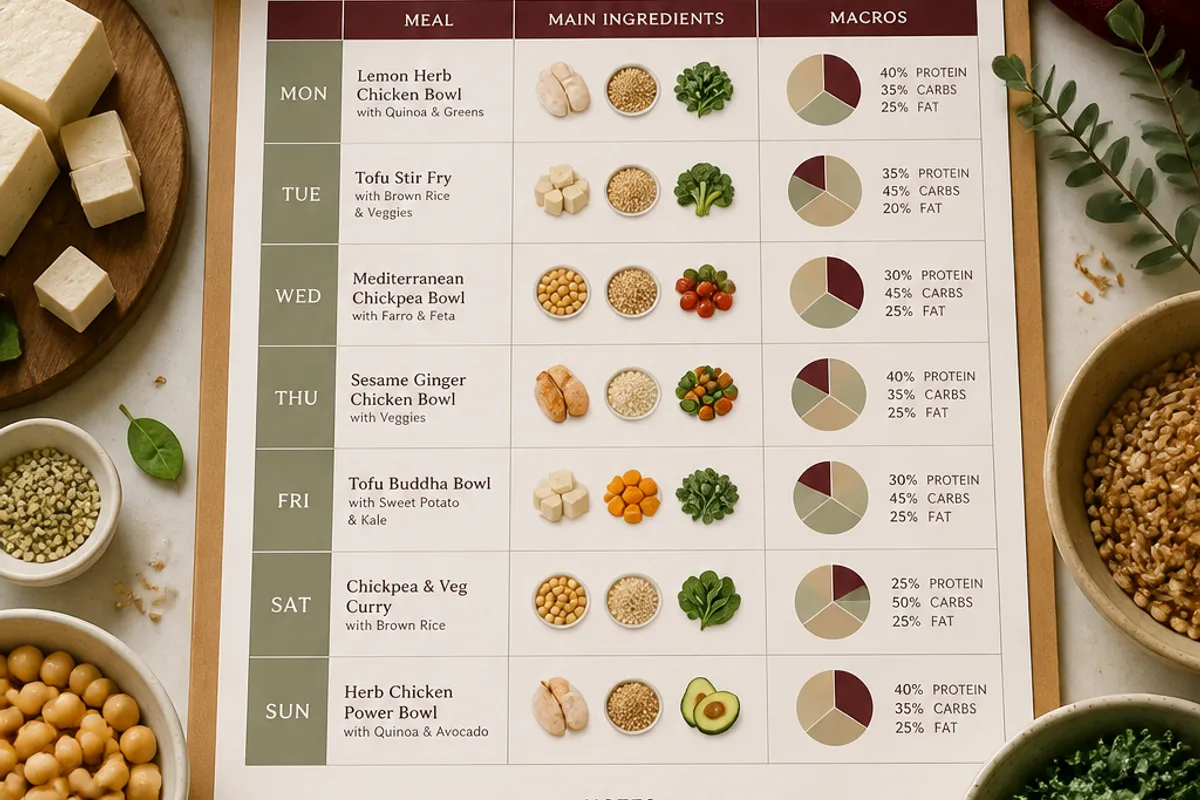
Macro planning gets overwhelming when every meal is a brand-new recipe. A simpler approach is to build templates: protein bowl, sheet-pan dinner, soup plus bread, yogurt bowl, egg plate, salad with grains, or pasta with a protein add-in. Once the template works, you can change flavors without changing the structure.
For example, a protein bowl can become Mediterranean, taco-style, teriyaki, curry, or barbecue by changing sauce and vegetables. The macro structure stays predictable: protein, grain or starch, vegetables, and a measured fat or sauce.
- Breakfast template: protein + fruit or grain + optional fat.
- Lunch template: leftovers, bowl, soup, or salad with a measured carb.
- Dinner template: protein + vegetable + starch + sauce.
Choose the protein anchor first
Protein is usually the macro people struggle to hit consistently. Pick the protein anchor first, then build the rest of the meal around it. Beans, lentils, tofu, eggs, Greek yogurt, cottage cheese, fish, poultry, lean beef, and protein-rich grains can all work depending on the recipe style.
A protein anchor also makes shopping easier. Instead of buying random ingredients, decide which two or three proteins will carry the week. Then reuse them in different formats: bowls, wraps, pasta, soup, salads, and snack plates.
If the meal already has a strong protein anchor, you can make smaller adjustments with carbs and fats instead of rebuilding the whole recipe.
Use carbs and fats as levers
Carbs and fats are not problems to avoid. They are levers to adjust energy, satiety, texture, and flavor. If a day is too low in calories, add rice, potatoes, oats, bread, fruit, olive oil, avocado, nuts, or sauce. If a meal is too energy-dense, reduce the highest-impact fat or starch and add vegetables or broth-based volume.
The best weekly plans usually include a mix: quick carbs for busy days, high-fiber carbs for fullness, and intentional fats for flavor. Planning this on purpose makes the final meals feel satisfying instead of restrictive.
What the current U.S. guidelines actually say
Macro planning gets easier when the targets come from an official source instead of a viral template. The Dietary Guidelines for Americans, 2025-2030 - the joint HHS and USDA edition published in January 2026 - replaced the old "percentage of calories" framing with concrete daily serving and protein goals.
The headline change for anyone building a macro plan is protein. The current edition sets a protein serving goal of 1.2 to 1.6 grams per kilogram of body weight per day and asks people to prioritize protein foods at every meal. That is a planning range, not a scoreboard: land inside it across the day and the rest of the plate gets much easier to arrange.
| Guideline | Daily goal | How it lands in a plan |
|---|---|---|
| Protein | 1.2-1.6 g per kg body weight | Anchors every meal; the first number to set |
| Dairy | 3 servings (2,000-calorie pattern) | Breakfast and snacks, plus sauces |
| Vegetables | 3 servings | Lunch and dinner volume, not an afterthought |
| Fruits | 2 servings | Carb source with fiber built in |
| Whole grains | 2-4 servings | Main carb lever; favor fiber-rich versions |
| Saturated fat | Under 10% of daily calories | Caps butter, cheese, and fatty meat portions |
| Added sugars | No more than 10 g in any one meal | Dessert and sweet drinks become occasional |
| Sodium | Under 2,300 mg (ages 14 and up) | Favors home cooking over packaged food |
Notice the shape of it: protein and produce have minimums, fats and sugars have ceilings, and grains sit in a range. A macro plan is mostly the work of hitting the minimums and staying under the ceilings.
Turn the protein goal into grams per day
Protein is the one macro the current guidelines express in grams per kilogram of body weight, so it needs a single conversion step before it becomes a shopping list. Divide your weight in pounds by 2.205 to get kilograms, then multiply by 1.2 for the floor and 1.6 for the ceiling.
Here is that arithmetic worked out for four common body weights, with the share each one implies if you eat three times a day:
- Round to the nearest 5 grams - no dinner plan needs a decimal.
- Use the lower end on rest days and the upper end on training or physically heavy days.
- Eating four smaller meals? Divide the daily number by four instead of three.
| Body weight | Kilograms | 1.2 g/kg per day | 1.6 g/kg per day | Per meal (3 meals) |
|---|---|---|---|---|
| 130 lb | 59.0 kg | 71 g | 94 g | 24-31 g |
| 150 lb | 68.0 kg | 82 g | 109 g | 27-36 g |
| 175 lb | 79.4 kg | 95 g | 127 g | 32-42 g |
| 200 lb | 90.7 kg | 109 g | 145 g | 36-48 g |
A 175-pound cook lands between roughly 95 and 127 grams of protein a day, or 32 to 42 grams per meal. That is a real constraint on the plate, which is exactly why the protein anchor gets chosen first.PairDish Tool Get your own daily protein number Enter weight and goal to see a daily protein target and how it splits across meals.
Hit the number without weighing every meal
Daily grams are a planning target, not a grade. The reliable shortcut is to build each meal around one protein anchor that is easy to judge by eye, then fill in the rest of the plate from the serving minimums.
Anchors that fit a macro template: eggs at breakfast, Greek yogurt or cottage cheese for snacks, beans, lentils, or tofu in plant-forward meals, and poultry, fish, lean meat, or seafood at dinner. The guidelines also count frozen, dried, or canned produce as legitimate options, which matters when fresh prices move - and it keeps a plan from collapsing on a busy Tuesday.
- One anchor per meal: choose it before anything else on the plate.
- Batch the anchor: cook two proteins at once and most of the week plans itself.
- Fill the rest from the minimums: 3 vegetables, 2 fruits, 2-4 whole grains.
- Cap rather than ban: saturated fat under 10 percent of calories, and no more than 10 grams of added sugar in a single meal.
Plan a range, not perfection
You do not need every meal to land on exact numbers. Weekly consistency matters more than one perfect lunch. A practical approach is to create a target range for meals and snacks, then repeat combinations that land close enough.
If one meal is higher in fat, choose a leaner dinner. If breakfast is low in protein, make lunch protein-forward. Macro planning should reduce decision fatigue, not create a new source of stress.
Use PairDish as a planning assistant
PairDish calculators are designed for home cooking estimates, meal planning, and recipe comparison. They are not a substitute for medical nutrition advice, allergy guidance, or a personalized diet plan from a qualified professional.
Keep planning your plate
Pairing decisions get easier with a framework. Browse the guides below for more combinations that work, or jump straight into a calculator to size the meal.
Sources & further reading
- Dietary Guidelines for Americans, 2025-2030 (HHS/USDA) — Source of the protein serving goal (1.2-1.6 g/kg/day), the daily serving minimums, and the saturated-fat, added-sugar, and sodium limits used above.
- DietaryGuidelines.gov - official Dietary Guidelines hub — Federal landing page for the current edition and all previous editions.
- USDA National Agricultural Library - DRI Calculator — Estimates daily calorie and macronutrient needs from the Dietary Reference Intakes.
- USDA FoodData Central — Official food composition data for checking individual ingredients and portions.