Quick takeaways
- ✓ Prep protein anchors separately from sauces so meals can change flavor.
- ✓ Cook one base and two vegetables to create several combinations.
- ✓ Add protein to snacks and breakfasts, not only lunch and dinner.
- ✓ Weigh protein raw and divide by containers: that number does not change when water cooks off.
Build components instead of identical boxes
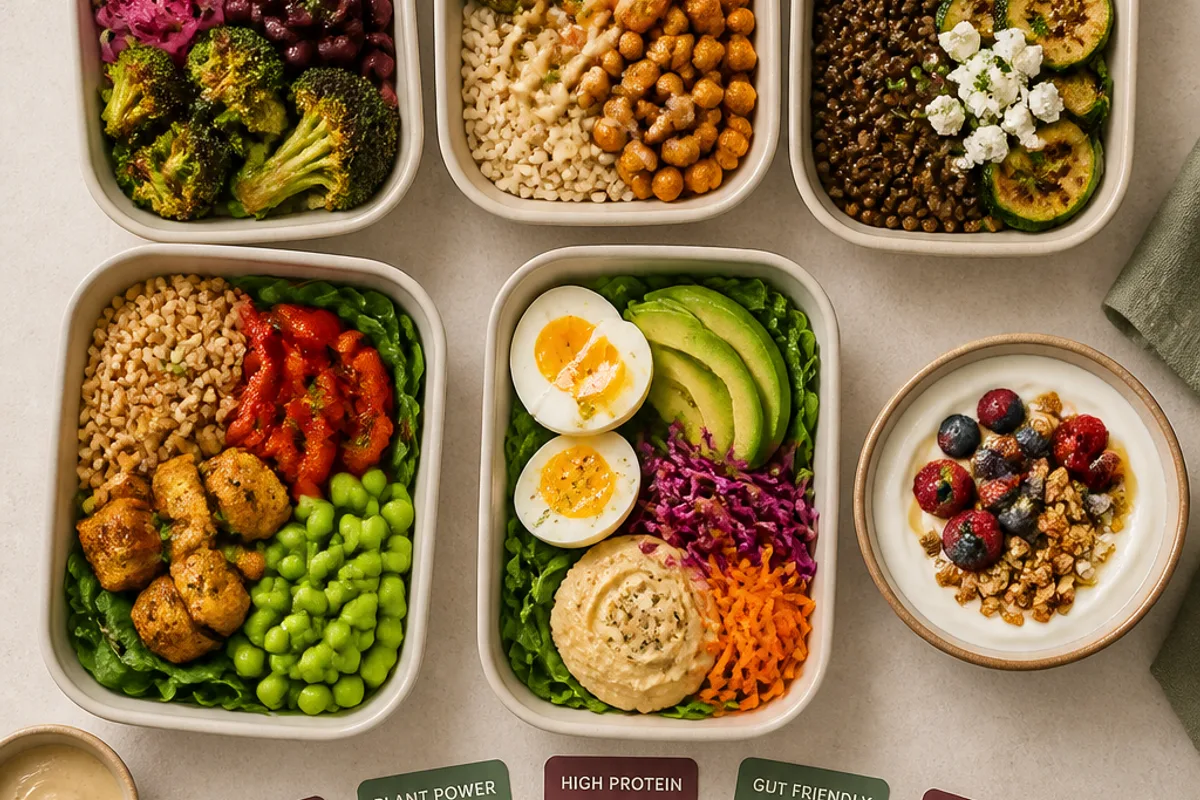
Classic meal prep often fails because five identical containers become boring by Wednesday. Component prep is more flexible. Cook a protein anchor, a grain or starch, vegetables, and one or two sauces separately. Then assemble different meals during the week.
For example, the same chickpeas, rice, roasted vegetables, and yogurt sauce can become a bowl, wrap, salad topper, or warm skillet. The same cooked eggs, potatoes, greens, and salsa can become breakfast, lunch, or dinner. Keeping components separate protects texture and variety.
- Protein anchor: beans, lentils, tofu, eggs, yogurt, fish, poultry, lean meat, or tempeh.
- Base: rice, potatoes, quinoa, pasta, oats, tortillas, or bread.
- Flavor: salsa, yogurt sauce, vinaigrette, tahini, curry sauce, pesto, or herbs.
Spread protein across the day
A high-protein plan is easier when protein appears in breakfast and snacks, not only dinner. Greek yogurt, cottage cheese, eggs, tofu scramble, overnight oats with protein-rich add-ins, bean dips, edamame, tuna, or lentil soup can help spread intake across the day.
This also makes meals feel less extreme. If breakfast and snacks carry some protein, lunch and dinner do not need to do all the work. That makes the meal plan easier to follow and easier to cook for mixed households.
Use sauces to change the week
Sauces are the easiest way to make repeated ingredients taste different. A yogurt herb sauce, salsa, peanut-style sauce, vinaigrette, pesto, tahini lemon sauce, or curry sauce can completely change a bowl. Keep sauces separate until serving so the prep stays fresh.
If you are tracking nutrition, measure calorie-dense sauces once, then portion them consistently. This keeps flavor high without guessing how much oil, nut butter, or cheese ended up in each serving.
High-protein does not have to mean plain. Flavorful sauces make simple protein anchors easier to repeat.
What the protein numbers actually look like per portion
Component prep gets easier once you know how much protein each anchor really delivers, because that number decides how many containers a batch fills. These are USDA FoodData Central values for protein per 100 g of the food as eaten; the portion column is the same figure multiplied out for a 150 g serving.
The spread is the useful part. A 150 g portion of cooked poultry delivers more protein than three times that weight of cooked chickpeas, so “protein anchor” is really several tiers. Building a week from two tiers — one dense anchor plus one plant anchor — holds up better than trying to hit the top of the list at every meal.
It also explains why portions look so different. Reaching 30 g of protein from cooked chickpeas means eating roughly 340 g of them; 100 g of cooked poultry already clears 30 g. Neither is better, but the container is not the same size.
- Use the 100 g column to compare anchors; use the portion column to plan containers.
- Cheese, nuts, and seeds add protein but arrive with much more fat per gram, so they support a meal rather than anchor it.
- Protein powders and bars are label-driven: read the package rather than a database entry.
| Protein anchor | Protein per 100 g | In a 150 g portion |
|---|---|---|
| Chicken or turkey breast, meat only, cooked | 32.1 g | about 48 g |
| Tuna, light, canned in water, drained solids | 25.5 g | about 38 g |
| Eggs, whole, hard-boiled | 12.6 g | about 19 g |
| Cottage cheese, lowfat (1% milkfat) | 12.4 g | about 19 g |
| Tofu, extra firm, prepared with nigari | 9.98 g | about 15 g |
| Yogurt, Greek, plain, lowfat | 9.95 g | about 15 g |
| Lentils, cooked, boiled | 9.02 g | about 14 g |
| Chickpeas, cooked, boiled | 8.86 g | about 13 g |
| Black beans, cooked, boiled | 8.86 g | about 13 g |
If you track one number in meal prep, track grams of protein per container. It survives every cooking method, and it is the figure the plan is actually built on.PairDish Tool Set your daily protein target Work out grams per day and per meal before dividing a batch into containers.
Do the batch math from raw weight
Protein is not lost when meat cooks; water is. That single fact makes batch math simple: multiply the raw weight of the protein by the protein density of the raw food, and you have the protein in the whole package no matter what the pan does to the scale.
A 3 lb (1,361 g) pack of raw boneless skinless chicken breast at 22.5 g of protein per 100 g carries roughly 306 g of protein. Divided into five containers that is about 61 g each; six containers gives about 51 g. The container count sets the per-serving number, not the cooked weight on the day.
The same approach covers plant anchors. A 250 g portion of cooked chickpeas at 8.86 g per 100 g comes to about 22 g of protein — roughly one plant-anchor serving. Write the batch number on the lid once and you never recalculate lunch again.
- Weigh raw, note the batch total, then divide by the containers you actually filled.
- Sauces, marinades, and oils are their own lines: they change fat and sodium, not the protein math.
- Freezing half the batch? Split the protein figure before it goes in the freezer so both halves carry their own number.
Cooked weight changes; protein content does not. Do the division from the raw package and the containers stay consistent from week to week.PairDish Tool Calculate the full batch Turn a batch recipe into per-container calories, protein, and macros.
Keep the week inside the safe storage window
A prep plan is also a food-safety plan, and the USDA Food Safety and Inspection Service publishes the windows that apply. Cooked leftovers — casseroles, soups, stews, cooked meat, poultry, and fish — keep three to four days in a refrigerator held at 40 °F or below. Cooked rice, pasta, and beans follow the same three-to-four-day rule. Raw ground meat, raw poultry, and fresh fish are far shorter: one to two days.
That is the argument for four containers instead of seven. Build the week in two batches, or freeze the back half in the containers you plan to eat later and thaw it in the refrigerator.
Two habits protect the batch. Get cooked food into the refrigerator promptly — FSIS guidance for leftovers is within two hours — and cool large batches fast by dividing them into small portions in shallow containers instead of leaving a deep pot to shed heat slowly.
- Write the cook date on each lid so day four is obvious at a glance.
- Cool in shallow containers first, then stack and cover once the food stops steaming.
- Freeze anything you will not eat inside the window — and label the container with the freeze date too.
| Prepped item | Refrigerator time |
|---|---|
| Cooked leftovers: casseroles, soups, stews, cooked meat, poultry, fish | 3 to 4 days |
| Cooked rice, pasta, or beans | 3 to 4 days |
| Raw ground meat or poultry, fresh poultry, fresh fish | 1 to 2 days |
| Eggs, fresh in shell | 3 to 5 weeks |
A four-day container is not a suggestion about freshness; it is the outer edge of the safe window for cooked food.
Check the recipe once, then repeat confidently
Once you have a meal prep combination you like, calculate it once and save the notes. Record the batch size, number of servings, protein per serving, and the sauce portion. The next time you cook it, you can adjust from a known baseline instead of starting over.
This is especially helpful for repeat lunches. A saved high-protein bowl, soup, or wrap formula becomes a reliable building block for future weeks.
Use PairDish as a planning assistant
PairDish calculators are designed for home cooking estimates, meal planning, and recipe comparison. They are not a substitute for medical nutrition advice, allergy guidance, or a personalized diet plan from a qualified professional.
Keep planning your plate
Pairing decisions get easier with a framework. Browse the guides below for more combinations that work, or jump straight into a calculator to size the meal.
Sources & further reading
- USDA FoodData Central — Source of every protein value in the anchor table (for example chicken breast cooked, FDC 331960; raw, FDC 2646170).
- USDA FSIS — Refrigeration & Food Safety — Source of the refrigerator storage windows and the shallow-container cooling guidance.
- USDA FSIS — Leftovers and Food Safety — Basis for the two-hour refrigeration rule for cooked food.