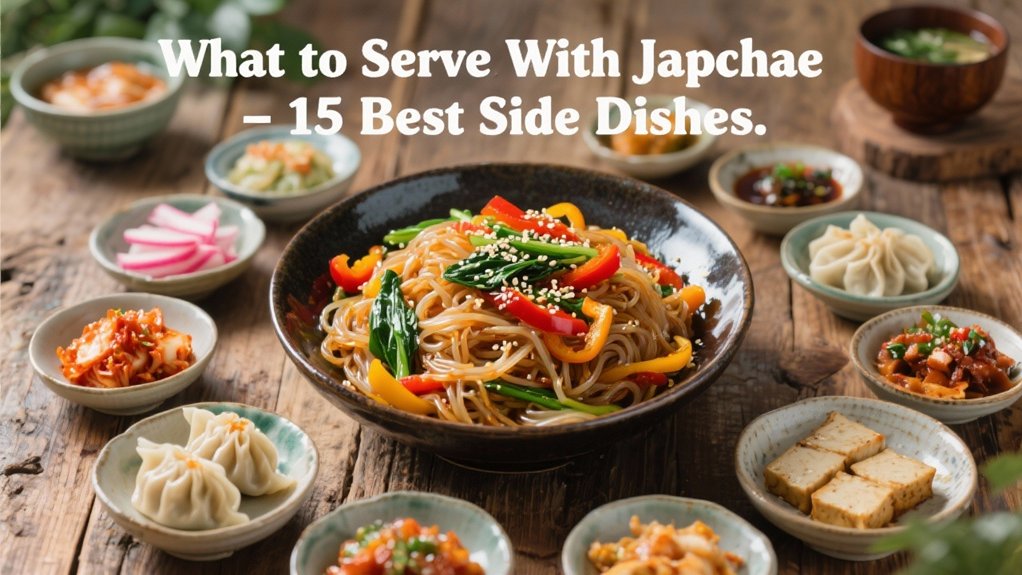
Japchae pairs beautifully with bold Korean sides that balance its sweet, silky noodles. Kimchi brings essential heat and tang, while Korean BBQ bulgogi adds rich umami flavors. Crispy pajeon scallion pancakes provide textural contrast, and pickled radish cleanses the palate between bites. Galbi short ribs offer hearty protein, while seasoned bean sprouts and Korean lettuce wraps keep things fresh. Miso soup adds comforting warmth to round out your feast perfectly. These combinations create an authentic Korean dining experience that’ll transform your meal.
Kimchi
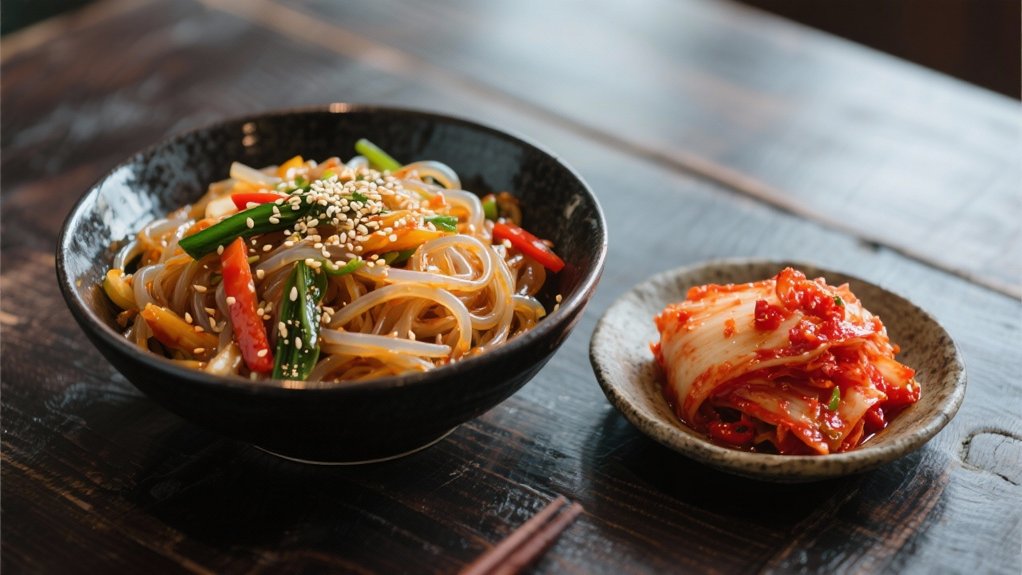
The vibrant red glow of kimchi brings both heat and tang to any japchae spread, making it one of the most popular side dish pairings you’ll find on Korean tables.
This fermented cabbage masterpiece cuts through japchae’s mild sweetness with its bold, spicy punch! The kimchi benefits are amazing – it adds probiotics, vitamin C, and a satisfying crunch that contrasts beautifully with those silky noodles.
Traditional fermenting techniques create complex flavors that develop over weeks, though you can grab store-bought versions for convenience. Just one bite and you’ll understand why this dynamic duo appears at every Korean feast!
Korean BBQ Bulgogi
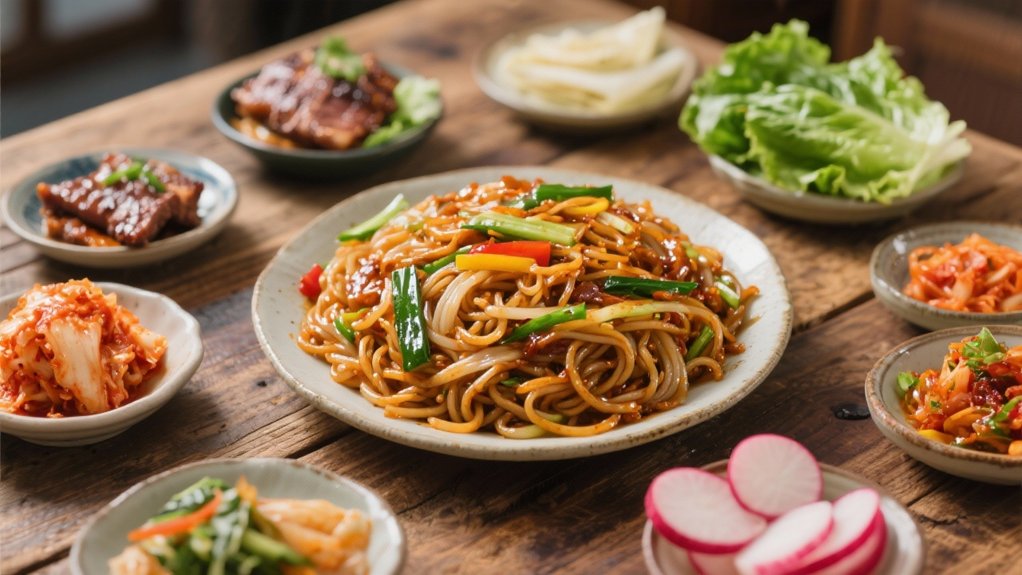
Smoky aromas and caramelized edges make bulgogi the perfect protein partner for your japchae feast! This sweet-savory Korean BBQ creates an incredible contrast with those silky noodles.
The bulgogi marinade, packed with soy sauce, pear, garlic, and sesame oil, tenderizes thin beef slices while infusing deep flavor. Your grilling techniques matter here – high heat for those beautiful char marks, quick cooking to keep meat tender.
Whether you use a grill pan, outdoor barbecue, or even broiler, aim for that signature caramelization. Bulgogi’s rich umami perfectly balances japchae’s subtle sweetness, making every bite absolutely divine!
Pajeon (Korean Scallion Pancakes)
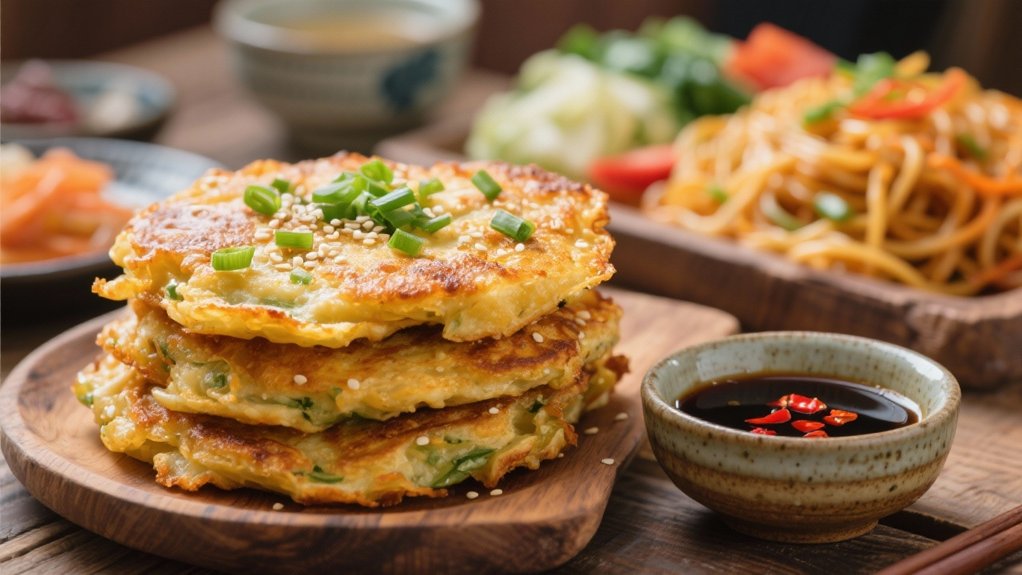
Moving from grilled meats to crispy pancakes, pajeon brings a delightful textural contrast that rounds out your japchae spread beautifully!
These savory Korean pancakes feature fresh scallions in a light, crispy batter that’s golden and satisfying. You can explore pajeon variations by adding seafood like shrimp or squid, or keep it simple with just scallions for vegetarian guests.
The key is achieving that perfect crispy exterior while keeping the inside tender.
Pajeon dipping sauce, typically made with soy sauce, vinegar, and chili flakes, adds tangy heat that complements japchae’s mild sweetness perfectly!
Pickled Radish (Danmuji)
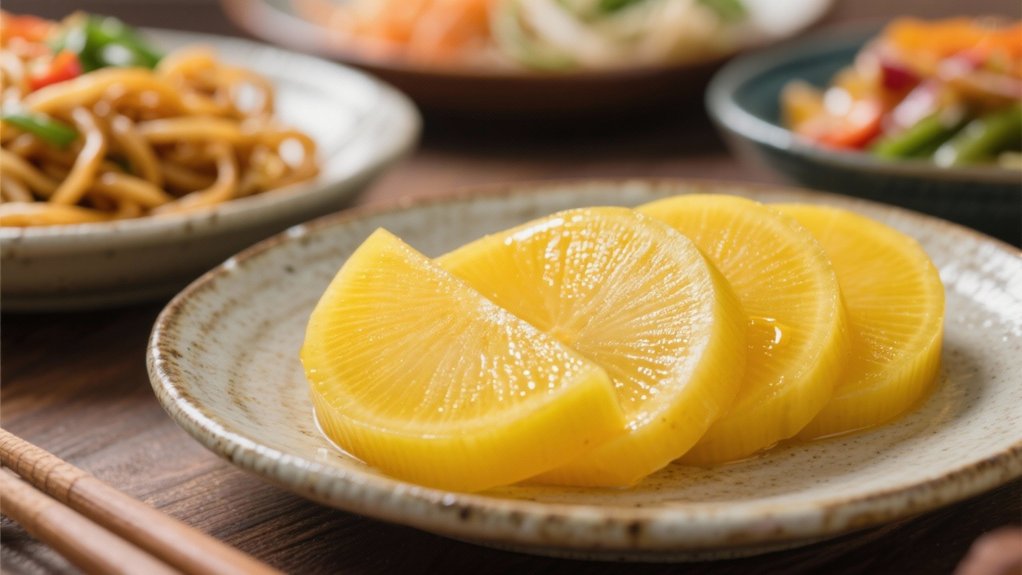
While pajeon adds crispy satisfaction to your meal, pickled radish brings that essential tangy crunch that cuts through japchae’s rich, sweet flavors!
This bright yellow banchan cleanses your palate between bites, making each forkful of noodles taste fresh again. The pickled radish benefits extend beyond flavor – its acidity aids digestion of heavier dishes.
Making danmuji at home takes just daikon radish, rice vinegar, sugar, and turmeric for that signature golden color. Store-bought versions work perfectly too!
Keep some chilled in your fridge, and you’ll always have the perfect acidic counterpoint to balance japchae’s sweetness.
Galbi (Korean Short Ribs)
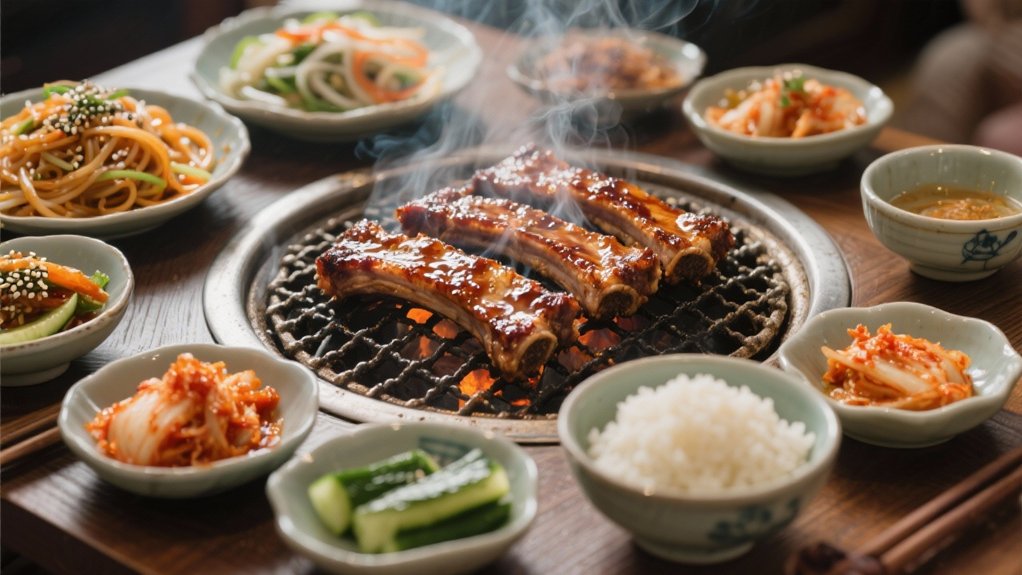
For those wanting to elevate their japchae spread with something truly special, galbi transforms your Korean meal into a proper feast!
These marinated short ribs bring incredible depth and richness that perfectly complements japchae’s sweet, savory noodles.
The key lies in your galbi marinade tips – soy sauce, pear, garlic, and sesame oil create that signature flavor.
For galbi cooking methods, you can grill them for smoky char or braise them until tender.
Either way, the meat’s caramelized edges and juicy interior make every bite heavenly. Your guests will think you’re a Korean cooking master!
Korean Cucumber Salad
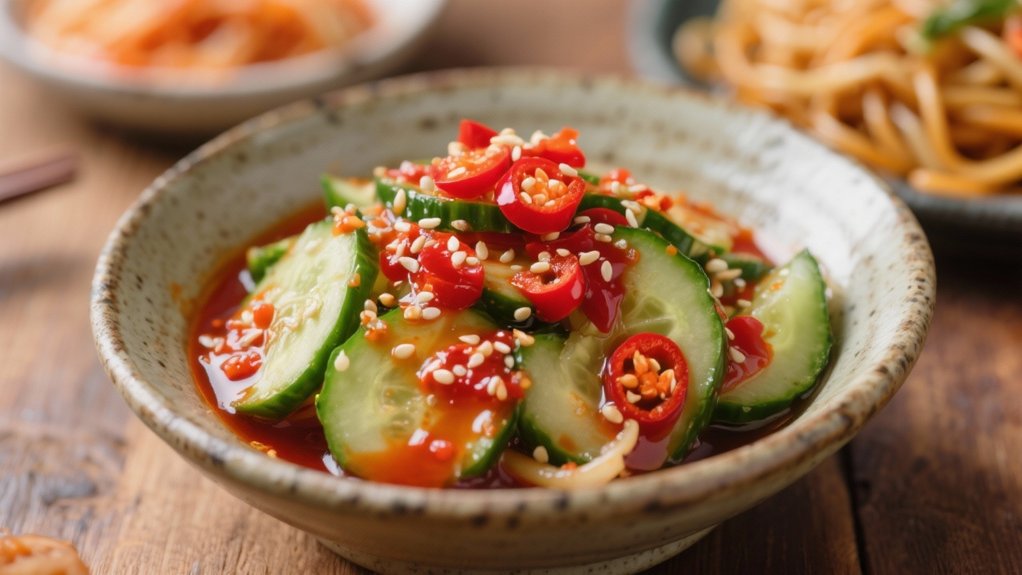
When you need something crisp and invigorating to balance japchae’s rich flavors, Korean cucumber salad (oi muchim) delivers the perfect palate cleanser!
This revitalizing side dish combines thinly sliced cucumbers with a tangy dressing of rice vinegar, korean sesame oil, and a touch of sugar.
The cucumber benefits include adding hydration and crunch that cuts through japchae’s savory richness beautifully.
You can prepare this salad in just ten minutes by salting the cucumbers first, then squeezing out excess moisture.
Add sesame seeds, scallions, and a pinch of red pepper flakes for extra flavor and visual appeal!
Banchan Vegetable Medley
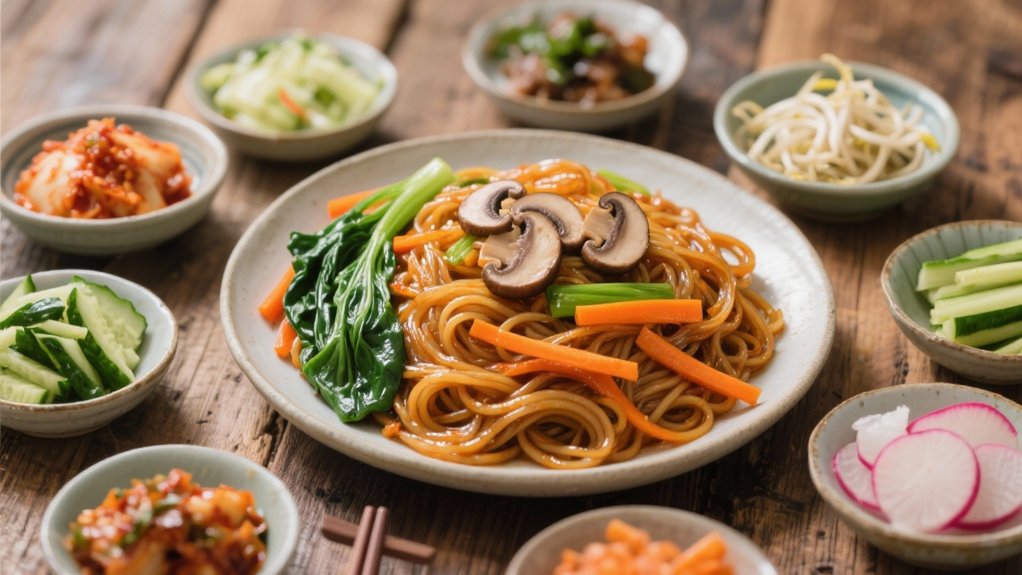
Beyond cucumber salad, a carefully curated banchan vegetable medley brings the full spectrum of Korean side dish tradition to your japchae feast!
You’ll want to combine three to five different vegetables for ideal variety. Consider pairing sweet glazed carrots with tangy pickled radish, or mix blanched spinach with seasoned bean sprouts.
Smart banchan serving suggestions include offering both raw and cooked options, plus varying textures from crunchy to tender.
The secret lies in balancing banchan flavor profiles—sweet, sour, spicy, and umami elements should complement each other while creating an exciting contrast to japchae’s savory-sweet noodles.
Spicy Korean Tofu (Dubu Jorim)
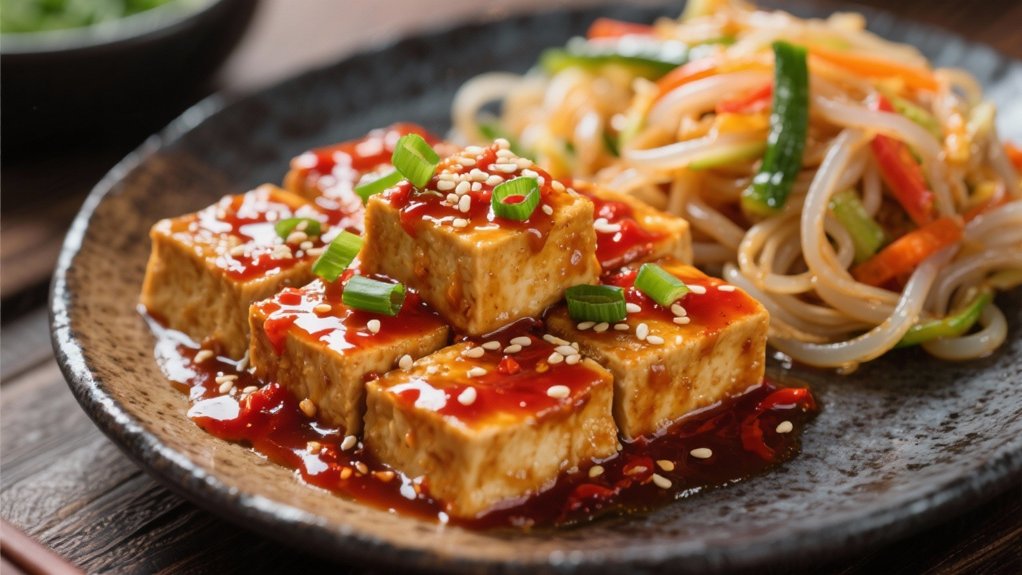
Three simple ingredients transform ordinary tofu into dubu jorim, a glossy, flavor-packed side dish that brings serious heat to your japchae table!
This braised tofu dish balances sweet soy sauce with fiery gochugaru, creating caramelized edges that’ll make you forget takeout exists.
The beauty of spicy tofu recipes lies in their flexibility – you can dial up the heat or tone it down for sensitive palates. Popular dubu jorim variations include adding garlic, scallions, or sesame seeds for extra punch.
Pan-fry your tofu first for better texture, then simmer in the sauce until it’s deeply golden and irresistible!
Korean Egg Roll (Gyeran-mari)
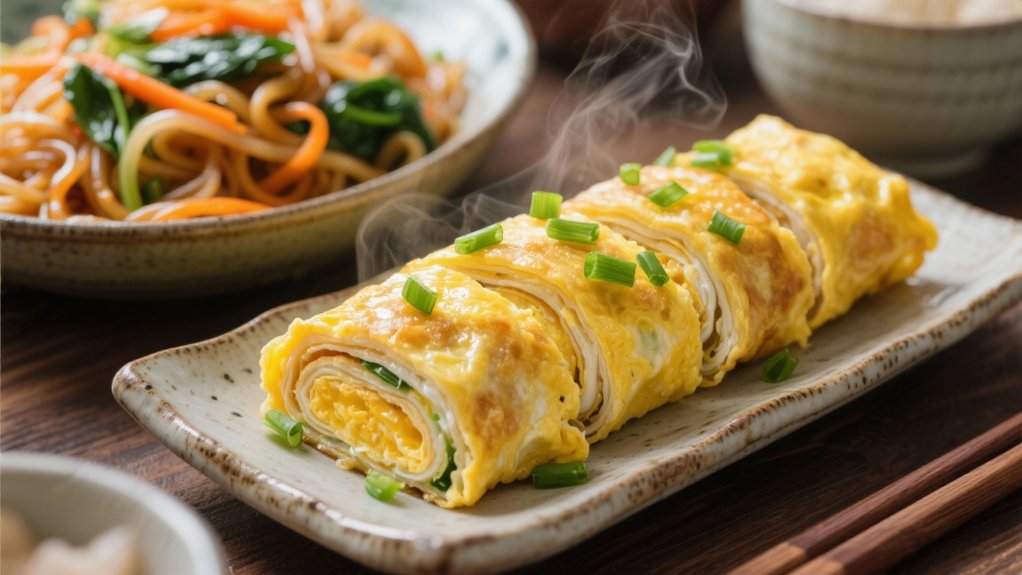
After satisfying your spice cravings with dubu jorim, gyeran-mari offers a completely different flavor profile that’s mild, comforting, and surprisingly versatile!
This rolled omelet showcases essential Korean cooking techniques through its signature spiral shape and delicate texture. You’ll beat eggs with salt, chopped scallions, and sometimes carrots or ham, then cook thin layers in a pan while rolling each one carefully.
The egg roll variations are endless – try adding kimchi, cheese, or vegetables for extra flavor. It’s like a warm, fluffy hug that balances japchae’s bold sesame and soy flavors perfectly!
Seasoned Spinach (Sigeumchi Namul)
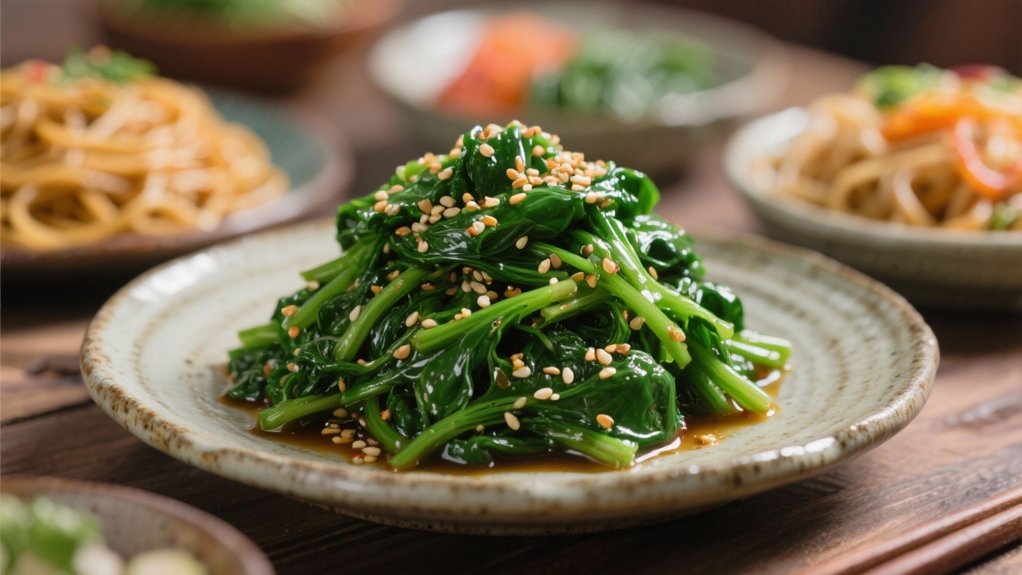
Simplicity shines brightest in sigeumchi namul, where fresh spinach transforms into a vibrant, garlicky side dish that’s practically mandatory at any Korean table!
How to prepare seasoned spinach couldn’t be easier—you’ll blanch fresh spinach leaves, squeeze out excess water, then toss with minced garlic, sesame oil, soy sauce, and toasted sesame seeds.
The nutritional benefits of spinach make this banchan a winner, packed with iron, vitamins, and folate.
This emerald side dish adds color, crunch, and earthy flavors that balance japchae’s sweet potato starch beautifully, creating the perfect harmony on your plate!
Korean Fried Chicken
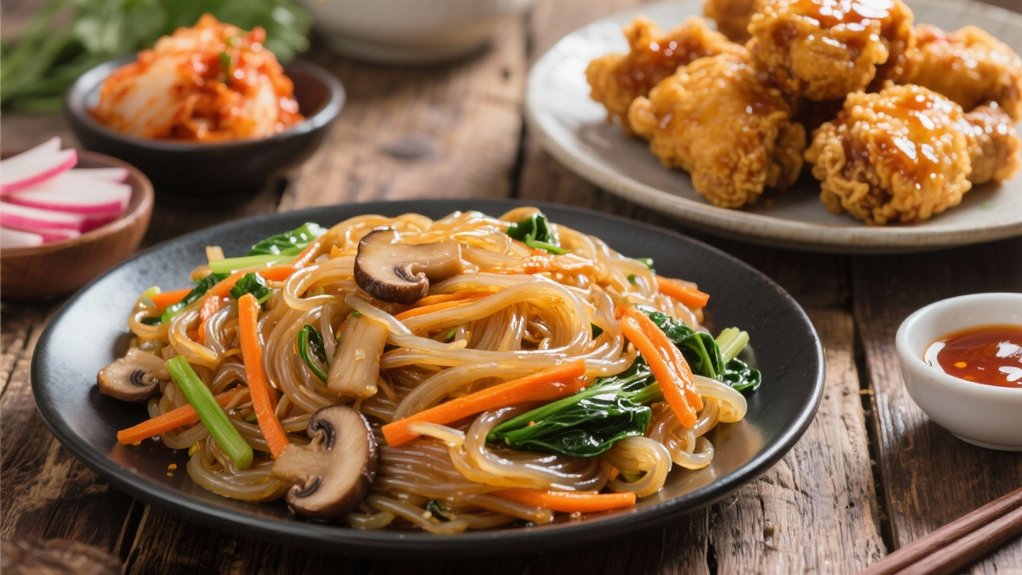
While sigeumchi namul brings gentle, earthy flavors to your japchae spread, Korean fried chicken delivers the bold, crispy excitement that turns any meal into a celebration!
This Korean chicken creates the perfect contrast with its incredible crispy texture that shatters with each bite. The flavorful marinade penetrates deep into tender meat, while spicy saucing adds that signature kick you’re craving.
- Double-frying technique creates an impossibly crunchy exterior that stays crispy even when sauced
- Sweet and spicy glaze balances heat with subtle sweetness, complementing japchae’s mild flavors perfectly
- Finger-food convenience makes it easy to enjoy alongside noodles without extra utensils needed
Miso Soup
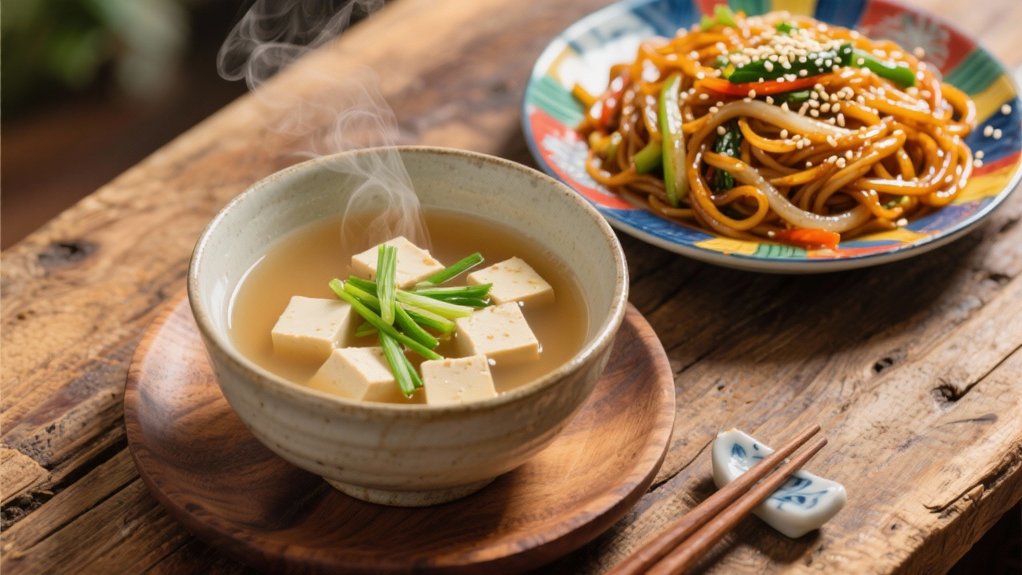
Frequently overlooked as a japchae companion, miso soup brings comforting warmth and umami depth that perfectly balances the cool, chewy noodles on your table.
The salty, savory miso flavors create a beautiful contrast to japchae’s sweet sesame notes, while the hot broth warms you between bites of room-temperature noodles.
You’ll love how this combination feels like a complete meal! Miso nutrition adds protein and probiotics to your dinner, making it both delicious and beneficial.
Try adding tofu cubes, green onions, or wakame seaweed for extra texture and flavor in your bowl.
Grilled Korean Corn
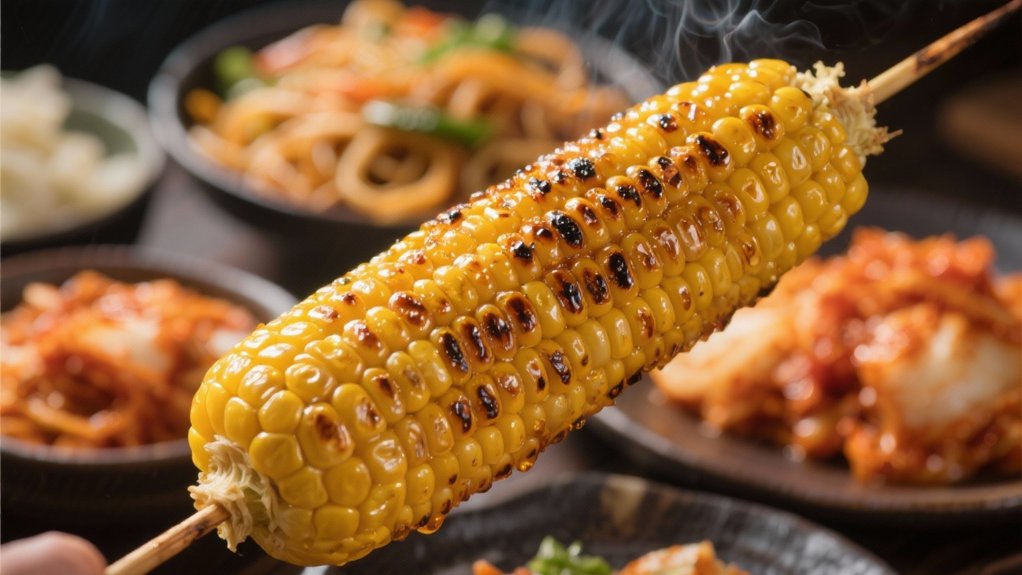
Grilled Korean corn transforms ordinary corn on the cob into a smoky, sweet sensation that pairs beautifully with japchae’s savory noodles.
The charred kernels develop incredible grilled flavors that complement japchae’s rich, umami-packed taste perfectly. You’ll love how the corn’s natural sweetness balances the salty soy sauce in your noodles!
Traditional corn toppings include:
- Butter mixed with gochugaru (Korean chili flakes) for gentle heat
- Mayo and cheese sprinkled with sesame seeds for creamy richness
- Simple salt and pepper with a squeeze of lime juice
This crowd-pleasing side dish adds wonderful texture contrast and brings out japchae’s best qualities.
Seasoned Bean Sprouts (Kongnamul Muchim)
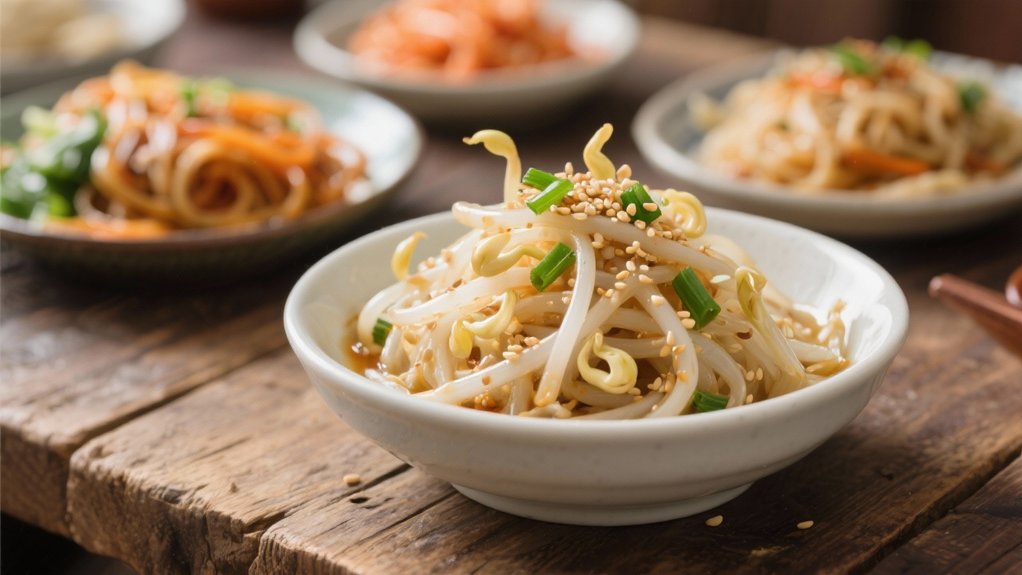
Crisp, rejuvenating bean sprouts become a delightful banchan when dressed with sesame oil, garlic, and a touch of salt in this classic Korean side dish.
The seasoning techniques are surprisingly simple – just blanch the sprouts briefly, then toss with minced garlic, sesame oil, salt, and sometimes a splash of rice vinegar.
You’ll love how this light, crunchy side balances japchae’s rich flavors perfectly!
The nutrition benefits are impressive too, since bean sprouts pack vitamin C, fiber, and protein into every bite. This invigorating dish cleanses your palate between those savory noodle forkfuls.
Korean Lettuce Wraps
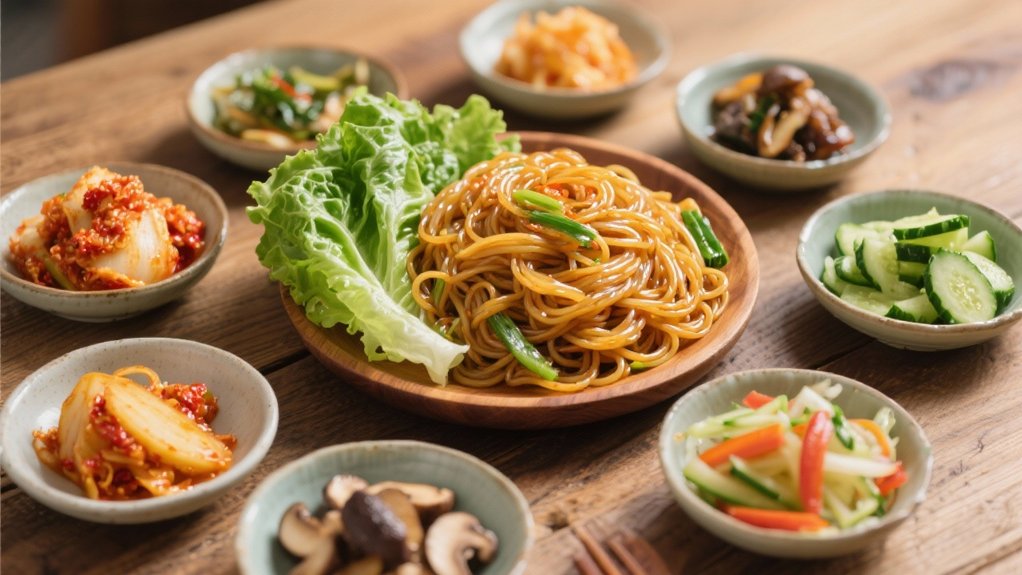
Often overlooked by newcomers to Korean cuisine, lettuce wraps transform any meal into an interactive dining experience that perfectly complements japchae‘s hearty texture.
Korean lettuce varieties like butter lettuce or red leaf lettuce create perfect little cups for wrapping bites of japchae alongside other dishes. You can set up a fun DIY station where everyone builds their own wraps!
- Fresh contrast – The crisp, cool lettuce balances japchae’s warm, chewy noodles beautifully
- Customizable experience – Each person controls their filling options and portion sizes
- Traditional authenticity – Lettuce wraps are a cornerstone of Korean dining culture