
Japanese curry becomes a complete meal when paired with steamed white rice to soak up the rich sauce, alongside crispy tonkatsu or chicken karaage for satisfying protein. Pickled vegetables like tsukemono and daikon radish cut through the curry’s richness with bright acidity, while tempura vegetables add delicate crunch. Cool sides such as cucumber sunomono, corn salad, and cabbage with sesame dressing provide invigorating contrast. These combinations create the perfect balance of flavors and textures that will transform your curry experience.
Steamed White Rice
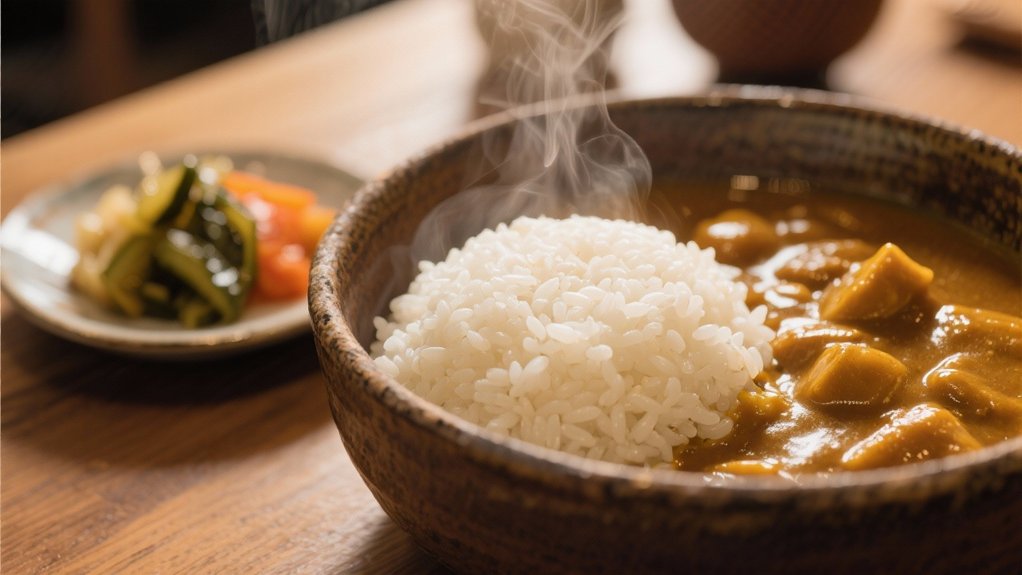
While Japanese curry pairs beautifully with many sides, steamed white rice remains the absolute classic choice that you simply can’t go wrong with.
The steamed rice benefits are endless – it soaks up every drop of that rich, golden curry sauce like a delicious sponge! Perfect rice cooking means using a 1:1.2 rice-to-water ratio and letting it rest after cooking.
Short-grain Japanese rice works best, but medium-grain varieties work wonderfully too. The fluffy, slightly sticky texture creates the ideal foundation that lets your curry shine while providing satisfying substance to each bite.
Pickled Vegetables (Tsukemono)
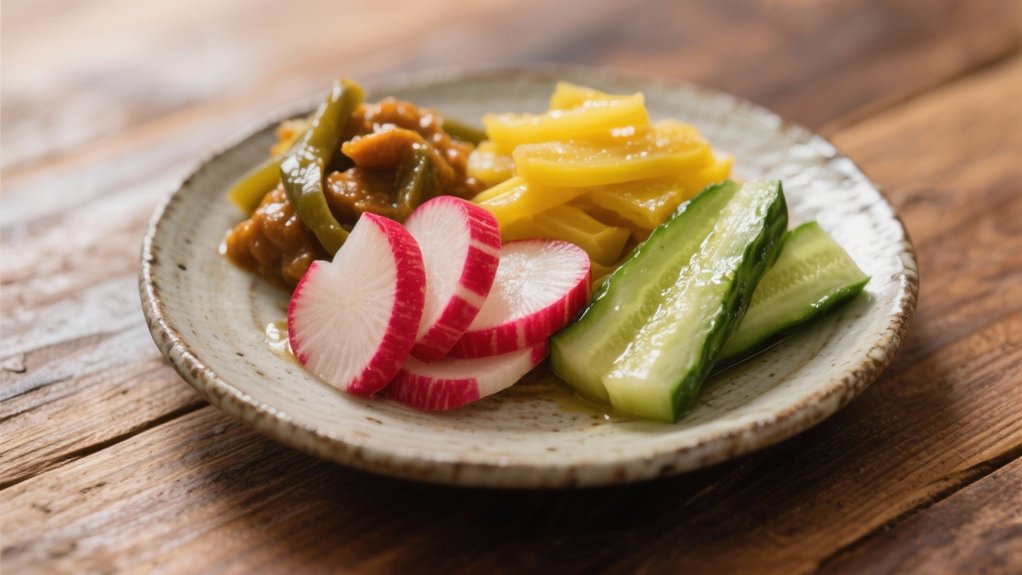
A splash of bright acidity cuts through Japanese curry’s rich depths beautifully, making pickled vegetables an essential companion that transforms your meal from good to absolutely fantastic!
Traditional tsukemono varieties like cucumber sunomono, pickled daikon, and cabbage offer invigorating contrast to curry’s warming spices. Simple pickling techniques using rice vinegar, salt, and sugar create quick versions in just thirty minutes.
You can pickle almost anything—carrots, radishes, even onions work wonderfully. The tangy crunch cleanses your palate between bites, preventing flavor fatigue while adding vibrant colors to your plate.
Store-bought options work perfectly if you’re short on time!
Tonkatsu (Breaded Pork Cutlet)
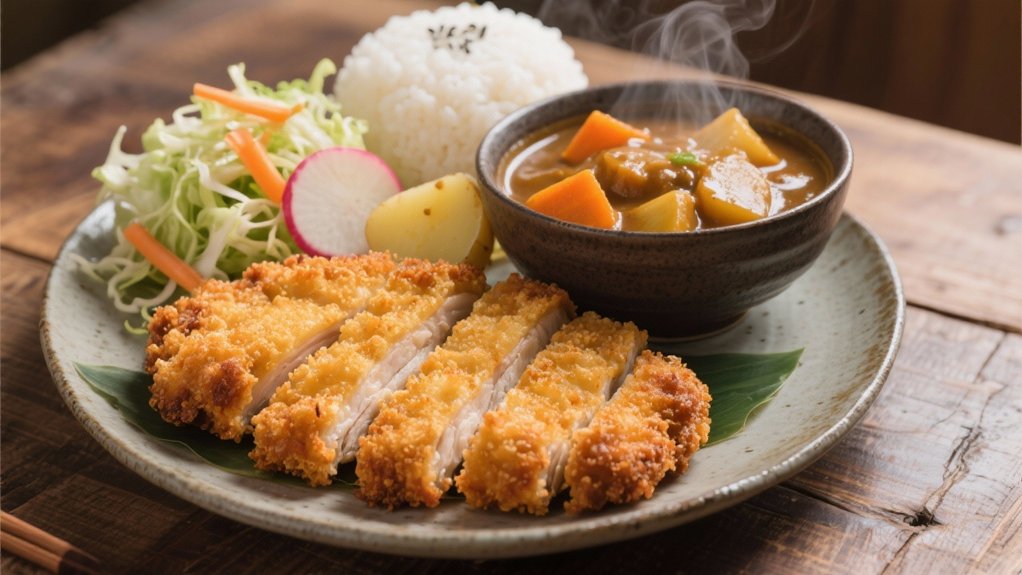
Moving from invigorating pickles to something more substantial, tonkatsu stands as the ultimate protein powerhouse that turns Japanese curry into a complete, satisfying feast!
This crispy, golden-brown pork cutlet brings incredible texture contrast to curry’s smooth richness.
Your tonkatsu preparation involves pounding pork thin, coating it in flour, egg, and panko breadcrumbs, then frying until perfectly crunchy.
Popular tonkatsu variations include chicken katsu for lighter appetites, or beef katsu for red meat lovers.
The crispy exterior and tender interior create an amazing bite when combined with curry sauce, making this pairing absolutely irresistible for hearty meal satisfaction!
Chicken Karaage
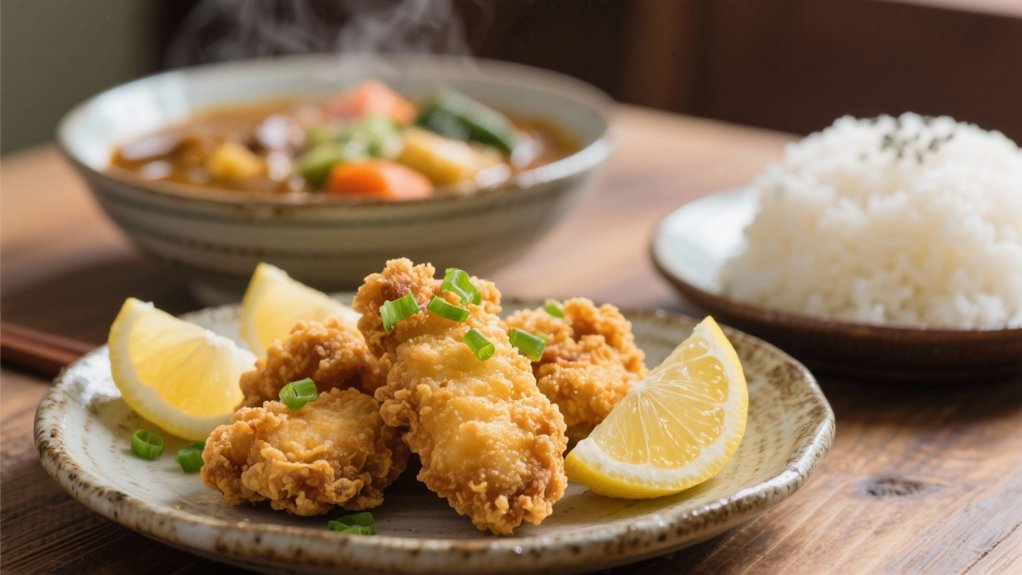
Several pieces of tender, bite-sized chicken karaage deliver the perfect pop of savory flavor that makes your Japanese curry experience even more delicious!
This beloved Japanese fried chicken starts with a flavorful chicken marinade of soy sauce, ginger, and garlic that infuses every morsel with umami goodness.
The secret lies in the crispy coating made from potato starch or cornstarch, which creates an incredibly light, crunchy exterior that stays crisp even when dipped in curry sauce.
You’ll love how the juicy chicken contrasts beautifully with the rich, warming spices of your curry for an absolutely satisfying meal!
Tempura Vegetables
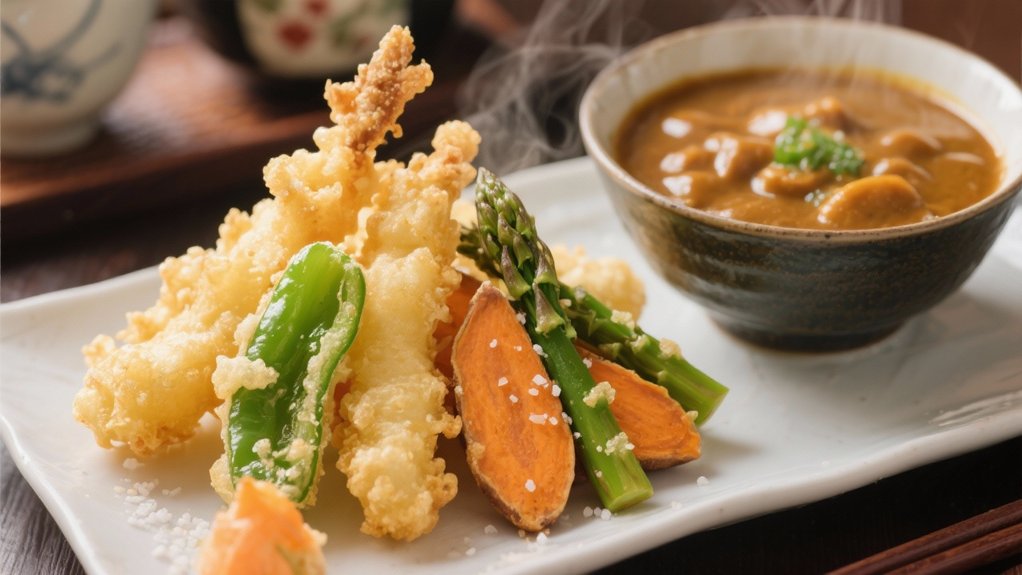
While crispy fried chicken brings satisfying protein to your curry plate, tempura vegetables offer a lighter yet equally delicious complement that showcases the beautiful technique of Japanese battering.
The secret lies in mastering tempura batter techniques—using ice-cold water and minimal mixing creates that signature light, airy coating! Popular vegetable combinations include sweet potato, eggplant, green beans, and bell peppers. You can even try mushrooms or zucchini for variety.
The vegetables’ natural sweetness pairs wonderfully with curry’s rich spices, while the crispy texture adds delightful contrast. Plus, tempura makes eating your veggies feel like a special treat!
Miso Soup
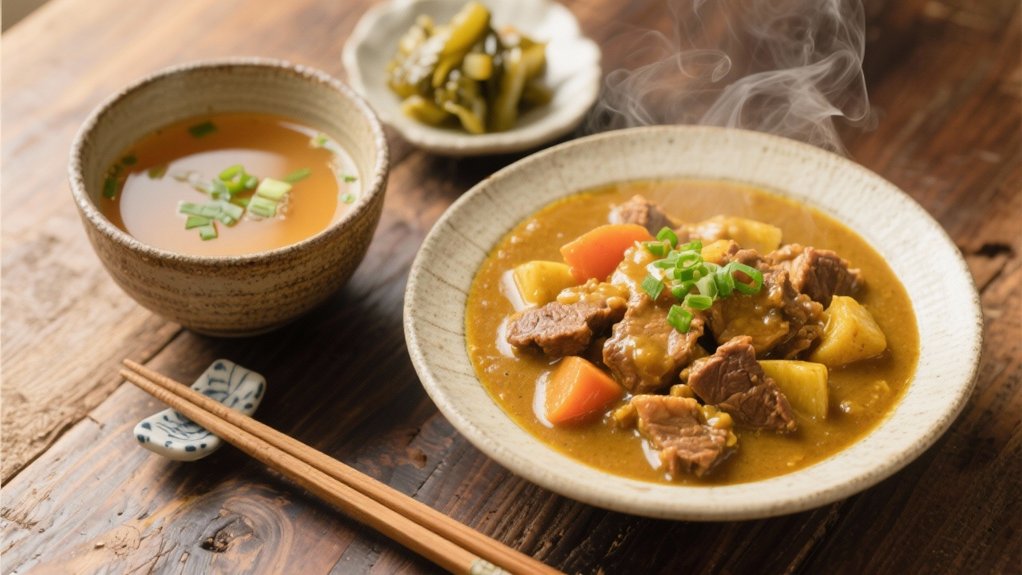
A steaming bowl of miso soup serves as the perfect liquid companion to Japanese curry, creating a harmonious balance that restaurants across Japan have perfected for decades.
The salty, umami-rich broth cleanses your palate between spoonfuls of rich curry, while miso benefits include probiotics that aid digestion.
You’ll find various miso varieties work beautifully – white miso offers mild sweetness, while red miso brings deeper, earthier flavors.
Add tofu cubes, wakame seaweed, or green onions for extra texture and nutrition.
This simple soup transforms your curry meal into an authentic Japanese dining experience!
Japanese Potato Salad
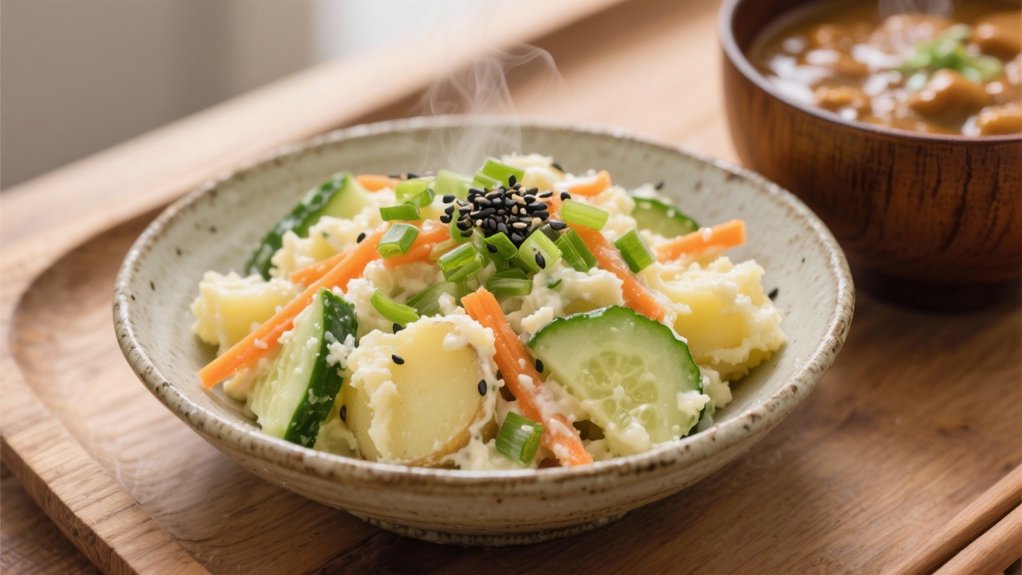
Creamy Japanese potato salad brings a surprisingly delightful contrast to spicy curry with its cool, smooth texture and subtle sweetness that perfectly balances bold flavors.
This beloved staple of Japanese cuisine differs from American versions with its incredibly creamy consistency and delicate taste. You’ll find Japanese potato salad made with mayonnaise, cucumber, carrots, and sometimes corn or ham.
The potatoes get mashed slightly more than traditional potato salad, creating that signature smooth texture. Serve it chilled alongside your curry for a revitalizing palate cleanser that helps cool down those spicy bites!
Gyoza (Pan-Fried Dumplings)
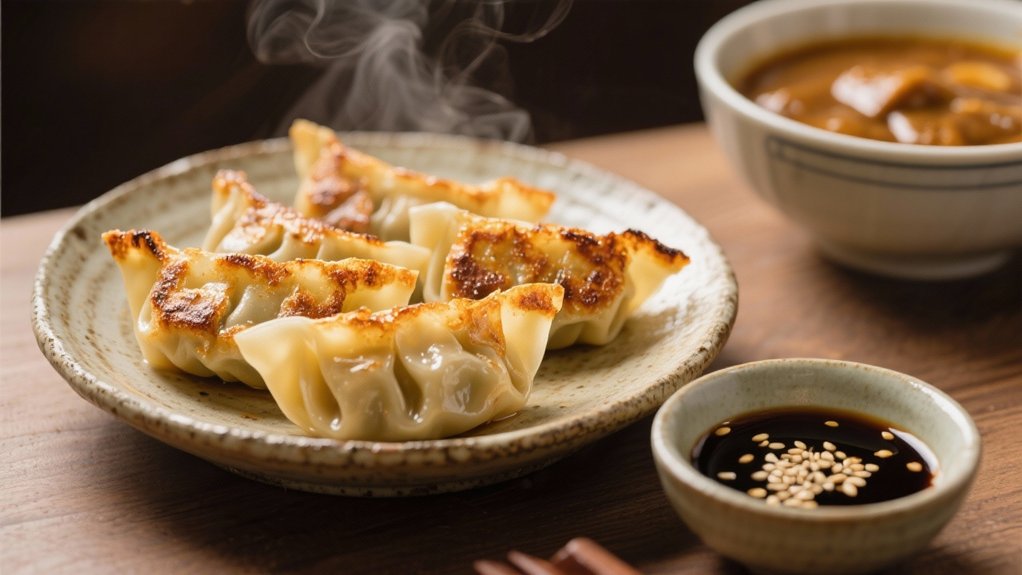
Moving from cool and creamy sides to something with more substance, gyoza offers the perfect crispy-bottomed companion that transforms your curry meal into a complete feast.
These golden dumplings bring satisfying texture contrast that makes every bite exciting!
- Gyoza filling varieties include classic pork and cabbage, chicken and ginger, or vegetarian mushroom blends
- Pan-fry them until bottoms turn beautifully golden and crispy
- Steam briefly with water for tender tops and crunchy bottoms
- Gyoza dipping sauces like soy-vinegar or spicy chili oil enhance flavors perfectly
- Make extra because they disappear fast from plates!
- Shred cabbage into thin, uniform strips for best texture
- Salt massage removes bitterness and creates tender leaves
- Sesame benefits include healthy fats and nutty flavor depth
- Rice vinegar adds bright acidity to balance curry spices
- Toasted sesame seeds provide extra crunch and visual appeal
- Mix corn kernels with diced bell peppers, red onion, and fresh herbs
- Try corn salad variations with cherry tomatoes, cucumber, or avocado chunks
- Create zesty corn salad dressing using lime juice, olive oil, and honey
- Add black beans or chickpeas for extra protein and substance
- Season with salt, pepper, and cumin for deeper flavor complexity
- Use large shrimp for the most impressive presentation and satisfying bite
- Butterfly shrimp by cutting along the back without cutting completely through
- Double-coat with panko for extra crispiness and restaurant-quality results
- Try ebi fry variations like coconut flakes mixed with breadcrumbs
- Serve immediately while hot for maximum crunch and flavor impact
Edamame
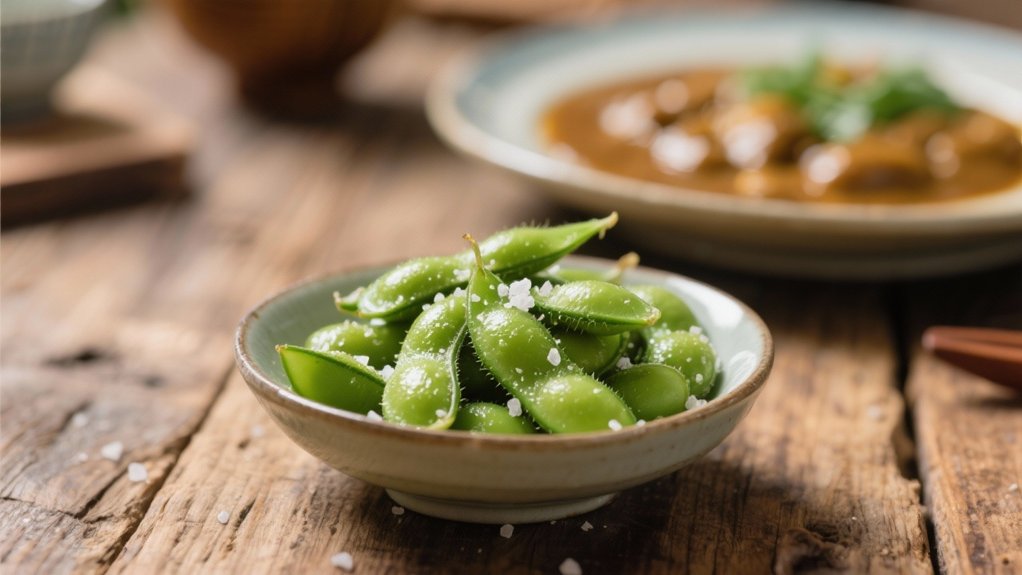
Simplicity shines when you need a light, healthy side that won’t compete with curry’s bold flavors, and edamame delivers exactly that clean, satisfying bite your meal needs.
These young soybeans bring impressive edamame benefits to your table, packed with protein, fiber, and essential nutrients that balance curry’s richness perfectly.
Edamame preparation couldn’t be easier – just boil frozen pods for three to five minutes, drain, and sprinkle with coarse sea salt. You can also steam them or quickly sauté with garlic for extra flavor.
Their pop-in-your-mouth texture and mild, nutty taste create the ideal palate cleanser between curry spoonfuls!
Cabbage Salad With Sesame Dressing
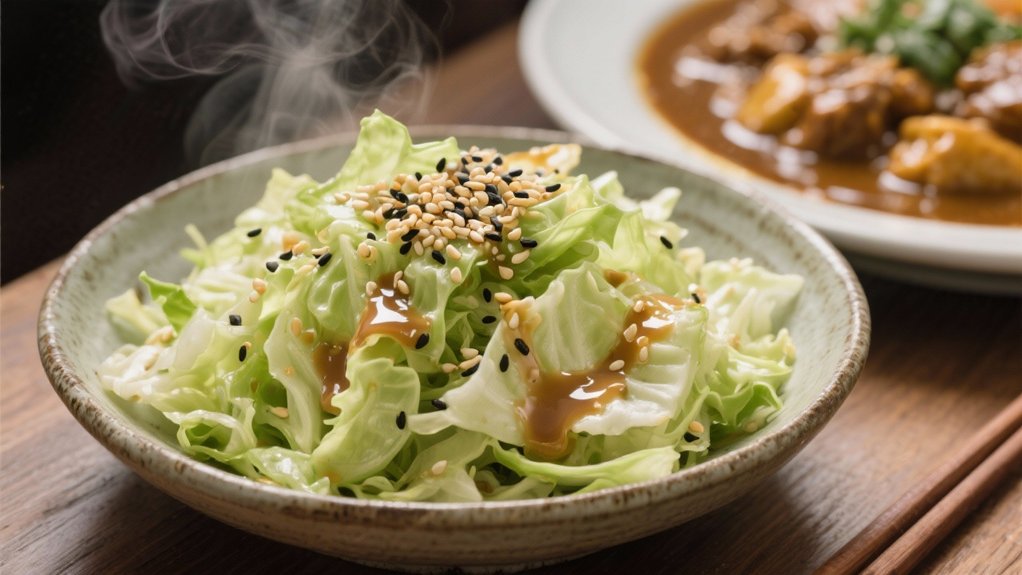
While edamame offers that perfect pop of protein, cabbage salad with sesame dressing brings a completely different texture adventure that your taste buds will absolutely love alongside Japanese curry.
This invigorating side dish cuts through curry’s richness with crisp, clean crunch. Smart cabbage preparation means slicing thin strips, then massaging them lightly with salt to soften the bite.
Naan Bread
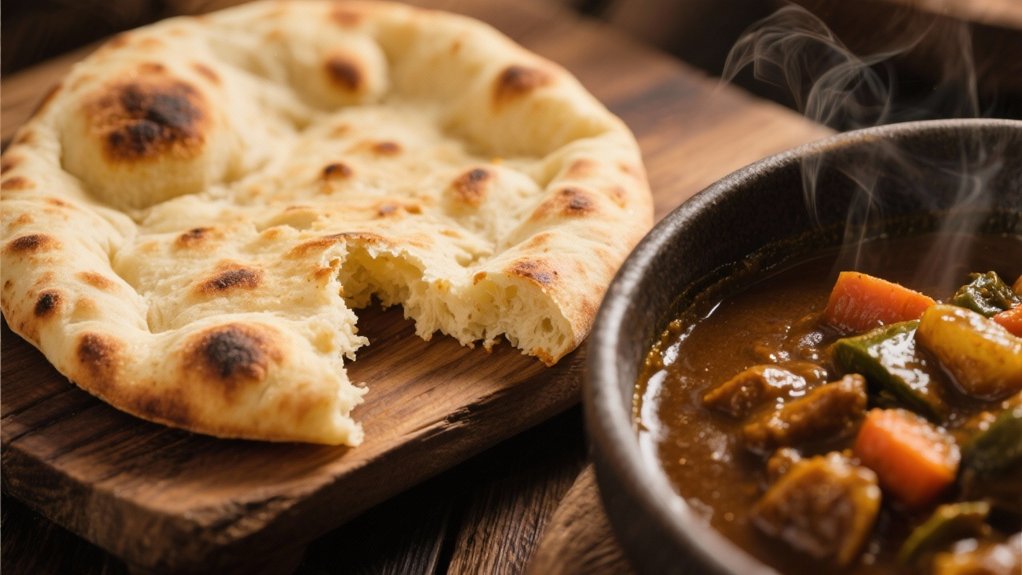
Every curry lover knows that naan bread transforms your dining experience from good to absolutely spectacular when you’re savoring Japanese curry.
This pillowy, warm bread acts like your personal curry vessel, soaking up every drop of that rich, golden sauce. The naan bread benefits include its perfect texture for scooping and its mild flavor that won’t compete with your curry’s taste.
You can buy store-bought versions or try simple naan bread recipes at home using yogurt, flour, and baking powder.
Either way, you’ll have the ultimate curry companion that makes every bite absolutely divine!
Corn Salad
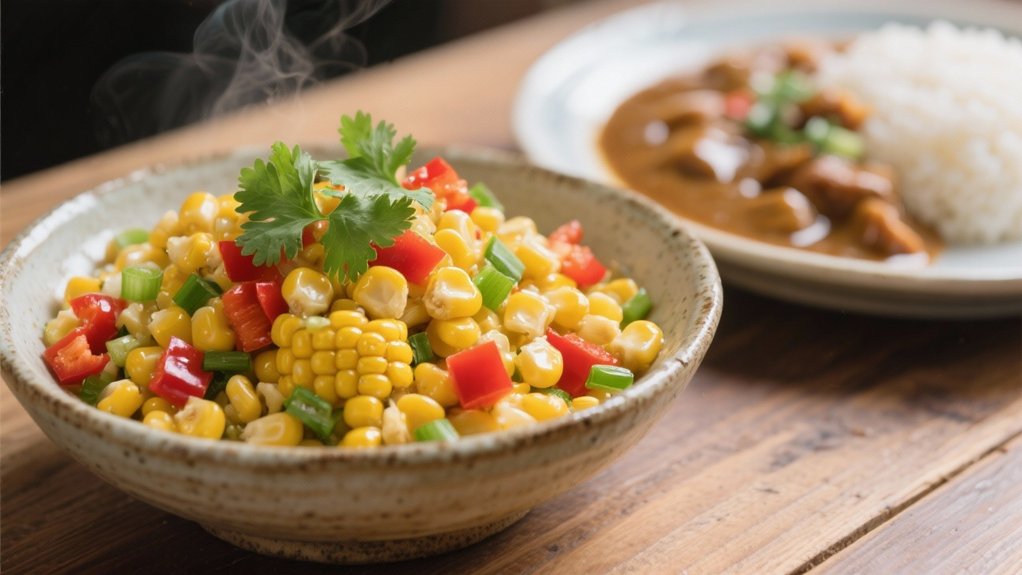
Moving from warm bread to something invigoratingly cool, corn salad brings a sweet crunch that perfectly balances Japanese curry’s rich, savory flavors.
This revitalizing side dish cuts through the curry’s heaviness while adding bright, summery notes to your meal.
Pickled Daikon Radish
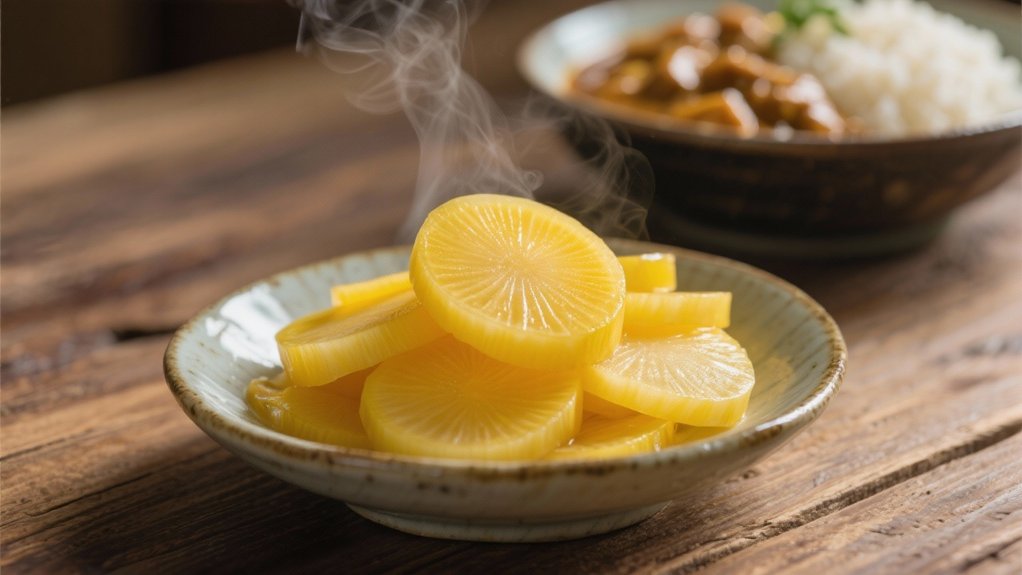
As one of Japan’s most beloved traditional accompaniments, pickled daikon radish delivers a crisp, tangy bite that cuts right through curry’s rich sauce like a palate-cleansing champion.
You’ll love how this simple side dish brightens every spoonful! The health benefits are impressive too – daikon provides vitamin C, fiber, and digestive enzymes that help break down heavy meals.
Quick preparation methods include slicing thin rounds, salting them for thirty minutes, then rinsing and adding rice vinegar with a touch of sugar.
Store-bought versions work perfectly if you’re short on time, offering that same invigorating crunch and acidic punch!
Fried Shrimp (Ebi Fry)
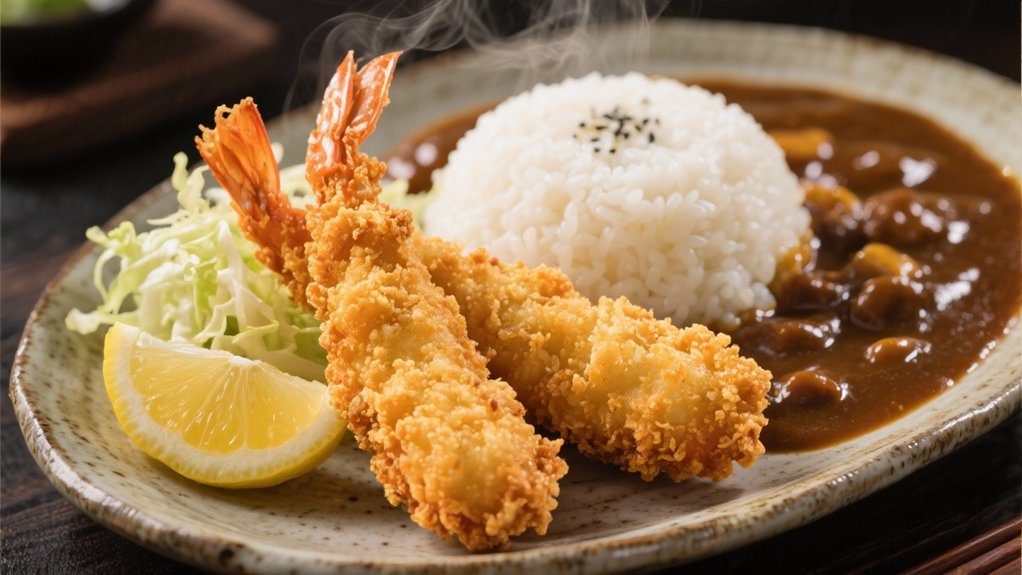
Several crispy, golden shrimp make the perfect protein-packed partner for Japanese curry, adding a delightful textural contrast that transforms your meal into something truly special.
Ebi fry preparation involves coating butterflied shrimp in flour, egg, and panko breadcrumbs before deep-frying until perfectly golden. The result is an incredibly satisfying crunch that pairs beautifully with curry’s creamy richness.
Cucumber Sunomono
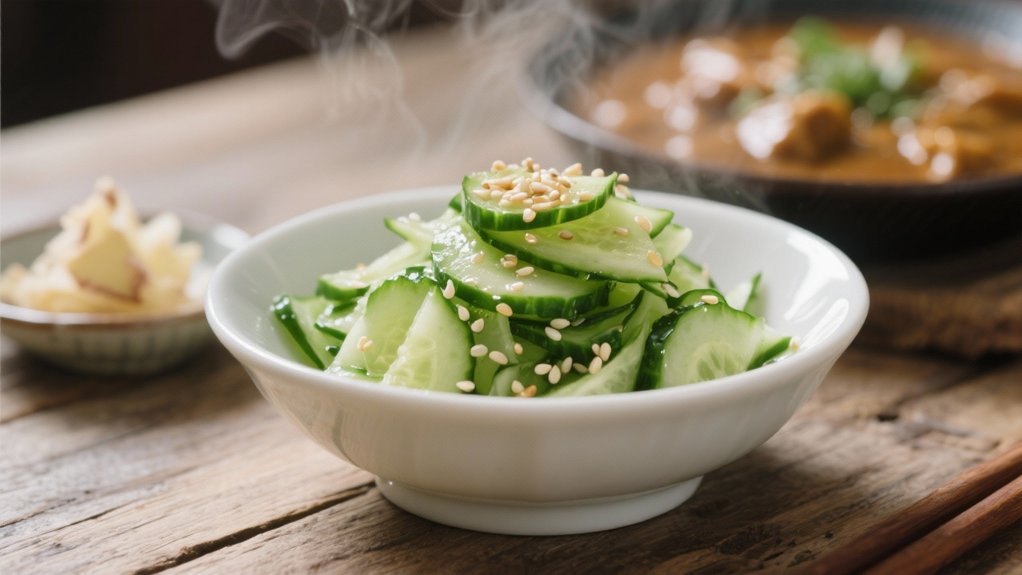
This rejuvenating cucumber salad brings a bright, tangy contrast that cuts through Japanese curry’s rich flavors while cleansing your palate between bites.
The simple preparation involves salting thinly sliced cucumbers to draw out excess moisture, then tossing them with rice vinegar and a touch of sugar.
Different cucumber preparation methods include using a mandoline for paper-thin slices or creating ribbon strips with a vegetable peeler.
Popular sunomono variations add wakame seaweed, sesame seeds, or thin radish slices for extra texture and flavor.
This cooling side dish takes just fifteen minutes to prepare!