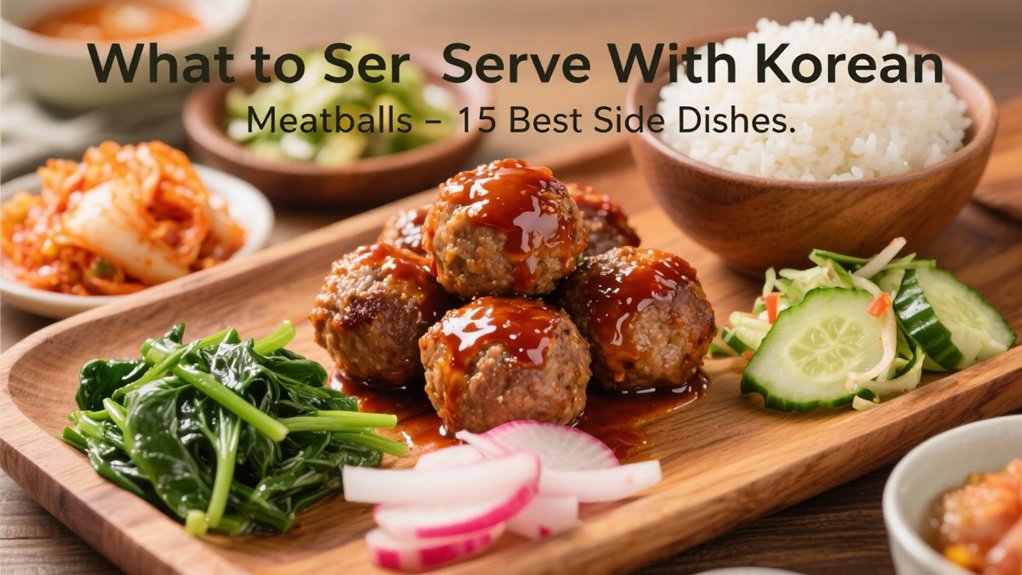
Korean meatballs pair beautifully with steamed white rice that absorbs their savory sauces, while kimchi adds tangy crunch and probiotics. Korean pickled radish (danmuji) refreshes your palate between bites, and japchae noodles provide chewy texture contrast. Cucumber salad offers cooling relief from spicy heat, while coconut rice brings subtle sweetness. Traditional miyeok-guk soup adds authentic warmth, roasted sweet potatoes contribute natural caramelized flavors, and crispy pajeon pancakes round out the meal perfectly. These combinations create restaurant-quality dining experiences that showcase Korean cuisine’s incredible variety.
Steamed White Rice
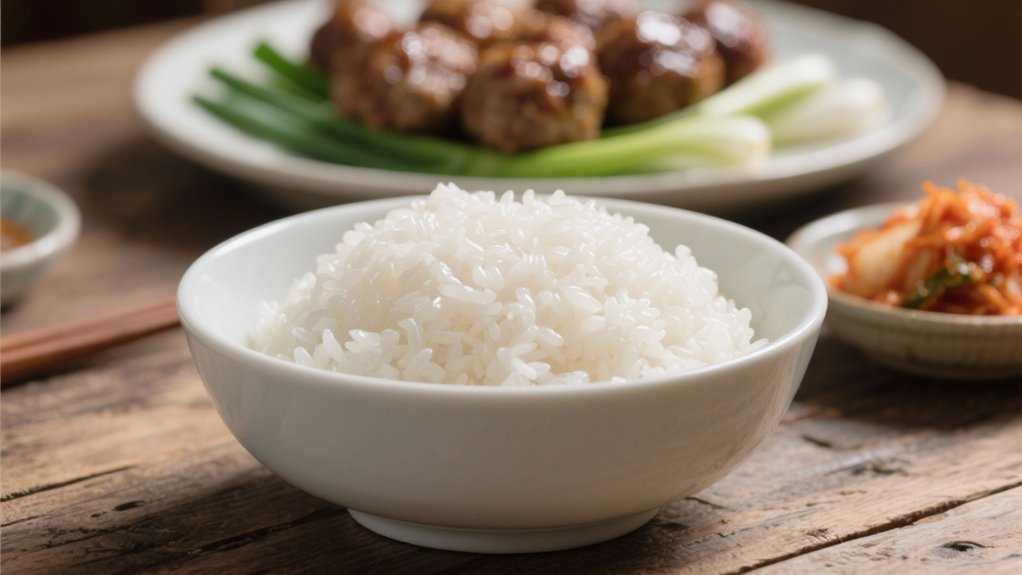
The foundation of countless Asian meals, steamed white rice serves as the perfect neutral canvas for Korean meatballs’ bold, savory flavors.
You’ll find that steamed rice benefits include absorbing those delicious sauces while providing satisfying substance to your meal. The mild taste won’t compete with complex seasonings, making every bite harmonious.
For foolproof results, try these rice cooking tips: rinse grains until water runs clear, use a 1:1.5 rice-to-water ratio, and let it rest five minutes after cooking.
This simple side transforms your Korean meatball dinner into a complete, restaurant-quality experience that’ll have everyone asking for seconds!
Kimchi
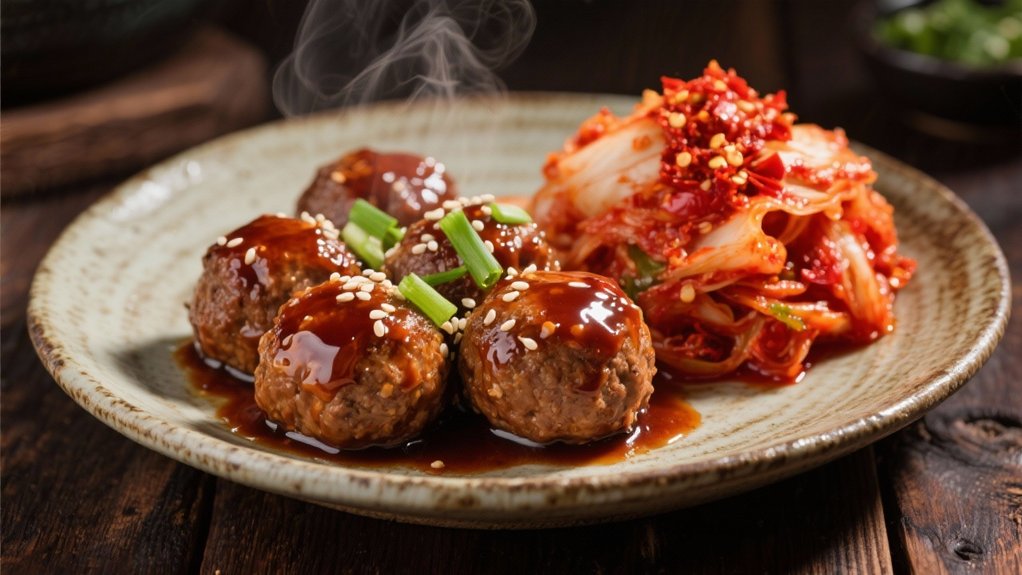
Few side dishes complement Korean meatballs as perfectly as kimchi, the fermented cabbage that brings tangy heat and probiotics to your plate.
This spicy, sour condiment cuts through rich meat flavors while adding a satisfying crunch that makes every bite more exciting. Kimchi varieties range from mild to fiery hot, so you can choose your adventure level!
The traditional napa cabbage version works beautifully, but radish kimchi offers a peppery twist.
Beyond taste, kimchi health benefits include gut-friendly bacteria and vitamins that support digestion. Serve it chilled alongside warm meatballs for a perfect temperature contrast.
Korean Pickled Radish (Danmuji)
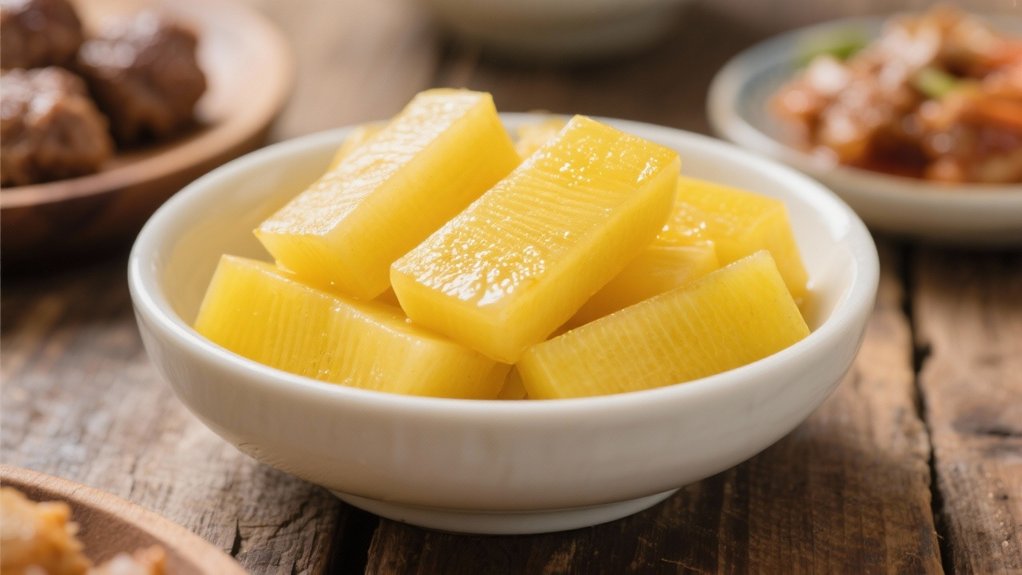
While kimchi brings bold fermented flavors to your meal, Korean pickled radish offers a completely different but equally delightful experience with its sweet, tangy crunch.
This bright yellow pickle, called danmuji, cuts through rich meatball flavors beautifully and refreshes your palate between bites.
Danmuji health benefits include probiotics for digestion and vitamin C for immunity.
You’ll find it at most Asian grocery stores, but making danmuji at home is surprisingly simple! Just slice daikon radish, add rice vinegar, sugar, and turmeric for that signature golden color.
Your homemade version tastes fresher and costs much less.
Japchae (Sweet Potato Starch Noodles)
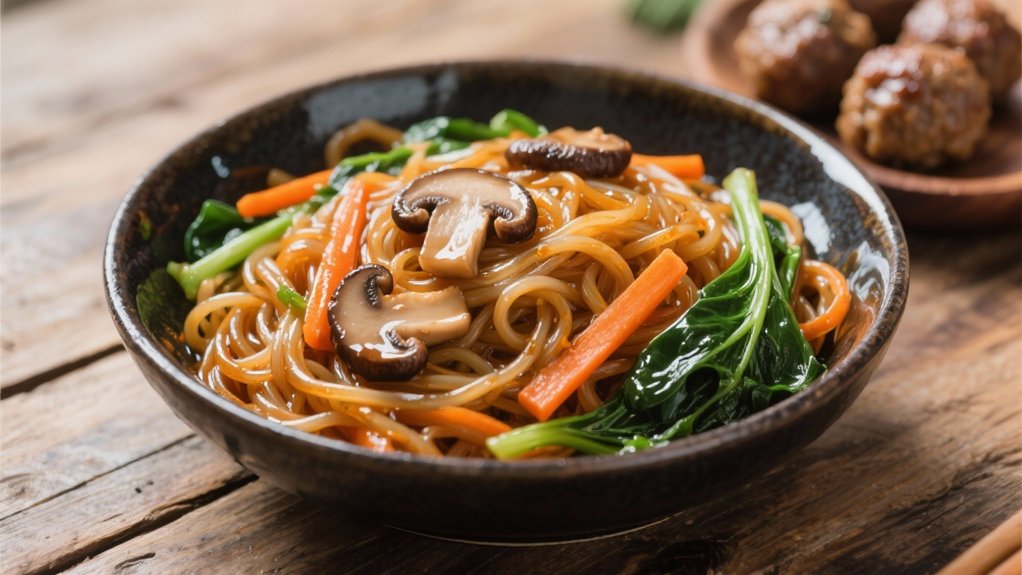
When you want to add satisfying substance to your Korean meatball feast, japchae delivers with its silky sweet potato starch noodles that soak up flavors like little flavor sponges.
These translucent noodles pair beautifully with vegetables like spinach, carrots, and mushrooms, creating a colorful, nutritious side dish.
Japchae health benefits include being gluten-free and packed with fiber from the sweet potato starch.
For successful japchae cooking tips, soak the noodles in warm water until tender, then stir-fry quickly with sesame oil and soy sauce.
The chewy texture perfectly complements your juicy meatballs!
Korean Cucumber Salad (Oi Muchim)
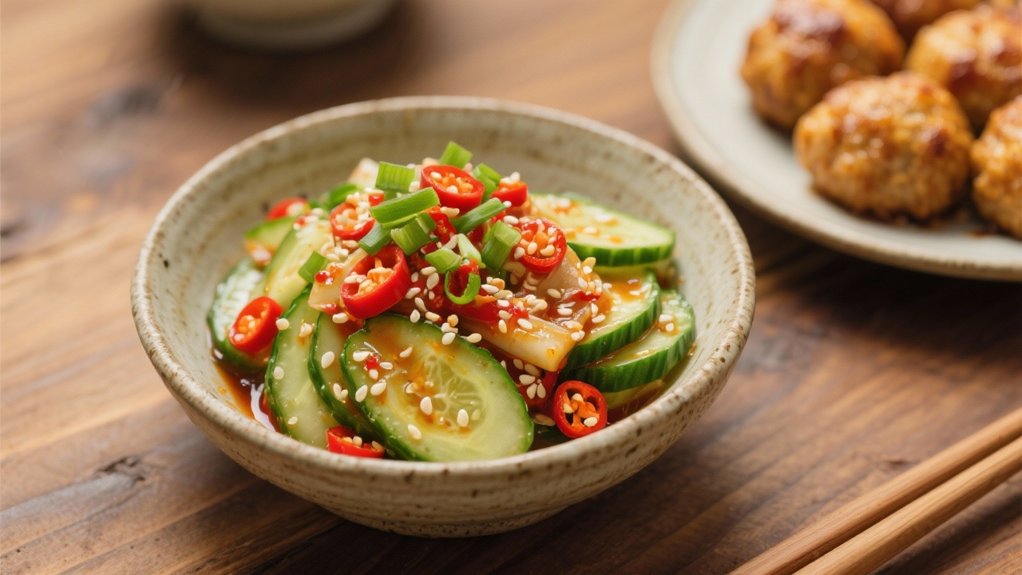
Crisp cucumber ribbons tossed in a tangy, spicy dressing create the perfect cooling contrast to rich Korean meatballs.
This invigorating banchan showcases traditional Korean seasoning techniques, combining rice vinegar, sesame oil, gochugaru (red pepper flakes), and garlic for authentic flavor balance.
You’ll love how the cucumber health benefits shine through – they’re packed with hydration and vitamins while staying incredibly low-calorie!
Simply slice cucumbers paper-thin, salt them briefly to draw out moisture, then toss with the zippy dressing.
The result is a crunchy, palate-cleansing side that cuts through fatty richness beautifully.
It’s ridiculously easy and incredibly satisfying!
Steamed Broccoli With Sesame Oil
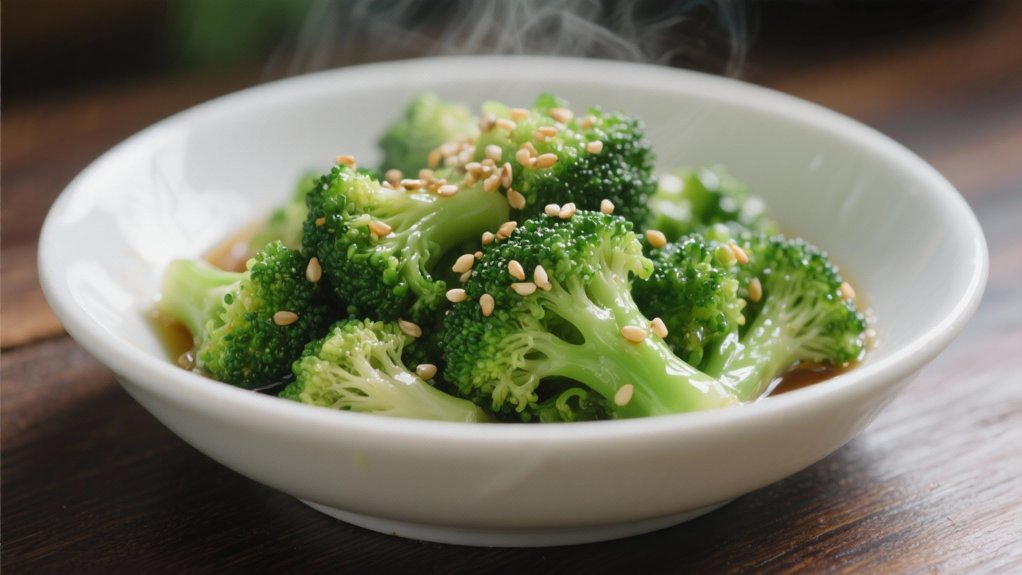
Simple steamed broccoli becomes an elegant Korean side dish when finished with fragrant sesame oil and a sprinkle of toasted sesame seeds.
This nutritious vegetable provides a fresh, healthy contrast to rich Korean meatballs while staying true to Korean flavors.
Here’s how to prepare this delightful side:
- Steam fresh broccoli florets until bright green and tender-crisp.
- Drizzle generously with high-quality sesame oil while still warm.
- Sprinkle with toasted sesame seeds for extra crunch.
- Add a pinch of salt to enhance flavors.
The steamed broccoli absorbs the nutty sesame oil beautifully, creating a simple yet sophisticated accompaniment that complements spicy meatballs perfectly!
Korean Spinach Banchan (Sigeumchi Namul)
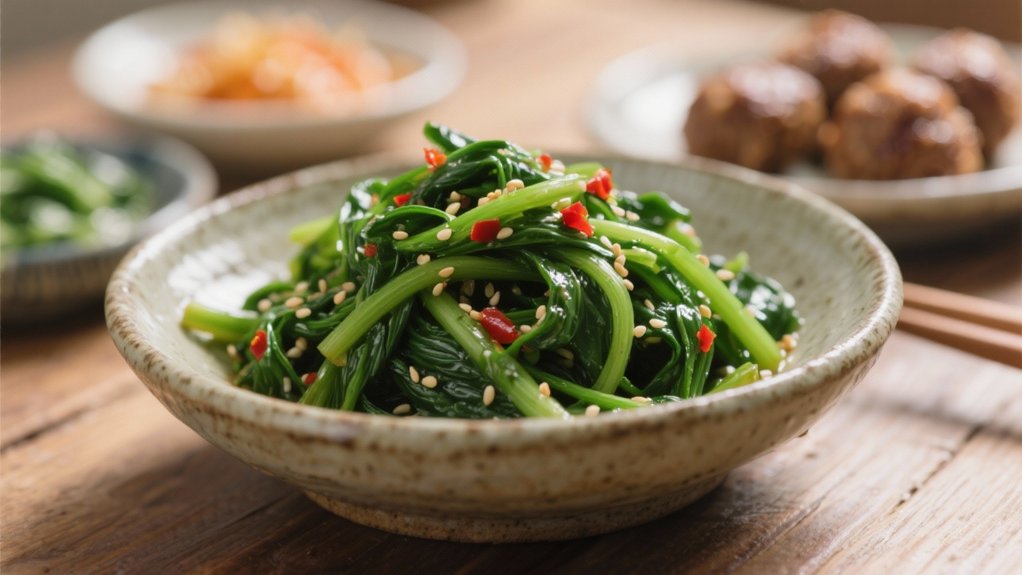
This beloved Korean side dish transforms humble spinach into a flavorful, garlicky banchan that’s practically mandatory at Korean dinner tables.
You’ll blanch fresh spinach, then squeeze out excess water before tossing with sesame oil, garlic, soy sauce, and a pinch of salt.
Korean seasoning tips include using toasted sesame seeds for extra nuttiness and adding a tiny dash of rice vinegar for brightness.
The spinach health benefits are impressive too – you’re getting iron, vitamins, and antioxidants in every bite!
This quick, nutritious side balances the richness of Korean meatballs perfectly while adding vibrant green color.
Miso Soup
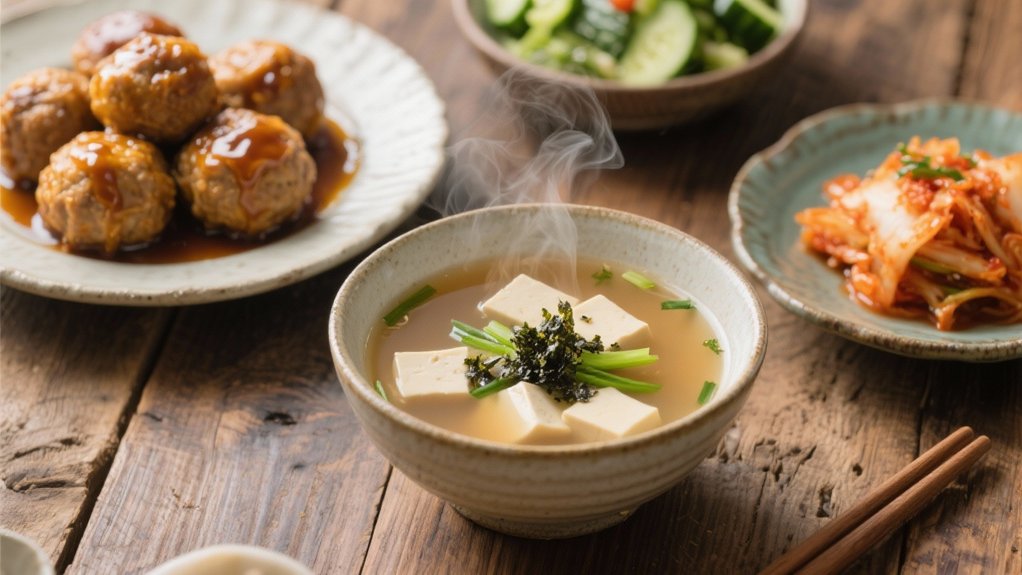
While leafy greens bring freshness to your Korean meal, a warm, comforting soup adds the perfect liquid element to round out your dining experience.
Miso soup perfectly complements Korean meatballs with its umami-rich broth and simple preparation. The miso benefits include probiotics and essential minerals that support digestion after your hearty meal.
Here are popular miso types to try:
- White miso – mild, slightly sweet flavor
- Red miso – deeper, saltier taste
- Mixed miso – balanced combination
- Barley miso – earthy, robust profile
Simply whisk your chosen miso paste into hot dashi broth, add tofu cubes and scallions, then serve alongside those delicious meatballs!
Korean Corn Cheese
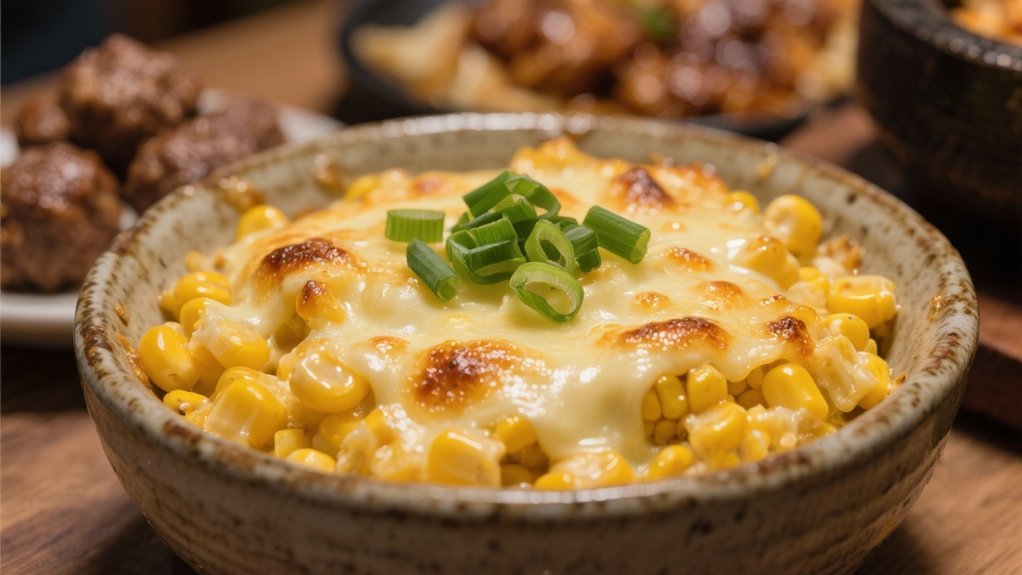
When Korean comfort food meets cheesy indulgence, Korean corn cheese becomes the ultimate crowd-pleasing side dish that’ll have everyone reaching for seconds.
This bubbly, golden masterpiece combines sweet corn kernels with melted mozzarella, creating a gooey sensation that perfectly balances the savory richness of Korean meatballs.
Most corn cheese recipes call for simple ingredients like canned corn, cheese, butter, and a touch of mayo for extra creaminess.
Serving suggestions include baking it in individual cast-iron skillets for that authentic Korean BBQ restaurant vibe, or preparing one large dish for family-style sharing that encourages delicious double-dipping!
Garlic Bok Choy
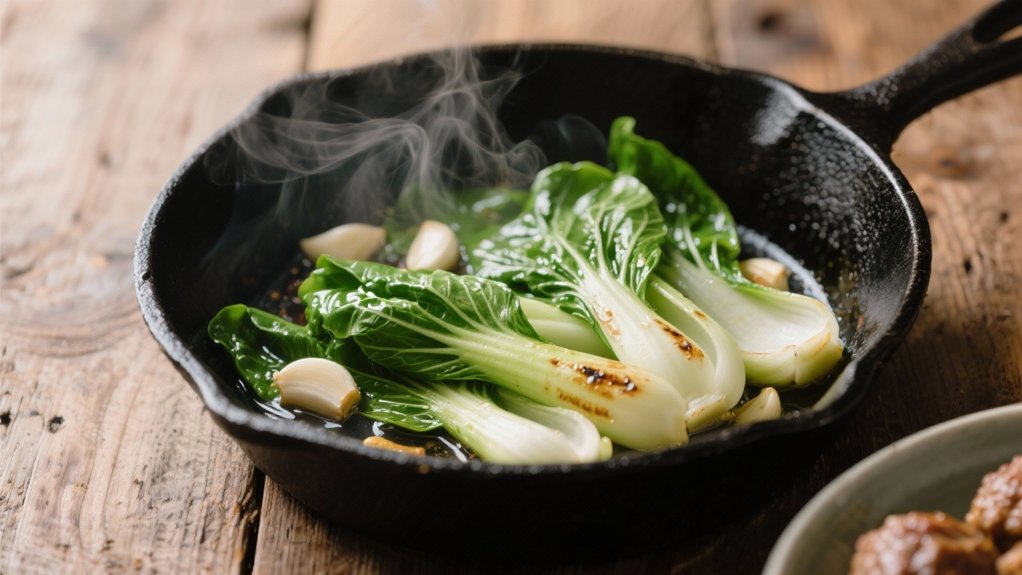
Fresh bok choy transforms into a vibrant, nutrient-packed side dish that brings crisp texture and mild, slightly sweet flavors to complement your Korean meatballs perfectly.
This leafy green cooks quickly and pairs beautifully with aromatic garlic for an irresistible combination.
Here’s why garlic bok choy makes an excellent choice:
- Quick cooking time – ready in just 3-4 minutes
- Packed with vitamins – bok choy health benefits include vitamin C and calcium
- Simple garlic preparation techniques – minced, sliced, or whole cloves work wonderfully
- Light, invigorating contrast – balances rich meatball flavors perfectly
You’ll love how this vegetable maintains its satisfying crunch while absorbing those delicious garlic flavors!
Korean Bean Sprout Salad (Kongnamul Muchim)
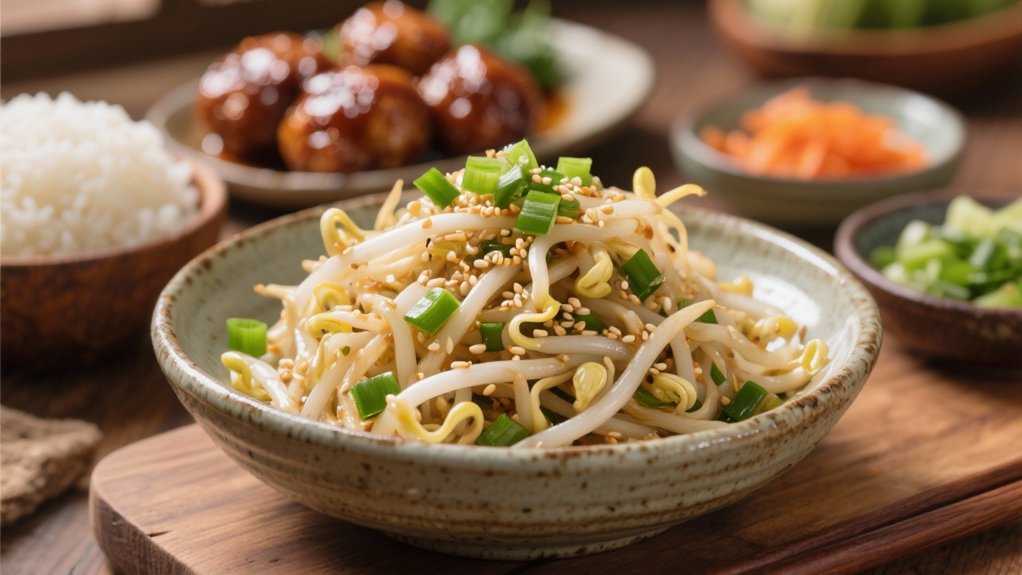
Another fantastic vegetable option that brings authentic Korean flavors to your table is kongnamul muchim, a invigorating bean sprout salad that’s been a staple in Korean households for generations.
This crunchy, invigorating side dish offers impressive health benefits, packed with vitamin C, fiber, and protein while staying incredibly low in calories.
The cooking techniques are wonderfully simple – you’ll blanch fresh bean sprouts for just two minutes, then toss them with sesame oil, garlic, scallions, and a touch of salt.
The result is a clean, crisp salad that perfectly balances the rich, savory flavors of your Korean meatballs!
Coconut Rice
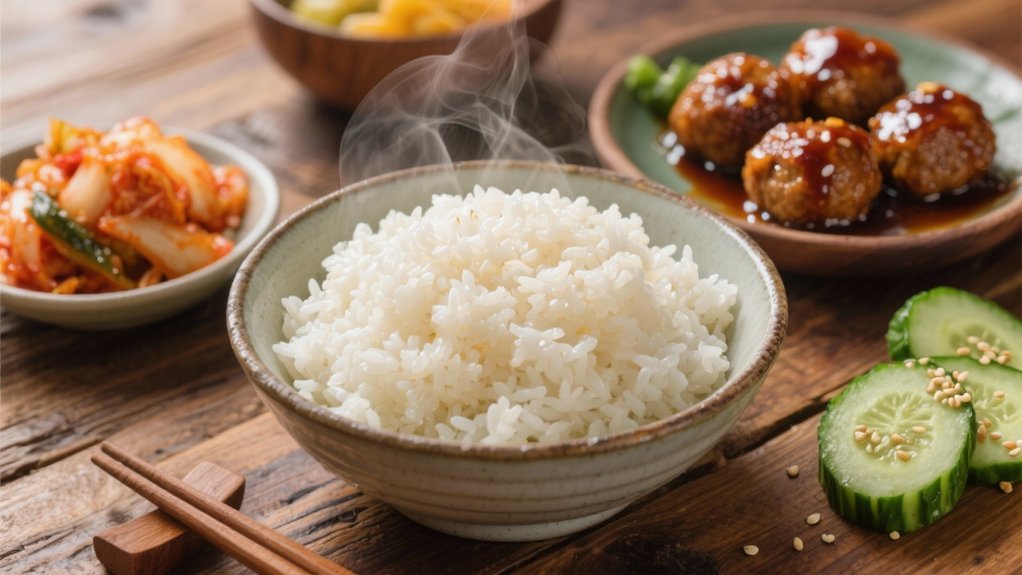
Fragrant coconut rice transforms ordinary steamed rice into something magical that pairs beautifully with Korean meatballs. The coconut flavor adds a tropical twist that balances the savory, spicy elements of Korean cuisine perfectly.
You’ll love how the creamy sweetness complements bold meatball flavors!
Here’s what makes this side dish special:
- Easy preparation – just substitute coconut milk for water
- Rich, creamy texture that absorbs meatball sauce beautifully
- Subtle sweetness that tames spicy heat
- Aromatic appeal that fills your kitchen with amazing scents
This crowd-pleasing rice elevates any Korean meal effortlessly.
Korean Seaweed Soup (Miyeok-guk)
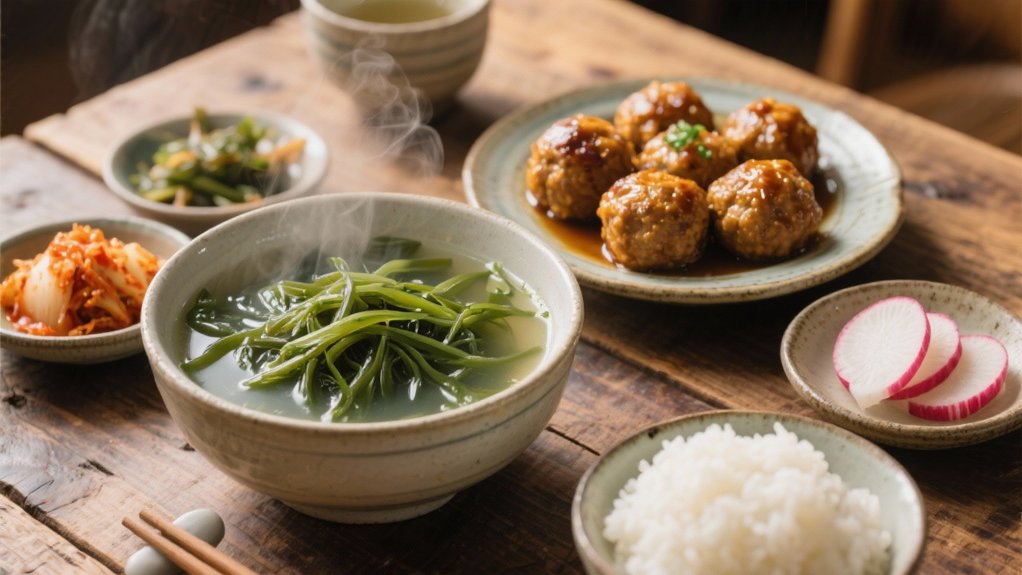
When you want to add authentic Korean flavors to your meatball dinner, miyeok-guk delivers the perfect combination of comfort and tradition.
This gentle seaweed soup brings warmth to your table while honoring Korean traditions that date back centuries. The mild, oceanic taste won’t compete with your meatballs’ bold flavors, creating perfect harmony instead!
Seaweed benefits include loads of vitamins, minerals, and iodine that boost your meal’s nutritional value.
You’ll find dried miyeok at Asian markets, and the soup comes together quickly with beef broth, garlic, and sesame oil. It’s surprisingly easy to make!
Roasted Sweet Potatoes
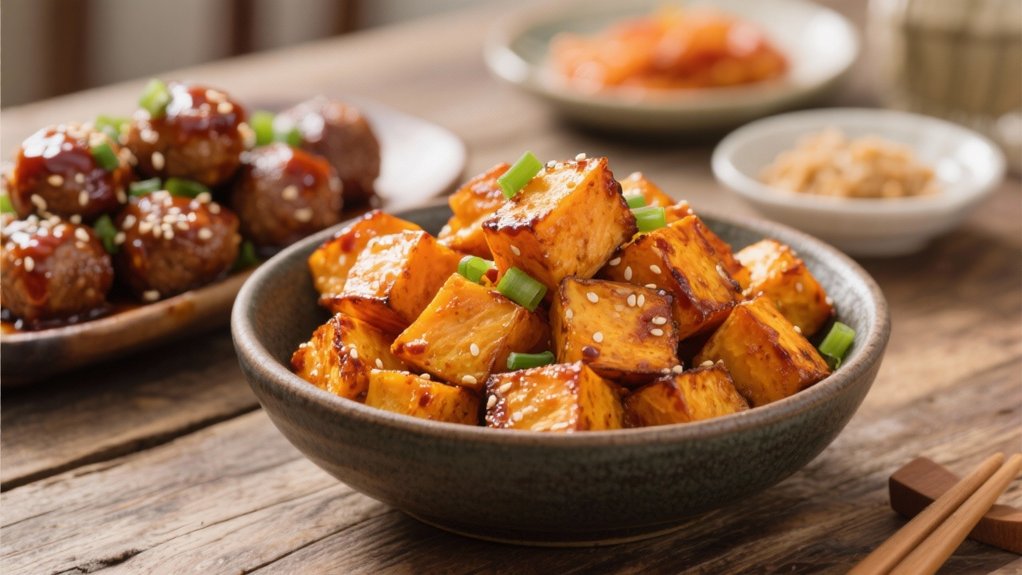
Moving from soup to something heartier, roasted sweet potatoes bring natural sweetness and satisfying substance to your Korean meatball spread.
These orange gems offer impressive roasted sweet potato benefits, including fiber, vitamins, and that cozy comfort factor we all crave.
Simple sweet potato recipes work best here:
- Slice into rounds, drizzle with olive oil
- Season with salt, pepper, and paprika
- Roast at 425°F for 25-30 minutes
- Flip halfway through for even browning
The natural caramelization balances savory meatball flavors perfectly!
You’ll love how their creamy texture contrasts with tender meat, creating a satisfying bite every time.
Korean Scallion Pancakes (Pajeon)
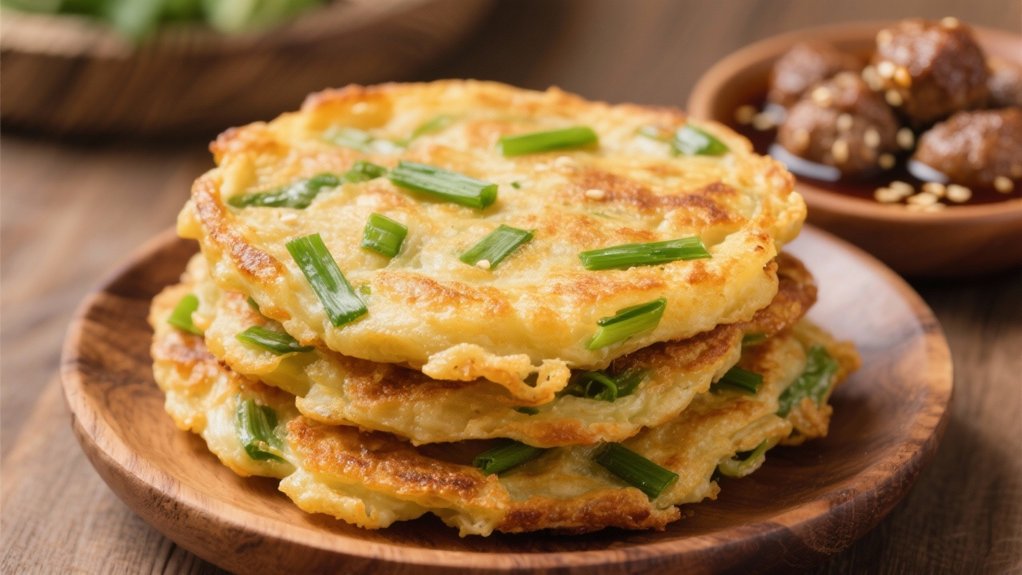
Several crispy, savory pancakes can transform your Korean meatball dinner into something truly special, and pajeon leads the pack with its perfect blend of chewy texture and fresh scallion flavor.
You’ll love how this traditional Korean pancake balances the rich meatballs with its light, satisfying crunch. Korean pancake variations include seafood, kimchi, or vegetable versions, but classic scallion works beautifully here.
Most scallion pancake recipes require just flour, water, eggs, and plenty of green onions. The golden, crispy edges and tender center create amazing texture contrast that’ll make your meal feel like a restaurant experience!