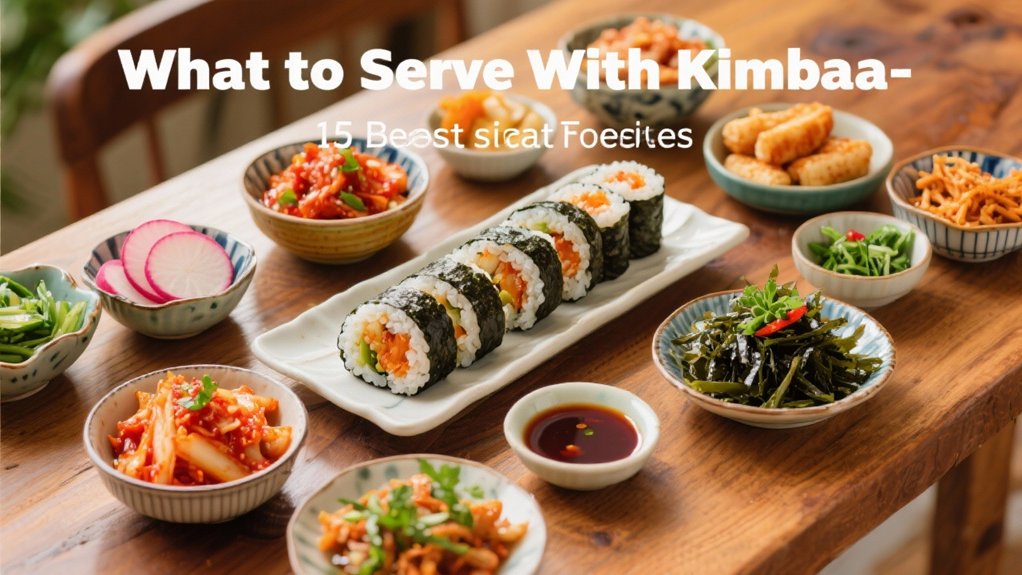
Kimbap pairs beautifully with traditional Korean side dishes that balance its mild flavors with bold, tangy elements. Kimchi brings fermented spice and crunch, while pickled radish (danmuji) adds sweet-sour brightness. Warm miso soup provides comforting contrast, and seasoned spinach banchan offers earthy freshness. Japchae noodles contribute chewy texture, Korean potato salad delivers creamy fusion flavors, and corn cheese creates indulgent comfort. Green tea or barley tea complete the authentic experience perfectly, and there’s so much more to discover!
Kimchi – Fermented Cabbage With Bold Flavor
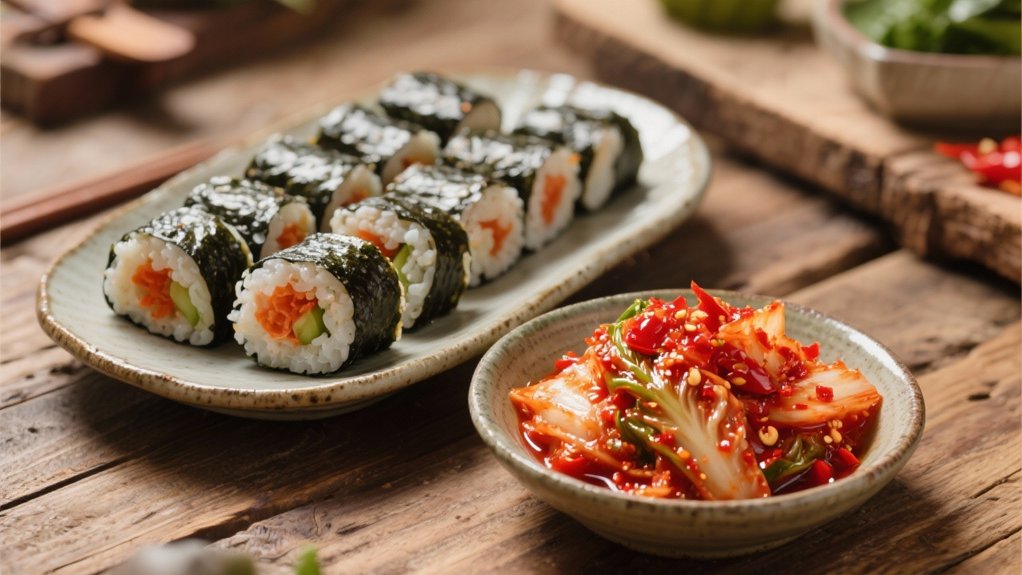
The tangy crunch of kimchi makes it the perfect companion to kimbap’s mild, savory flavors.
This spicy fermented cabbage cuts through the rice’s richness while adding a zesty kick that’ll wake up your taste buds!
The kimchi fermentation process creates those signature sour notes and bubbly texture that pairs beautifully with kimbap’s clean taste.
You’ll love how the bold, garlicky heat balances out each bite.
Plus, kimchi health benefits include probiotics for gut health and loads of vitamins.
Serve it chilled alongside your kimbap rolls for an authentic Korean experience that’s both delicious and nutritious!
Pickled Radish (Danmuji) – Sweet and Tangy Crunch
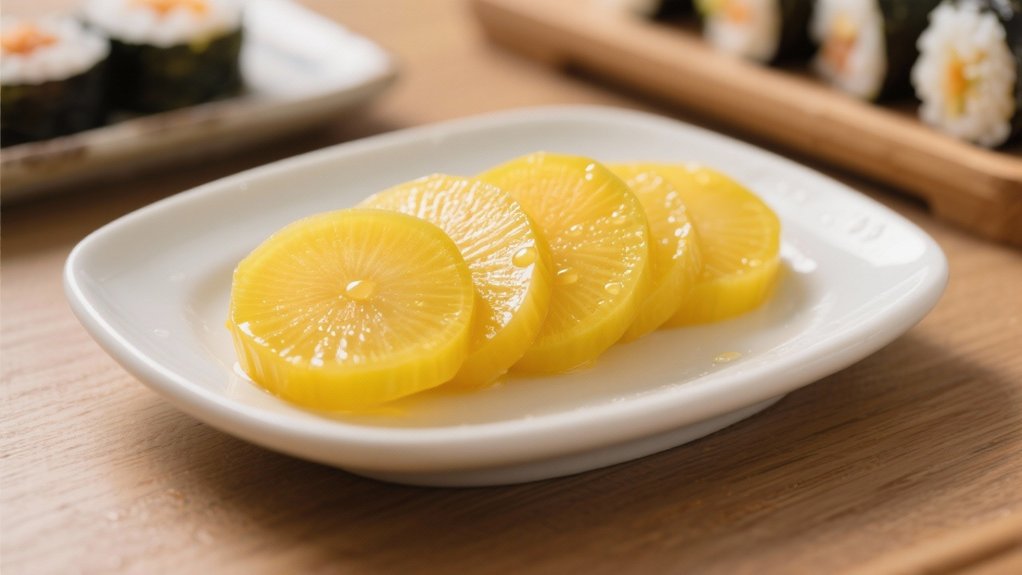
Bright yellow pickled radish brings a delightful sweet-and-sour punch that perfectly complements kimbap’s savory rice rolls! This crunchy side dish, called danmuji, cuts through rich flavors while adding invigorating texture to every bite.
Korean pickling transforms ordinary daikon into something magical, creating that signature golden color and addictive tang you’ll crave. You can find pre-made danmuji at Asian markets, or try making your own using different radish varieties like turnips or regular red radishes.
The sweet-tart flavor profile cleanses your palate between bites, making each piece of kimbap taste fresh and vibrant again!
Miso Soup – Light and Warming Broth
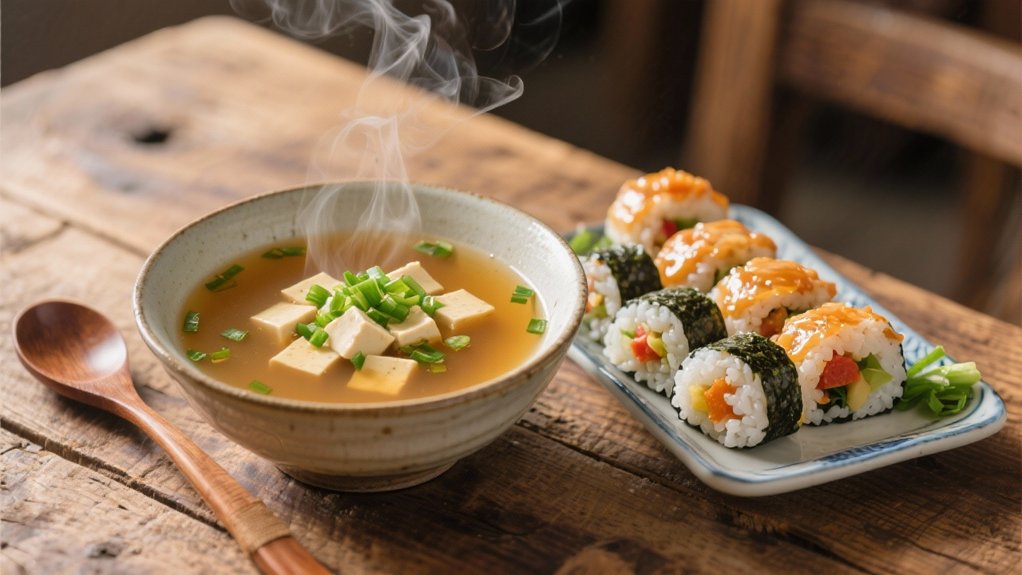
When you’re enjoying savory kimbap rolls, a warm bowl of miso soup creates the perfect balance with its gentle, umami-rich broth!
This traditional Japanese cuisine staple pairs beautifully with Korean dishes, offering a light, comforting contrast to kimbap’s dense, flavorful filling.
The salty-sweet miso paste benefits include probiotics and essential minerals that support digestion.
You can make it simple with just miso paste, hot water, and scallions, or add tofu cubes and seaweed for extra texture.
The soup’s warming qualities help cleanse your palate between bites, making each kimbap piece taste fresh and exciting again!
Korean Spinach Banchan (Sigeumchi Namul) – Seasoned Greens
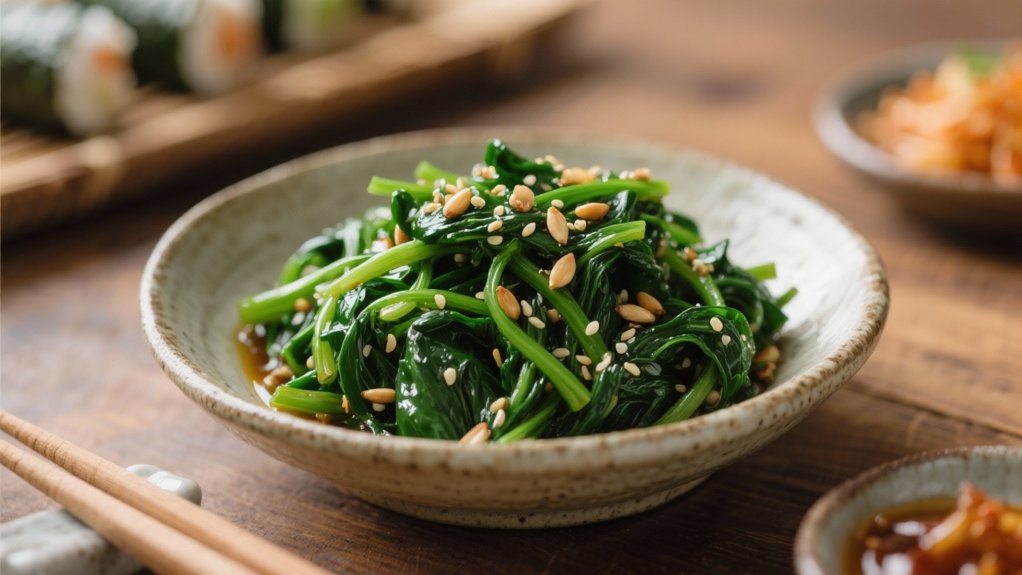
Moving from comforting liquids to invigorating vegetables, Korean spinach banchan brings vibrant green color and clean, earthy flavors to your kimbap spread!
This simple side dish showcases traditional cooking techniques that transform ordinary spinach into something special. The blanching method preserves nutrients while creating perfect texture.
Essential flavor combinations include:
- Sesame oil for nutty richness
- Garlic for aromatic depth
- Soy sauce for umami balance
- Toasted sesame seeds for crunch
You’ll love how quickly this comes together!
Just blanch fresh spinach, squeeze out excess water, then toss with seasonings. The result perfectly complements kimbap’s mild flavors.
Japchae – Sweet Potato Starch Noodles
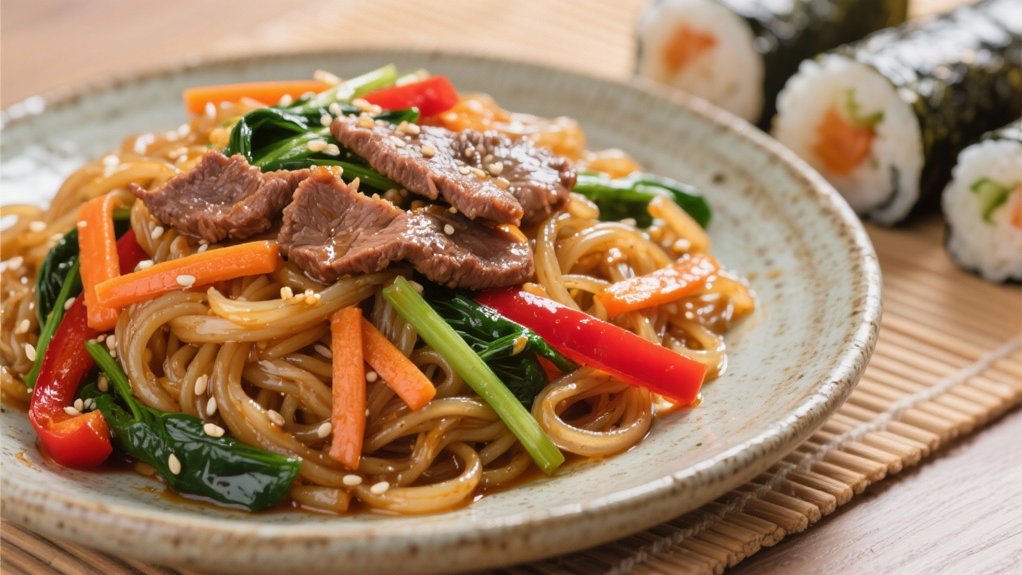
These translucent, chewy noodles bring a delightful textural contrast that makes them one of Korea’s most beloved side dishes! Often served with a tangy dipping sauce or paired with vibrant vegetables, these noodles enhance any meal with their unique flavor and chewy consistency. Whether enjoyed as a standalone dish or as one of the best side dishes for pastrami, they elevate the dining experience by adding variety and interest to the plate. Their versatility makes them a favorite not only in Korean cuisine but also in fusion recipes around the world. Their unique ability to soak up flavors from sauces and broths enhances their appeal, making them a versatile addition to any meal. For those seeking dynamic culinary experiences, experimenting with what to pair with tostadass can further elevate the dining experience, showcasing how these noodles can complement a variety of textures and tastes. Whether served alongside grilled meats or tangy pickled vegetables, they promise to be a delightful accompaniment.
Japchae perfectly complements kimbap‘s fresh, clean flavors with its slightly sweet, savory profile. You’ll love how the slippery noodles dance around your chopsticks, mixed with colorful vegetables like carrots, spinach, and mushrooms.
Sweet potato health benefits include vitamin A and fiber, making this dish both tasty and nutritious.
Popular japchae variations feature beef, tofu, or extra vegetables depending on your preferences. Serve it warm or at room temperature – either way, it’s absolutely delicious alongside your kimbap!
Korean Cucumber Salad (Oi Muchim) – Refreshing and Crisp
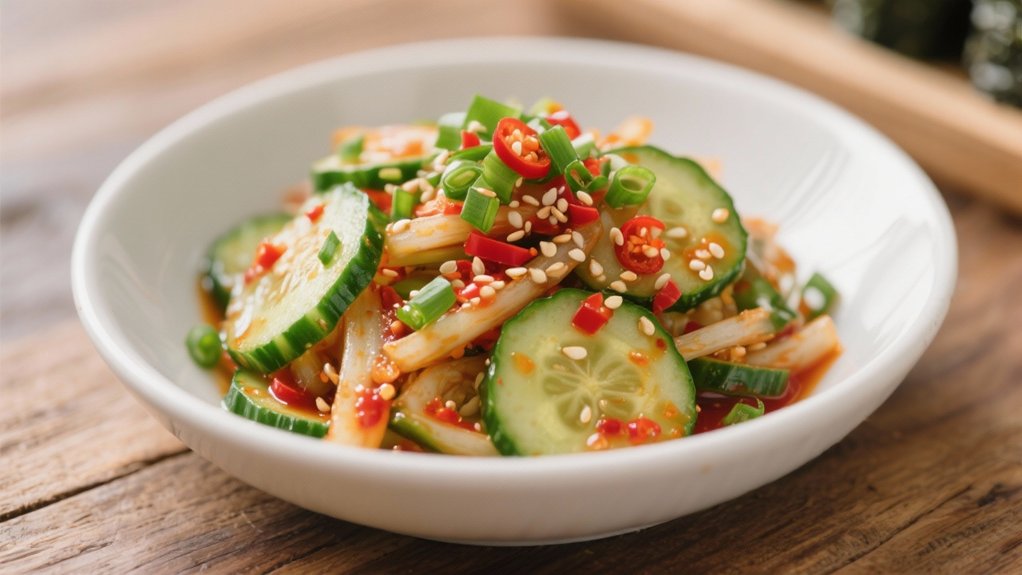
While japchae offers wonderful warmth and heartiness, Korean cucumber salad (oi muchim) brings a completely different energy to your kimbap meal with its bright, stimulating crunch!
This revitalizing side dish perfectly balances rich kimbap flavors with its clean, zesty taste. Cucumber benefits include natural hydration and digestive support, making this salad both delicious and nourishing.
Oi muchim variations let you customize spice levels and add creative touches:
- Classic version – sesame oil, garlic, and gochugaru
- Mild option – skip chili flakes for sensitive palates
- Extra kick – add fresh chilies or extra gochugaru
- Sweet twist – include thin apple slices
Seaweed Soup (Miyeok-guk) – Nutritious Clear Broth
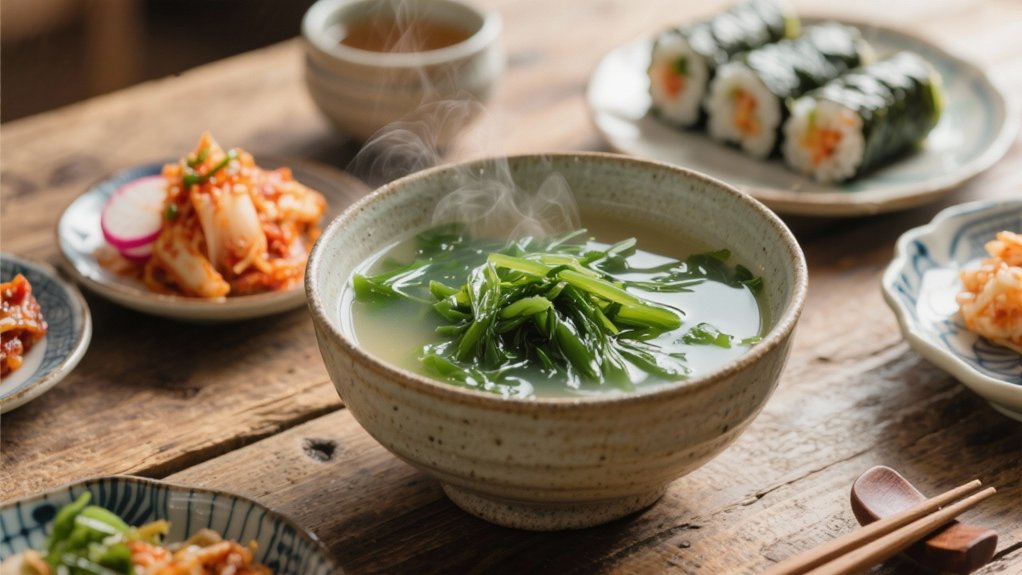
After enjoying the crisp refreshment of cucumber salad, seaweed soup (miyeok-guk) delivers comforting warmth and incredible nutrition to round out your kimbap feast!
This traditional Korean soup features tender seaweed in a light, savory broth that’s absolutely packed with minerals, vitamins, and iodine. The seaweed benefits include supporting thyroid health and providing essential nutrients your body craves.
Miyeok guk variations range from simple vegetarian versions to heartier options with beef or seafood.
You’ll love how the gentle, oceanic flavor cleanses your palate between bites of kimbap, while the warm broth aids digestion and keeps you satisfied longer.
Korean Bean Sprout Salad (Kongnamul Muchim) – Crunchy Texture
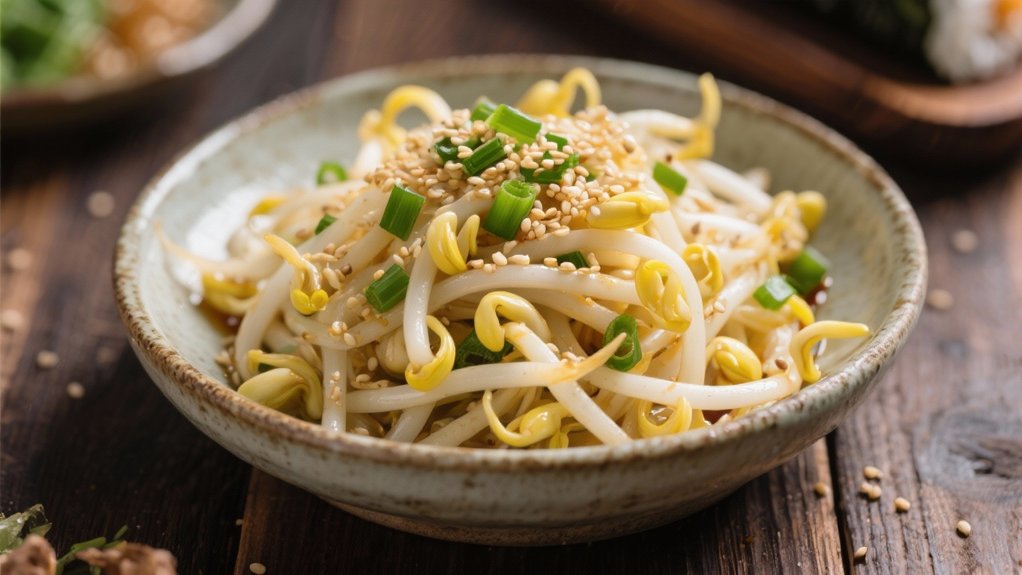
Since you’re craving another invigorating texture contrast, Korean bean sprout salad (kongnamul muchim) brings an irresistible crunch that perfectly complements kimbap’s soft rice and tender fillings!
This stimulating banchan delivers amazing nutritional benefits, including vitamin C, fiber, and protein. The crisp sprouts get tossed with sesame oil, garlic, and scallions for incredible flavor.
Here’s why you’ll love this crunchy side:
- Takes only 10 minutes to prepare
- Provides satisfying textural contrast to soft kimbap
- Offers endless ingredient variations with chili flakes or vinegar
- Stays fresh for days in your refrigerator
Gyoza or Korean Mandu – Pan-Fried Dumplings
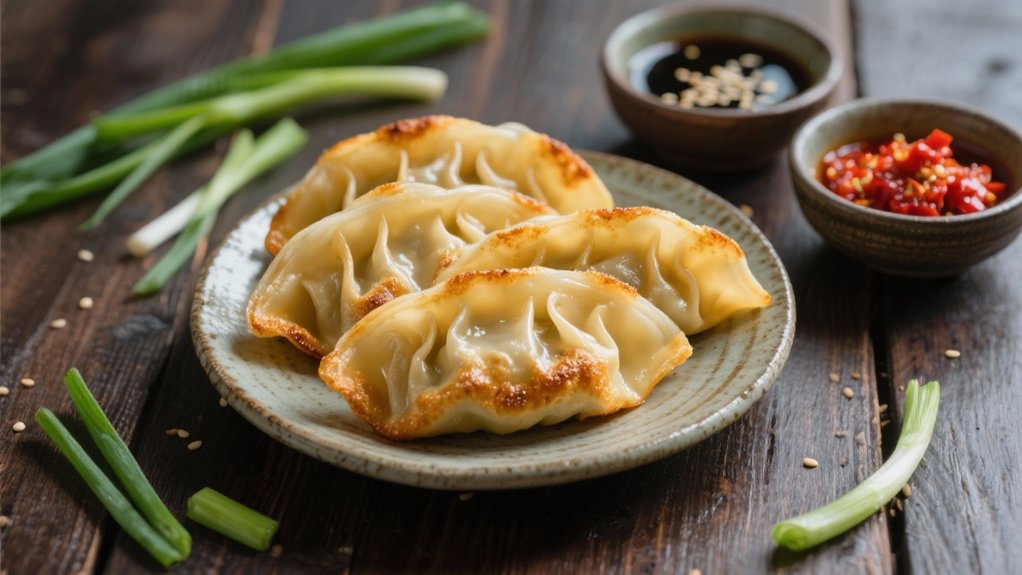
Few side dishes create as much excitement at the dinner table as crispy-bottomed gyoza or Korean mandu, those delightful pan-fried dumplings that bring both comfort and satisfaction to your kimbap meal!
These little pockets of joy offer endless possibilities with gyoza fillings ranging from classic pork and cabbage to vegetarian mushroom mixtures.
You’ll find dough variations too, from thin wrappers that crisp beautifully to thicker ones that stay chewy.
The contrast between the golden, crunchy bottom and tender steamed top creates textural magic that perfectly complements kimbap’s soft rice rolls.
Serve them hot with soy dipping sauce!
Korean Egg Roll (Gyeran-mari) – Fluffy and Mild
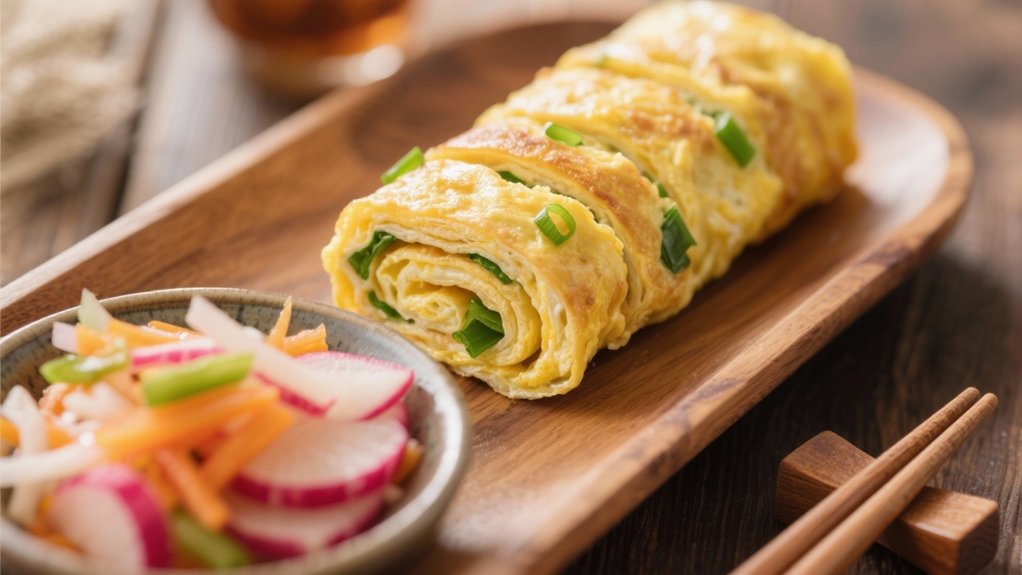
While dumplings bring bold flavors and exciting textures, Korean egg roll (gyeran-mari) offers a gentle, comforting presence that balances your kimbap spread with its mild sweetness and cloud-like fluffiness.
This popular Korean breakfast staple creates the perfect harmony alongside rice rolls, bringing soft textures that won’t compete with kimbap’s savory elements.
Here’s why gyeran-mari works so beautifully:
- Silky texture melts in your mouth
- Subtle sweetness cleanses your palate
- Quick preparation using simple egg roll ingredients
- Visual appeal adds sunny yellow colors
You’ll love how this fluffy creation provides gentle contrast!
Spicy Rice Cakes (Tteokbokki) – Chewy and Flavorful
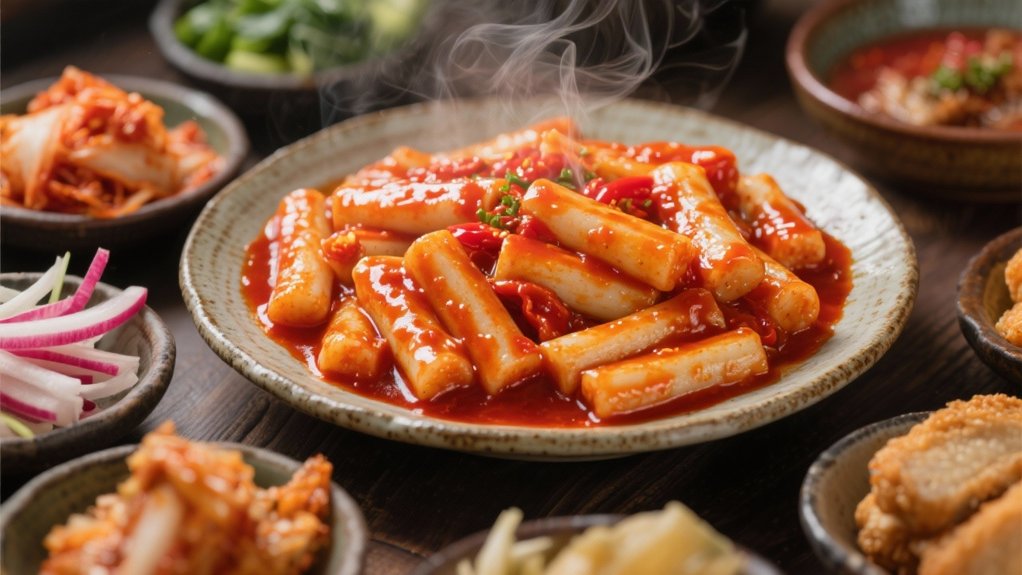
Plunge into the bold, spicy world of tteokbokki, where chewy rice cakes swim in a fiery red sauce that’ll wake up your taste buds and create an exciting contrast to kimbap’s milder flavors.
This beloved Korean street food brings serious heat to your meal! You can explore spicy variations by adding fish cakes, boiled eggs, or cabbage for extra texture and flavor.
The cooking methods are pretty straightforward – simmer rice cakes in gochujang-based sauce until they’re tender and glossy.
Start with less spice if you’re heat-sensitive, then gradually work your way up to Korean-level fire!
Korean Potato Salad – Creamy Western-Korean Fusion
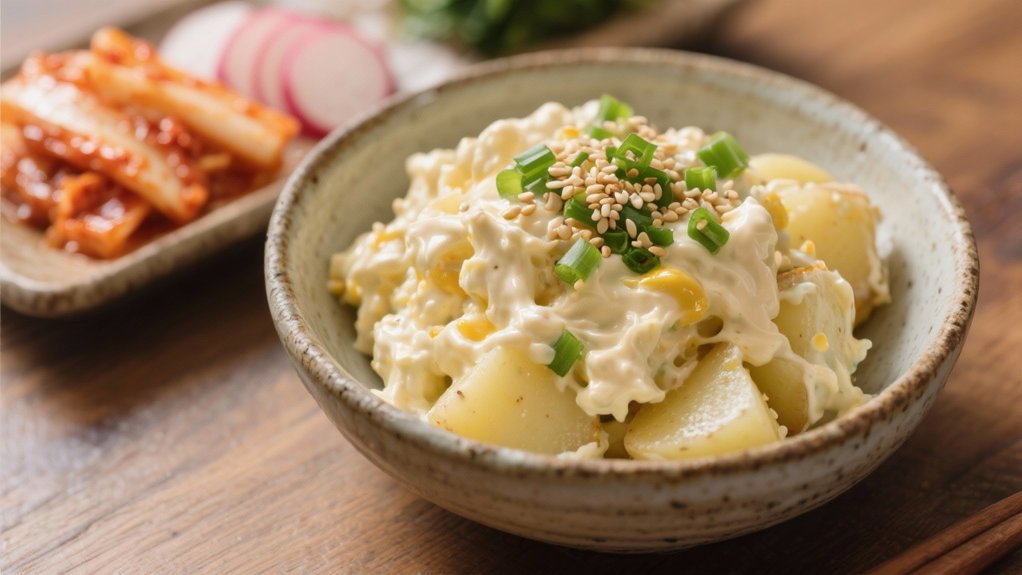
Korean potato salad transforms the classic Western dish into something uniquely delicious by adding sweet ingredients like apples, corn, and sometimes even raisins that’ll surprise your taste buds in the best way possible.
This creamy texture perfectly balances kimbap’s clean flavors, creating an exciting contrast that keeps you coming back for more bites.
Here’s why this fusion side dish works so well:
- Sweet apples add unexpected crunch and freshness
- Corn kernels bring natural sweetness and color
- Creamy mayonnaise base feels familiar yet different
- Korean flavors blend seamlessly with Western comfort
You’ll love how this playful twist elevates your entire meal experience!
Pickled Vegetables (Jangajji) – Assorted Preserved Vegetables
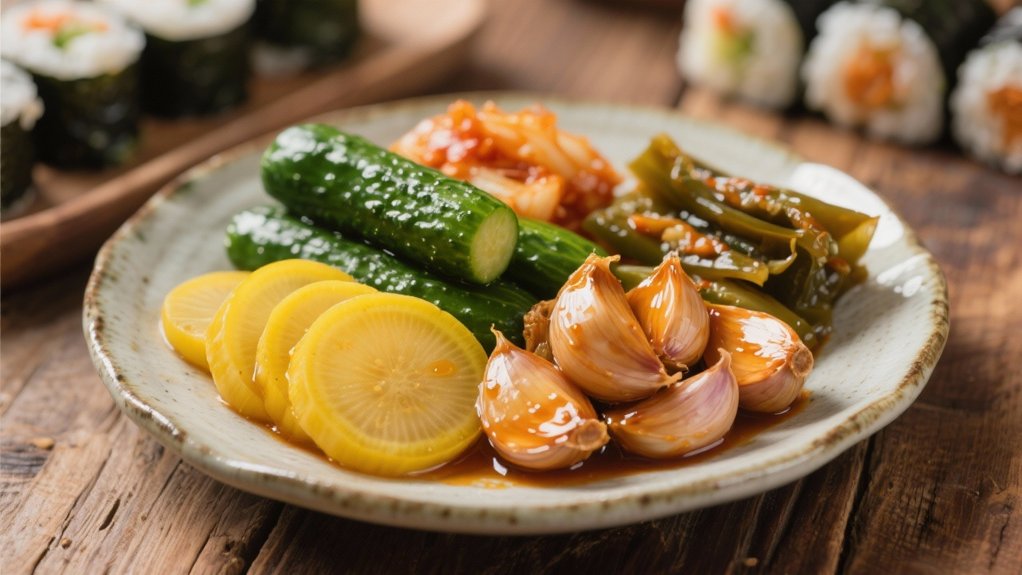
When you’re looking for that perfect acidic bite to cut through kimbap’s rich flavors, pickled vegetables deliver exactly what your taste buds crave.
These tangy, crunchy gems showcase Korea’s mastery of vegetable preservation, transforming everyday produce into flavor-packed accompaniments. You’ll find jangajji made from radishes, cucumbers, onions, and garlic, each offering unique fermented flavors that brighten your meal.
The pickling process creates that satisfying crunch and zesty punch that makes each bite of kimbap more exciting. Whether you buy them from Korean markets or make your own, these preserved vegetables add essential contrast and complexity to your dining experience!
Korean Corn Cheese – Melted Comfort Food
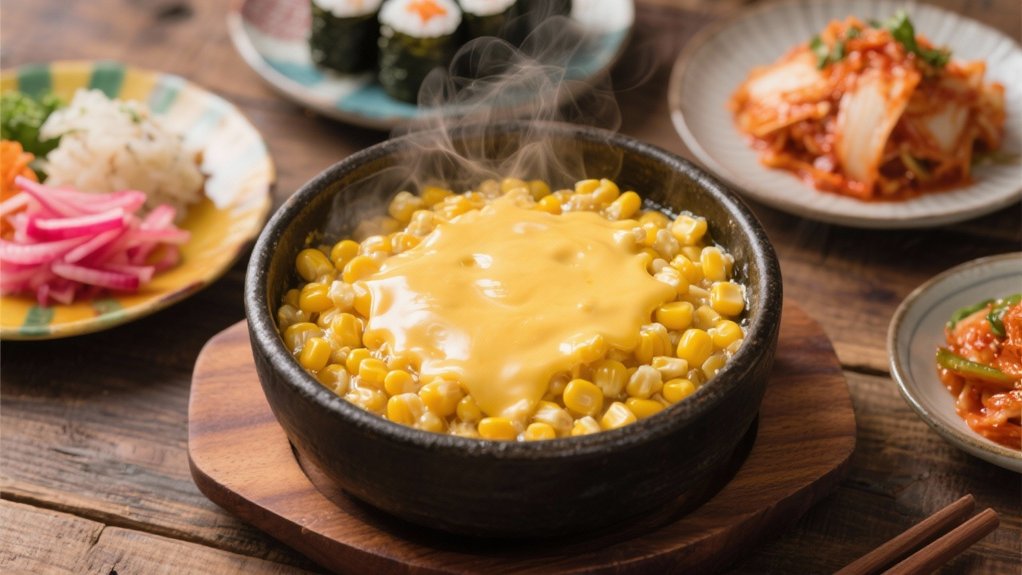
Few comfort foods can match the irresistible appeal of bubbling corn cheese, a modern creation that has captured hearts across Korea and beyond.
This golden, gooey delight transforms simple corn kernels into pure comfort through melted cheese magic. You’ll discover numerous corn cheese variations that perfectly complement kimbap’s fresh flavors.
Essential serving tips for maximum enjoyment:
- Serve immediately while cheese bubbles and stretches
- Provide small spoons for easy scooping
- Keep portions warm in individual cast iron dishes
- Offer crispy crackers or bread for dipping
The sweet corn balances beautifully against kimbap’s savory elements, creating memorable meal combinations.
Green Tea or Barley Tea – Traditional Korean Beverages
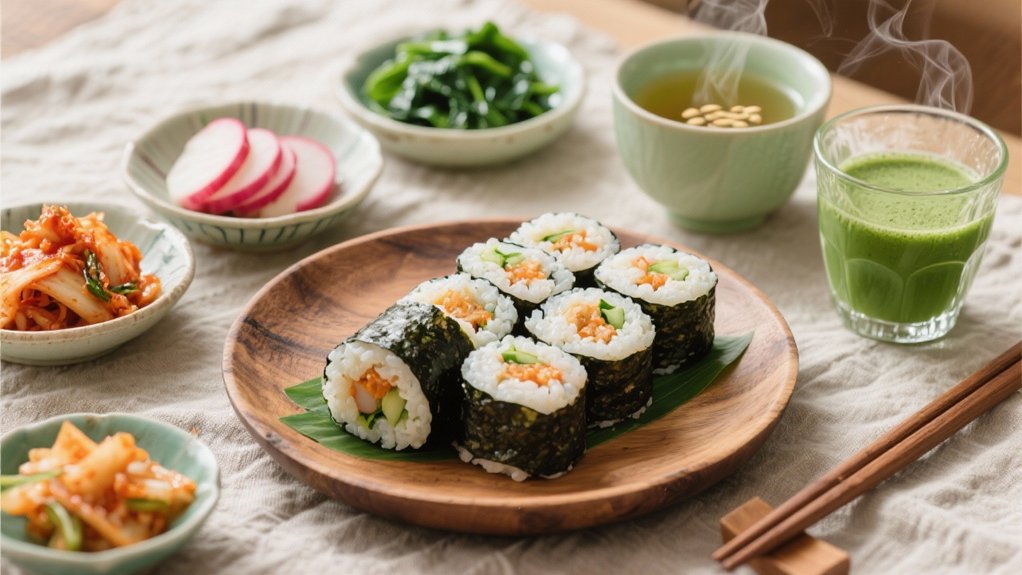
While corn cheese provides the perfect warm, indulgent finish to your kimbap meal, nothing cleanses the palate quite like traditional Korean teas that have accompanied meals for centuries.
Green tea offers a light, invigorating complement that cuts through rich flavors, while barley tea provides a nutty, caffeine-free option that’s perfect any time of day.
These traditional tea varieties carry deep cultural beverage significance in Korean dining, symbolizing hospitality and harmony.
You can serve them hot or cold depending on the season, and both teas aid digestion after enjoying your delicious kimbap feast!