
The best bossam side dishes create a perfect balance against the rich pork belly with fermented kimchi like baechu kimchi and kkakdugi providing tangy probiotics, while fresh musaengchae radish salad adds crispy texture. Crisp sangchu lettuce wraps let you customize each bite, and bold ssam sauce ties everything together with umami flavors. Comforting miyeok-guk seaweed soup cleanses your palate between bites, while pickled vegetables and doenjang jjigae complete this traditional Korean feast that’ll transform your dining experience! For an even more diverse spread, consider incorporating some kimbap side dish suggestions, such as seasoned spinach and marinated shiitake mushrooms, which offer contrasting flavors and enhance the overall meal. These additions not only complement the bossam but also elevate the dining experience with their vibrant colors and fresh ingredients. Ultimately, a thoughtful selection of sides can turn a simple gathering into a memorable feast that celebrates the rich tapestry of Korean cuisine. For those looking to expand their culinary repertoire, exploring what pairs well with tostadas can enhance your meal further. Consider adding a refreshing side of guacamole and pico de gallo to bring a vibrant kick to your feast. This combination not only complements the flavors of bossam but also introduces a delightful contrast in textures and tastes. For those looking to experiment with unique flavors, consider incorporating pastrami side dish recommendations that can complement the rich profile of bossam. Items like tangy pickled cucumbers or savory potato salad can provide a delightful contrast while enhancing the overall meal. With these additions, your bossam experience will reach new heights, leaving your guests craving more.
Baechu Kimchi (Napa Cabbage Kimchi)
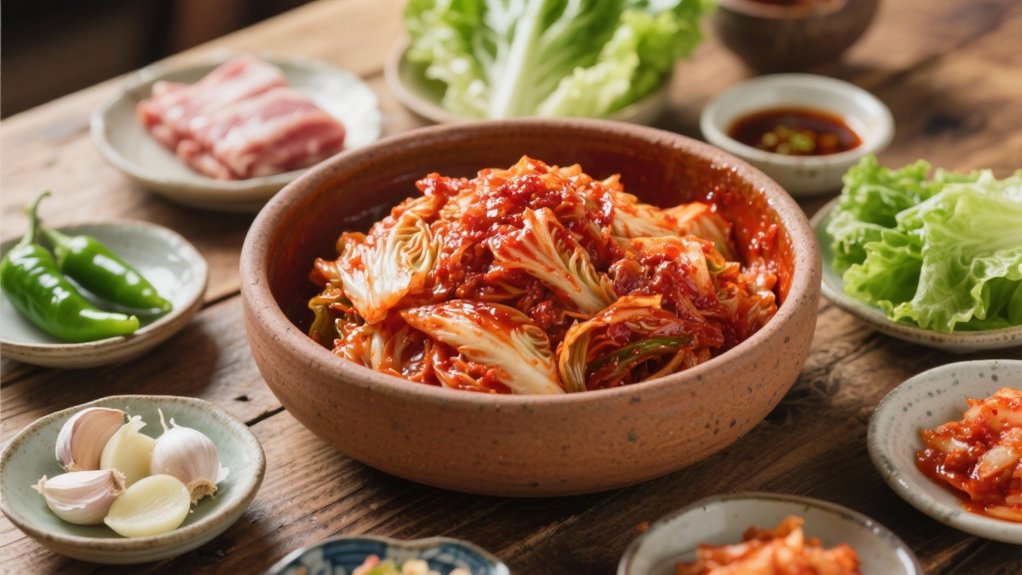
When it comes to classic Korean side dishes, baechu kimchi stands as the undisputed champion of fermented vegetables, and you’ll find it gracing nearly every Korean table alongside bossam.
This spicy, tangy delight made from napa cabbage creates the perfect flavor balance against rich, fatty pork. The kimchi fermentation process develops complex flavors that cut through bossam’s richness beautifully!
Plus, napa cabbage benefits include loads of vitamins and probiotics for your gut health. You can buy quality kimchi from Korean markets or make your own if you’re feeling adventurous – just remember it needs time to develop those signature sour notes.
Kkakdugi (Cubed Radish Kimchi)
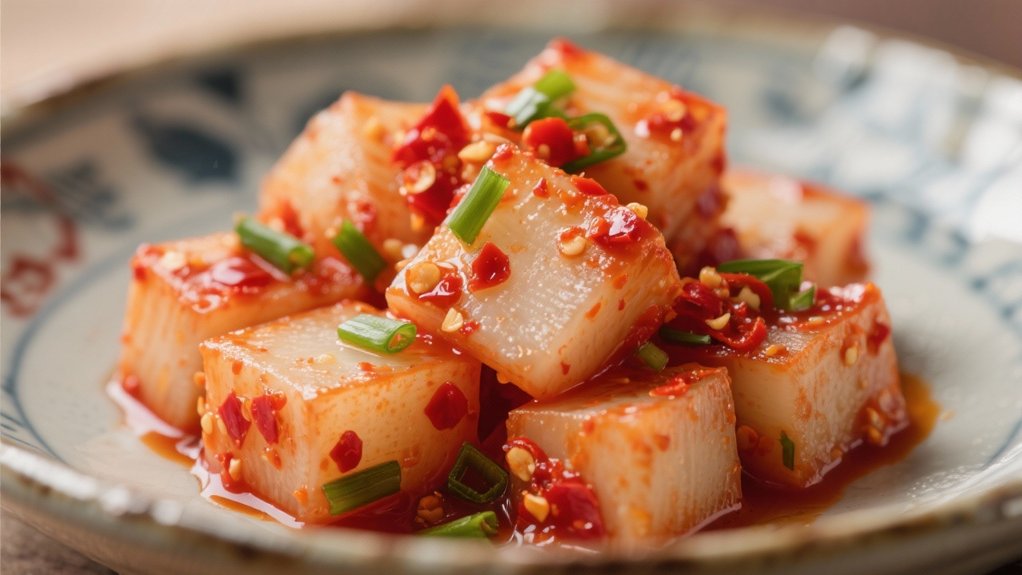
Another fermented superstar that deserves a spot on your bossam spread is kkakdugi, the chunky cousin of traditional napa cabbage kimchi that brings its own unique crunch and punch to the table.
This cubed radish kimchi offers incredible texture contrast that perfectly complements tender pork belly.
The kkakdugi benefits include:
- Digestive support from probiotics and fiber
- Refreshing crunch that cuts through rich meat
- Bright, tangy flavor that awakens your palate
Popular kkakdugi variations range from extra-spicy versions to milder family-friendly options.
You’ll love how those satisfying radish cubes practically burst with fermented goodness!
Musaengchae (Spicy Raw Radish Salad)
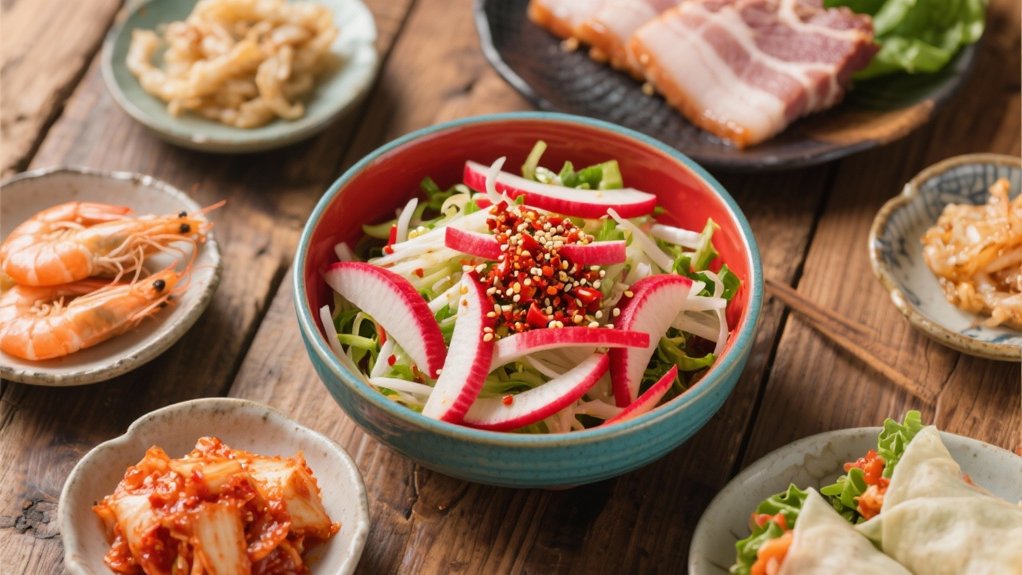
Fresh radish takes center stage in musaengchae, a vibrant salad that brings crisp texture and fiery heat to your bossam feast without any fermentation time required.
You’ll julienne daikon into thin matchsticks, then toss with gochugaru, vinegar, garlic, and a touch of sugar for perfect balance.
Musaengchae variations include adding carrots, scallions, or Asian pear for extra crunch and sweetness. The beauty lies in its instant gratification – no waiting around!
For musaengchae serving suggestions, pile it high alongside your pork belly, letting guests heap generous portions into their lettuce wraps for invigorating contrast against rich meat.
Sangchu (Fresh Lettuce Wraps)
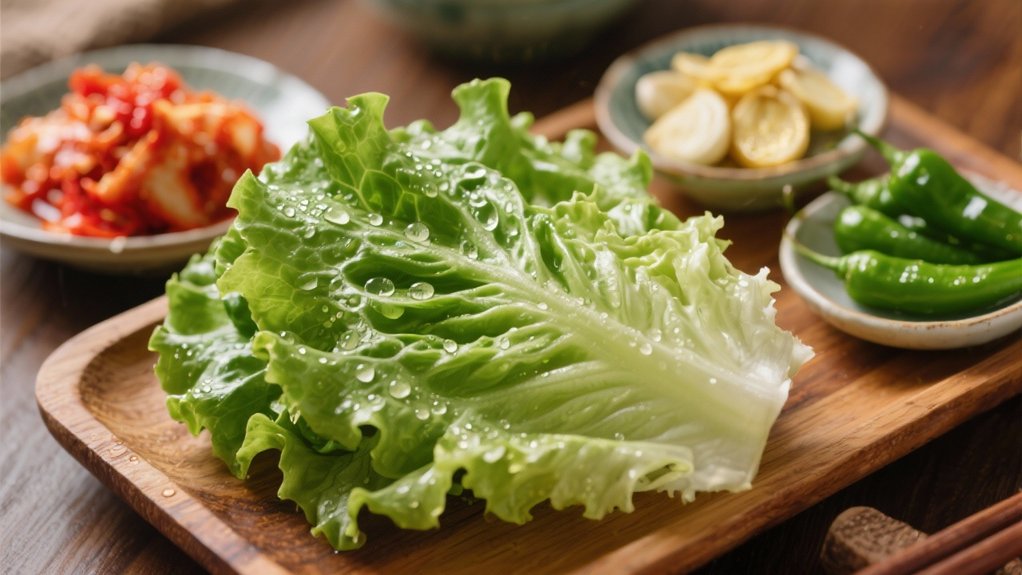
The foundation of every memorable bossam experience rests in sangchu, those crisp lettuce leaves that transform each bite into a customizable handheld feast.
These verdant wrappers create the perfect vessel for your tender pork, allowing you to control every delicious mouthful.
Sangchu varieties offer exciting options for your table:
- Butter lettuce – soft, pliable leaves with mild flavor
- Red leaf lettuce – adds beautiful color and slight peppery notes
- Boston lettuce – sturdy cups that hold generous portions
Beyond convenience, sangchu delivers impressive health benefits, providing vitamins A and K while adding invigorating crunch that balances bossam’s rich flavors perfectly!
Ssam Sauce (Korean Wrapping Sauce)
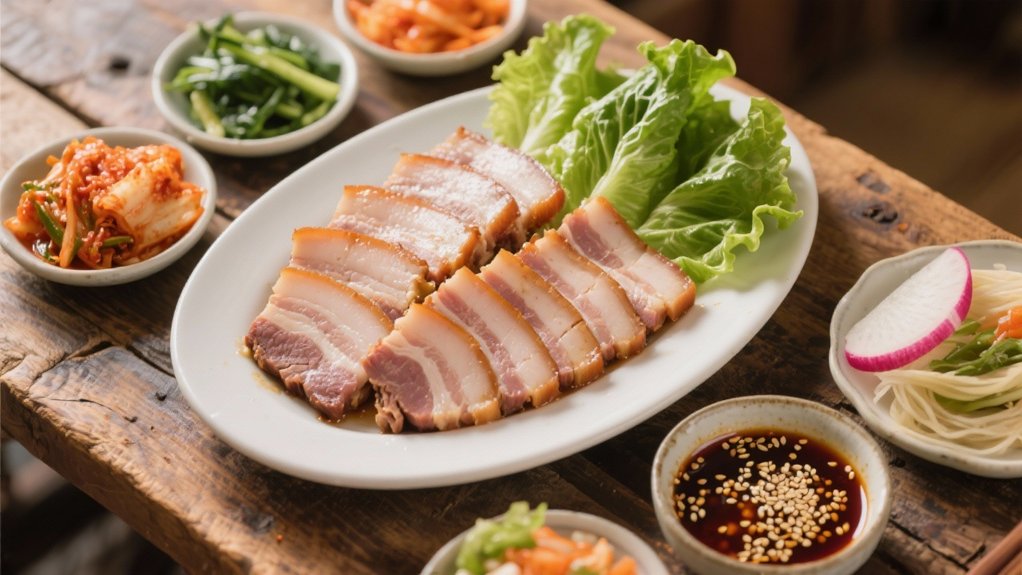
While sangchu provides the perfect wrapper, ssam sauce brings the bold, umami-packed flavor that elevates your bossam from good to absolutely incredible.
This tangy, slightly sweet condiment transforms each bite into pure magic. Traditional ssam sauce ingredients include ssamjang (fermented bean paste), gochujang, garlic, sesame oil, and rice vinegar.
However, ssam sauce variations are endless! You can add honey for sweetness, lime juice for brightness, or even peanut butter for richness.
Mix and match ingredients until you find your perfect balance. The beauty lies in customizing the sauce to your taste preferences, creating your signature bossam experience.
Pickled Garlic (Maneul Jangajji)
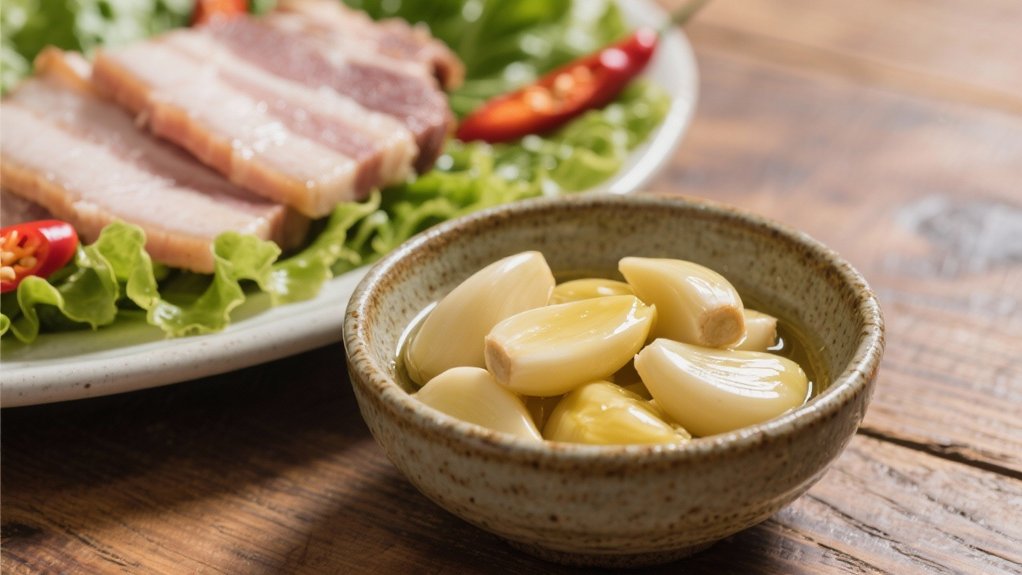
Sharp bursts of tangy flavor await you with pickled garlic, one of Korea’s most beloved banchan that perfectly cuts through bossam’s rich, fatty pork. This zingy side dish transforms regular garlic into something magical through traditional pickling techniques that balance sweet, sour, and salty flavors.
Here’s why pickled garlic works so well:
- Garlic benefits include digestive support, which helps process heavy meals.
- Pickling techniques mellow garlic’s harsh bite while preserving its punch.
- Perfect pairing – the acidity cleanses your palate between bites.
You’ll love how these crunchy, amber-colored cloves add excitement to every wrap!
Korean Scallion Salad (Pa-muchim)
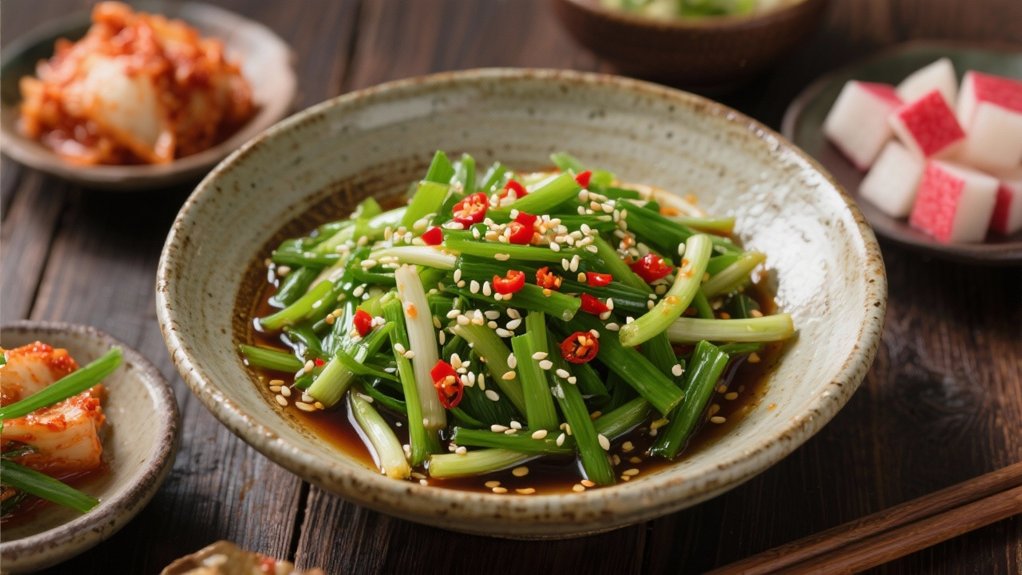
Moving from pickled vegetables to fresh ones, Korean scallion salad brings a completely different energy to your bossam spread with its crisp texture and bright, peppery bite.
This Korean scallion dish cuts through the rich pork beautifully! The simple salad dressing combines soy sauce, sesame oil, rice vinegar, and a touch of sugar, creating the perfect flavor pairing with fatty meat.
Traditional recipes often include gochugaru for heat, but you can skip it for milder palates. The scallions stay crunchy and fresh, offering a clean contrast that keeps your taste buds interested throughout the meal.
Seasoned Bean Sprouts (Kongnamul Muchim)
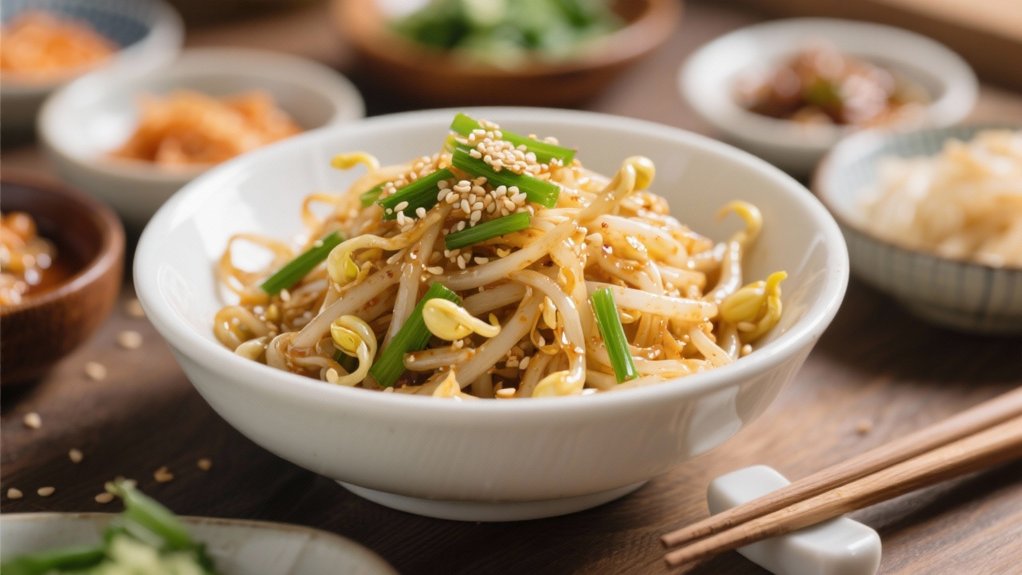
Every Korean household has its own version of seasoned bean sprouts, and this simple side dish delivers maximum flavor with minimal effort. The seasoned bean sprouts benefits include crisp texture and invigorating taste that cuts through bossam’s richness perfectly.
Here are essential kongnamul preparation tips:
- Blanch quickly – Cook bean sprouts for just 2-3 minutes to maintain their signature crunch.
- Season while warm – Add sesame oil, garlic, and salt immediately after draining for better absorption.
- Serve fresh – This banchan tastes best within hours of preparation.
You’ll love how this nutritious, budget-friendly side balances your meal beautifully!
Korean Cucumber Salad (Oi Muchim)
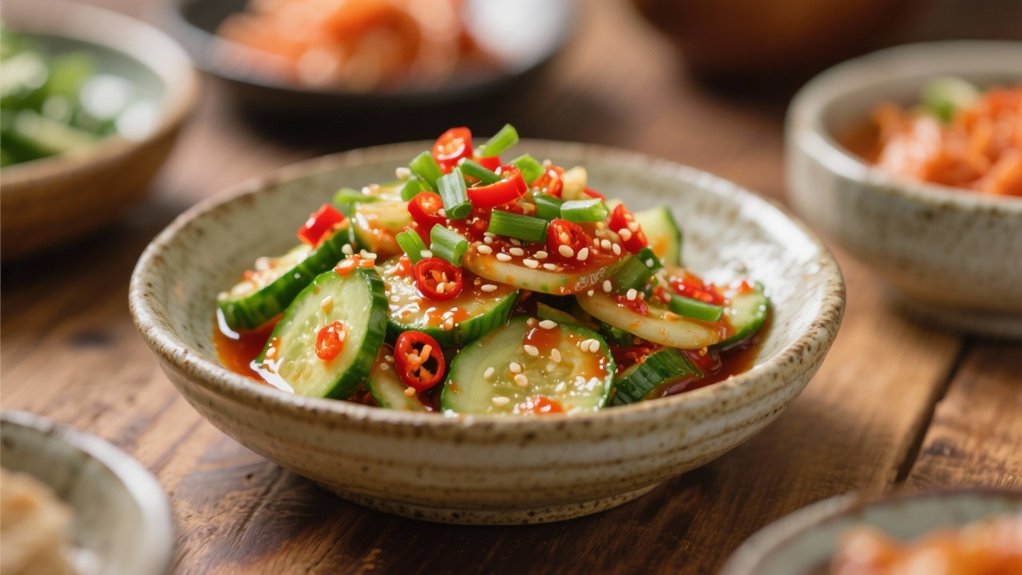
Crisp cucumber ribbons tossed in a tangy, garlicky dressing make oi muchim one of Korea’s most invigorating banchan, and it’s exactly what your bossam spread needs for that cooling contrast.
This revitalizing side cuts through rich pork belly like a dream! You’ll slice cucumbers thin, salt them briefly to draw out moisture, then toss with rice vinegar, sesame oil, and minced garlic.
Korean salad recipes like this are incredibly forgiving—add gochugaru for spicy cucumber variations, or throw in some julienned carrots for extra crunch.
It’s ready in minutes and tastes even better after marinating!
Pickled Radish (Chicken Mu)
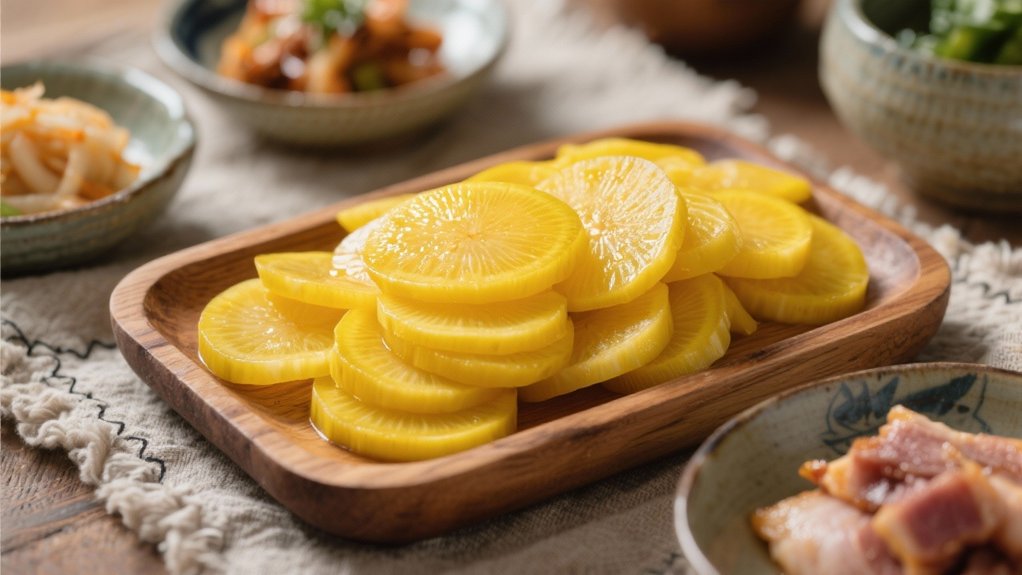
Tangy cubes of pickled radish, known as chicken mu in Korean cuisine, bring that perfect acidic punch to balance out bossam’s rich, fatty pork belly.
You’ll love how this crunchy yellow pickle cleanses your palate between bites!
Here are three key pickled radish benefits:
- Digestive aid – helps break down heavy, greasy foods
- Palate cleanser – refreshes your taste buds instantly
- Probiotic boost – supports gut health naturally
Variations of chicken mu include spicy versions with gochugaru, sweet-and-sour styles with extra sugar, and homemade batches that taste fresher than store-bought.
This humble side dish transforms every bossam meal!
Steamed Rice (Bap)
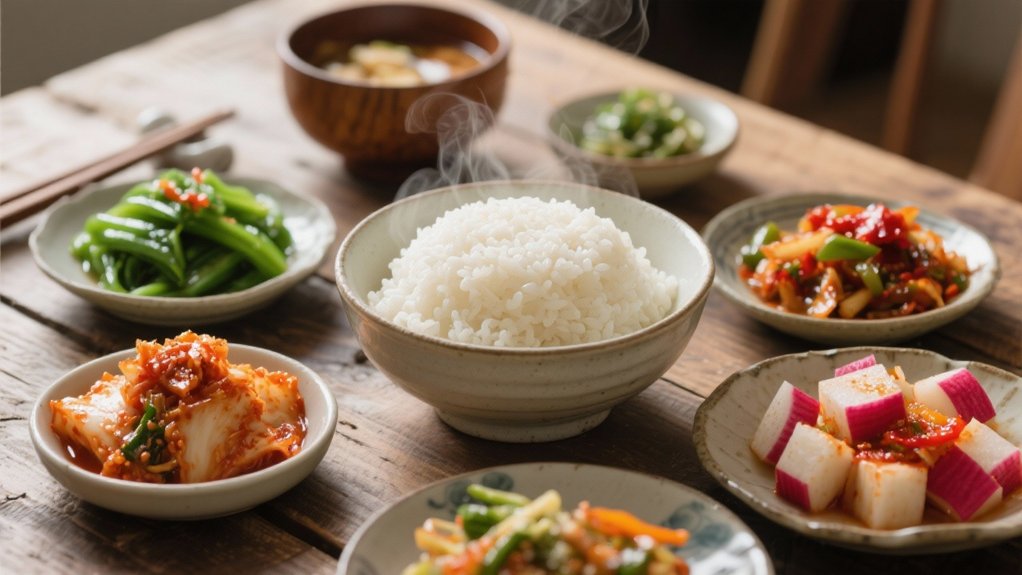
While pickled radish cuts through bossam’s richness, steamed rice provides the comforting foundation that brings everything together on your plate.
This humble grain absorbs all those wonderful flavors from the pork and sauces, creating perfect bites every time.
Steamed rice benefits include balancing heavy dishes and stretching your meal further. Perfect rice texture should be fluffy yet slightly sticky, making it easy to grab with chopsticks.
You can use short-grain Korean rice for authenticity, but jasmine or medium-grain varieties work beautifully too!
Don’t skip this essential side – it transforms bossam from snack to satisfying meal.
Korean Seaweed Soup (Miyeok-guk)
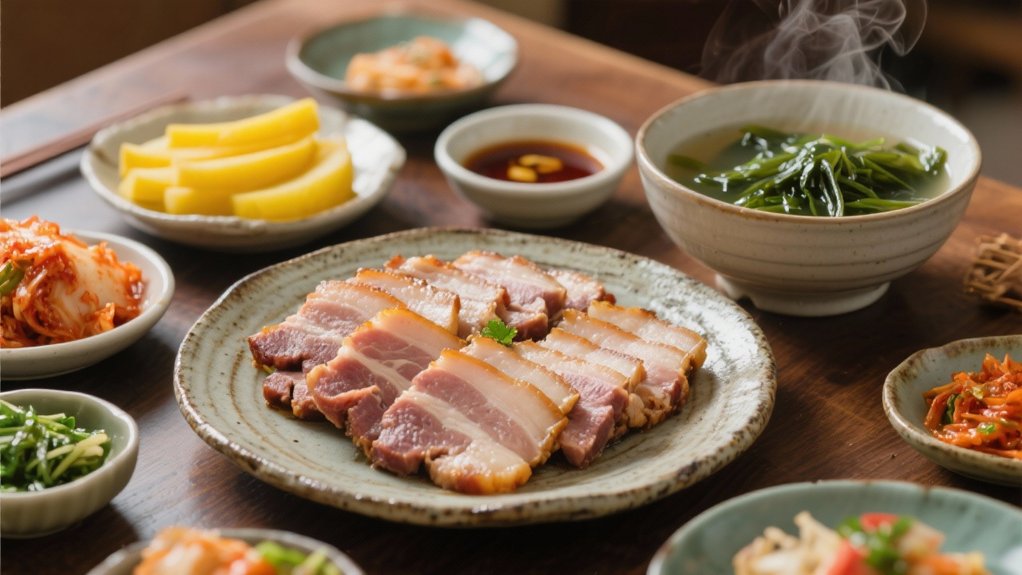
Every Korean household knows that miyeok-guk brings both comfort and balance to rich meals like bossam.
This nourishing seaweed soup cuts through the fatty pork beautifully, cleansing your palate between bites. The miyeok guk benefits include essential minerals and a light, invigorating taste that won’t compete with bossam’s bold flavors.
Here are three simple seaweed soup recipes to try:
- Classic beef broth version – Simmer dried seaweed with beef stock and garlic
- Vegetarian option – Use anchovy broth or mushroom stock instead
- Birthday-style – Add beaten eggs for extra richness and tradition
You’ll love how this gentle soup makes every bossam dinner feel complete!
Fermented Shrimp Sauce (Saeujeot)
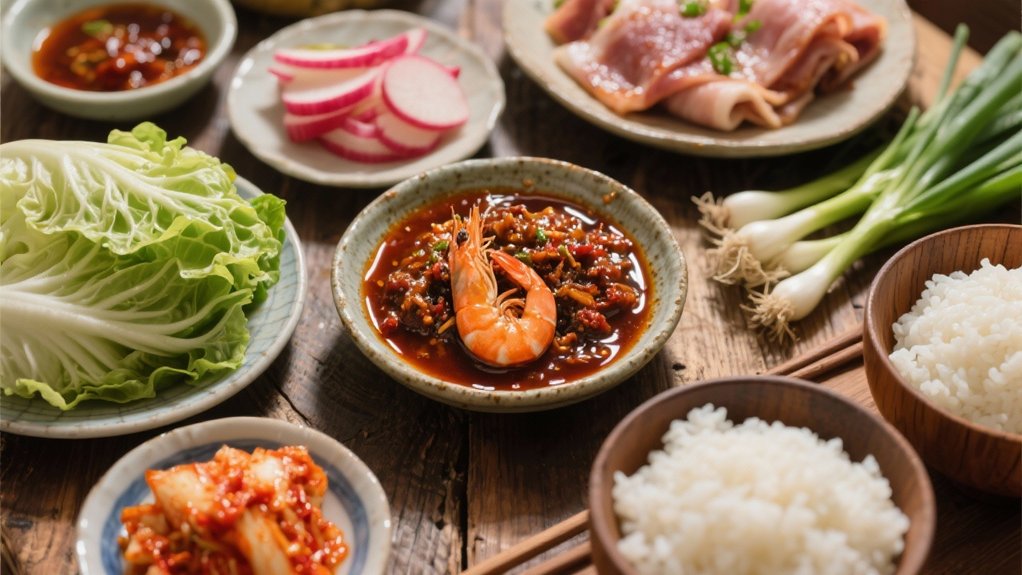
A small dollop of saeujeot transforms your bossam experience from good to absolutely unforgettable. This intensely salty, umami-packed condiment brings centuries of fermented shrimp history to your table, creating the perfect counterpoint to rich pork belly.
You’ll find saeujeot recipes vary by region, but the classic version combines tiny shrimp with sea salt and time. The resulting paste delivers a punch of oceanic flavor that cuts through fatty meat beautifully.
Just remember, a little goes a long way! Start with a tiny amount mixed into your ssam wraps, then adjust to your taste preferences.
Korean Pickled Cabbage (Baechu Jangajji)
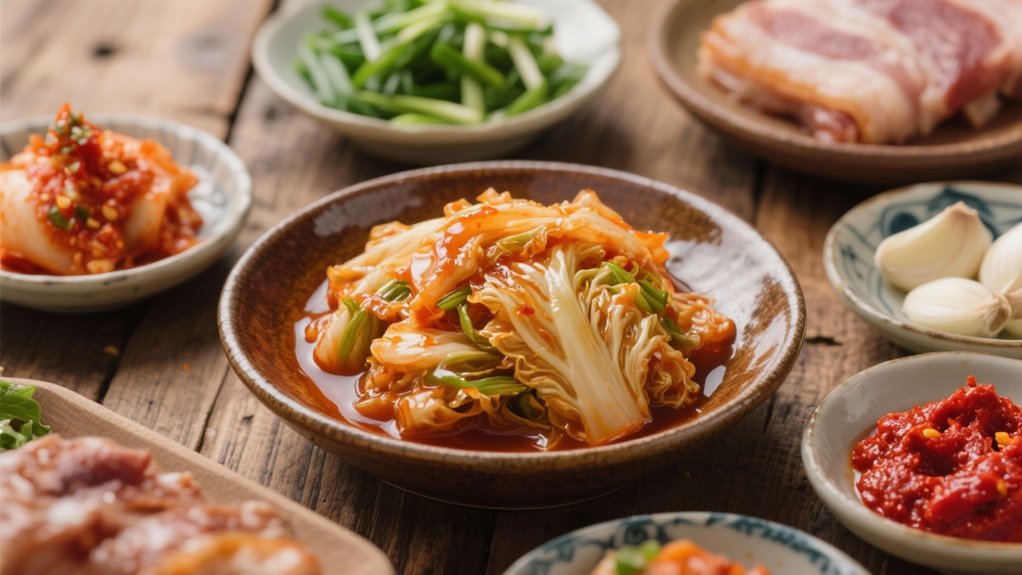
Simplicity defines baechu jangajji, yet this humble pickled cabbage delivers complexity that perfectly complements bossam’s rich flavors.
This tangy side dish cuts through fatty pork beautifully, creating perfect balance on your plate.
Why baechu jangajji works so well:
- History significance – Traditional Korean families have preserved cabbage this way for centuries, making it an authentic pairing.
- Health benefits – Probiotics support digestion while vitamins boost nutrition.
- Flavor contrast – Sharp acidity brightens heavy bossam wonderfully.
You’ll find the crisp texture and sour notes refresh your palate between bites.
Making homemade versions takes just days!
Doenjang Jjigae (Soybean Paste Stew)
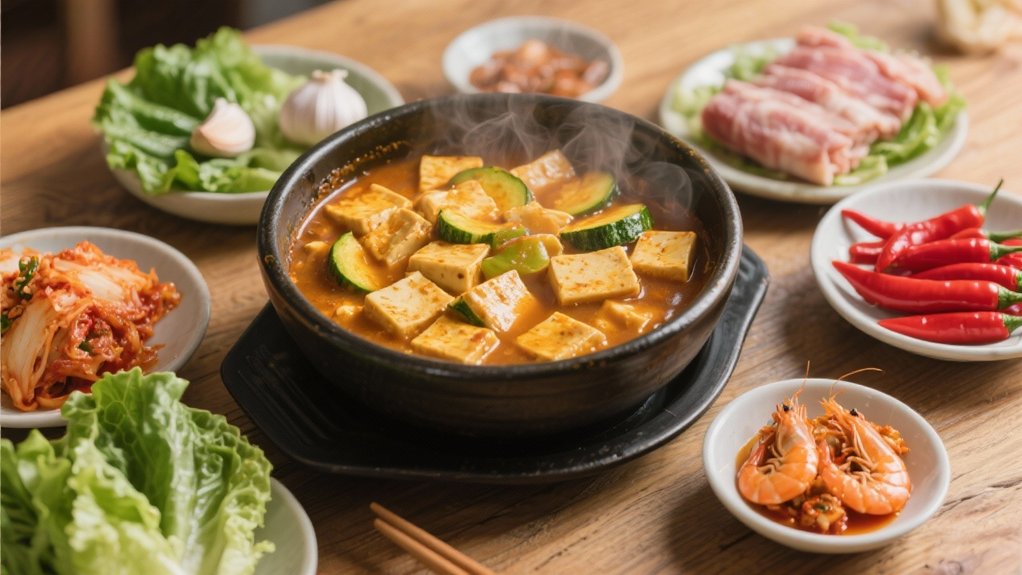
When Korean families gather for bossam, doenjang jjigae often bubbles away on a nearby burner, filling the kitchen with its deep, earthy aroma. This hearty soybean paste stew perfectly balances the rich pork with its savory, umami-packed broth.
Traditional ingredients include doenjang paste, tofu, zucchini, onions, and garlic, though you can add whatever vegetables you have on hand. The cooking methods are wonderfully forgiving – simply sauté your aromatics, add the paste and water, then simmer until everything melds together beautifully.
You’ll love how this comforting stew cleanses your palate between bites of succulent bossam!