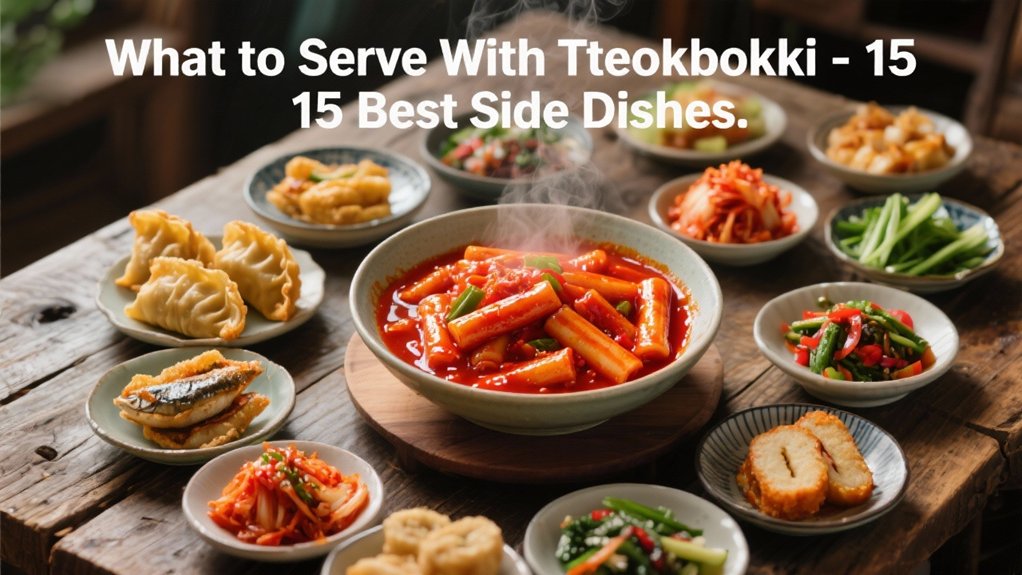
Tteokbokki pairs beautifully with cooling, crunchy sides that balance its spicy heat. Kimchi and pickled radish provide tangy contrast, while Korean fried chicken adds satisfying protein with crispy textures. Steamed white rice soaks up the gochujang sauce perfectly, and Korean egg rolls offer delicate comfort. Cold buckwheat noodles cool your palate, cheese kimbap brings creamy richness, and Korean fried rice stretches the meal into feast territory. These combinations create the ultimate Korean comfort food experience that’ll have you discovering even more perfect pairings.
Kimchi
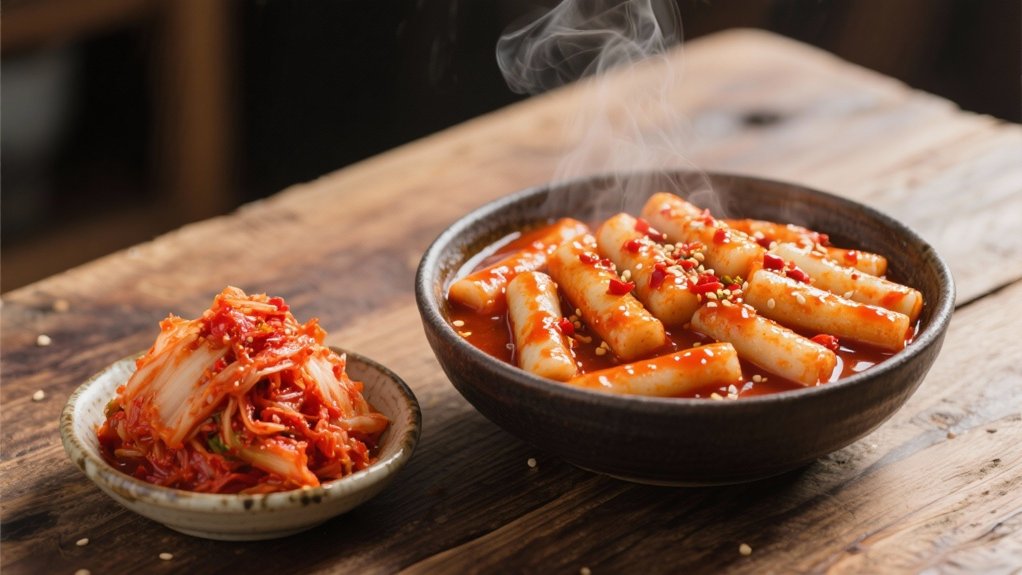
Kimchi naturally pairs with tteokbokki like two best friends who just get each other! This fermented cabbage brings tangy, sour notes that perfectly balance tteokbokki’s sweet-spicy sauce.
You’ll love how kimchi’s crunch contrasts with those chewy rice cakes. Plus, you’re getting serious health benefits from all those probiotics and vitamins!
Try different spicy variations like cucumber kimchi or radish kimchi for exciting flavor combinations. The cool, invigorating bite cuts through tteokbokki’s richness beautifully, cleansing your palate between bites.
It’s honestly hard to imagine enjoying tteokbokki without this classic Korean sidekick on your plate!
Korean Fried Chicken (Dakgangjeong)
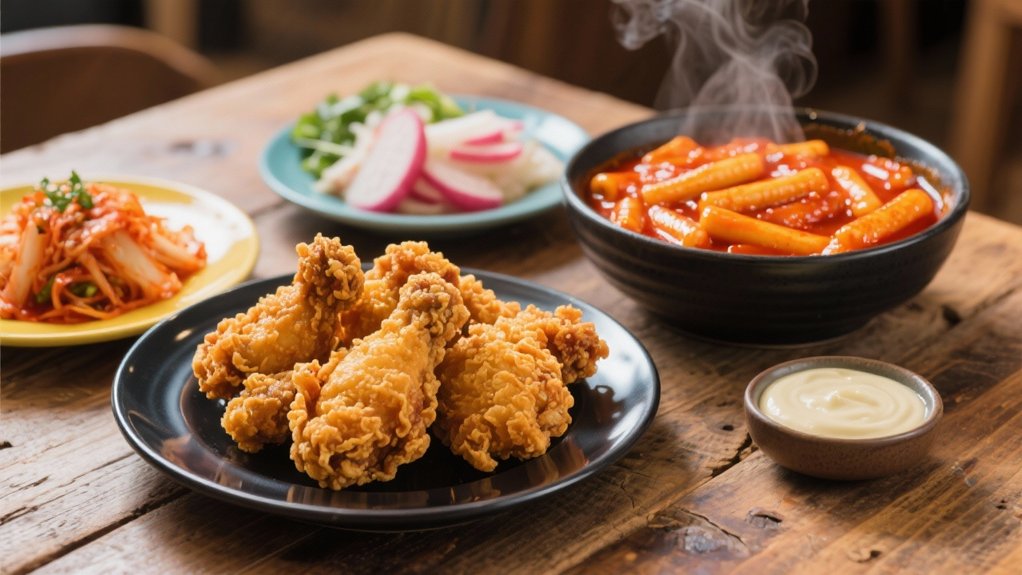
While fermented vegetables bring fantastic tang to your meal, Korean fried chicken takes your tteokbokki experience in a completely different direction with crispy, sweet-glazed perfection!
Dakgangjeong’s sticky, caramelized coating creates an amazing contrast against tteokbokki’s chewy texture and spicy sauce. The chicken’s sweet glaze helps cool down the heat while adding satisfying protein to your feast.
Korean chicken variations like yangnyeom or honey garlic work beautifully too, each bringing unique dakgangjeong flavors that complement the rice cakes perfectly.
You’ll love how the crunchy exterior gives way to juicy meat, making every bite a delightful mix of textures and tastes!
Pickled Radish (Danmuji)
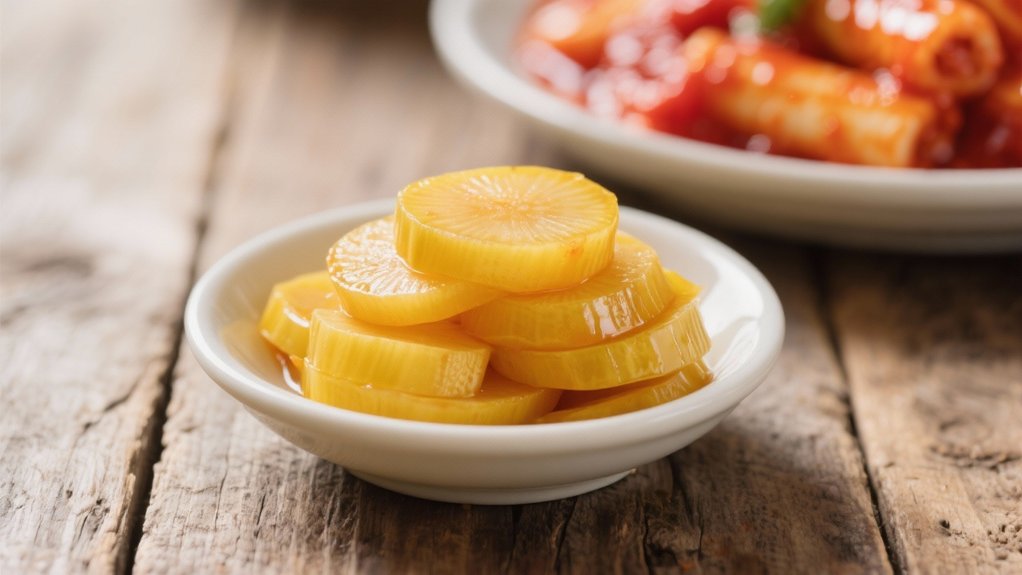
Those bright yellow strips of pickled radish bring the perfect palate-cleansing crunch to balance out tteokbokki’s rich, spicy flavors!
You’ll find pickled radish varieties at Korean markets, from sweet and mild to tangy and bold. The crisp texture cuts through the sauce’s heat while invigorating your taste buds between bites.
Beyond taste, these golden gems offer health benefits like probiotics for digestion and vitamin C for immunity.
Keep a small dish nearby for easy grabbing, and watch how this simple side transforms your meal into a well-rounded Korean feast that’s both satisfying and rejuvenating!
Steamed White Rice
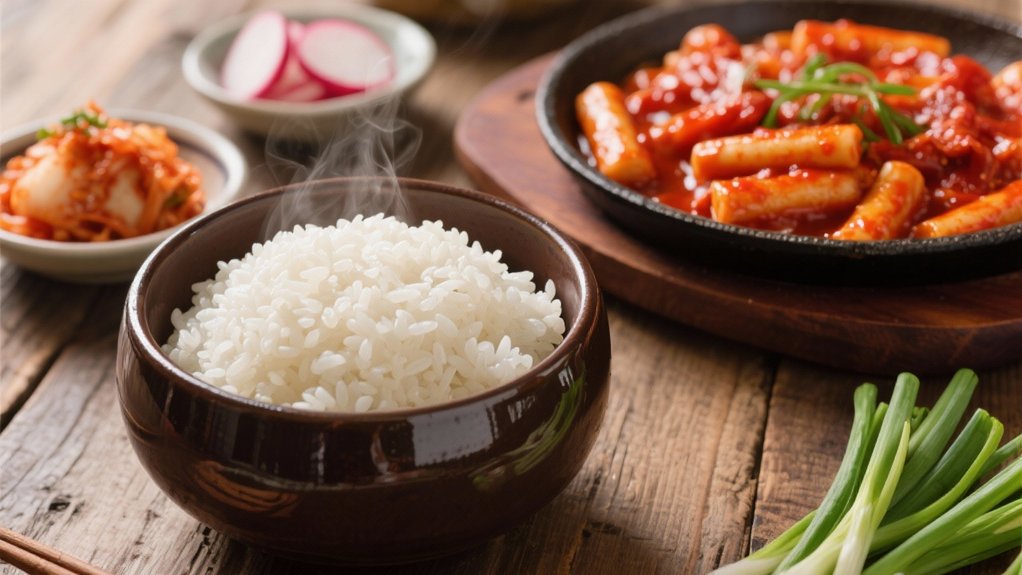
When tteokbokki’s bold, saucy flavors start to overwhelm your taste buds, a bowl of fluffy steamed white rice becomes your best friend! This simple side dish creates perfect balance, cooling down the spice while soaking up that incredible gochujang sauce.
Steamed rice benefits include:
- Neutralizes heat – gives your mouth a break between bites
- Stretches portions – makes your meal more filling and satisfying
- Absorbs sauce – captures every drop of that delicious red coating
- Adds texture contrast – soft grains complement chewy rice cakes beautifully
Follow these serving tteokbokki tips: serve rice in separate bowls and let everyone customize their perfect bite!
Korean Corn Dogs (Hotteok)
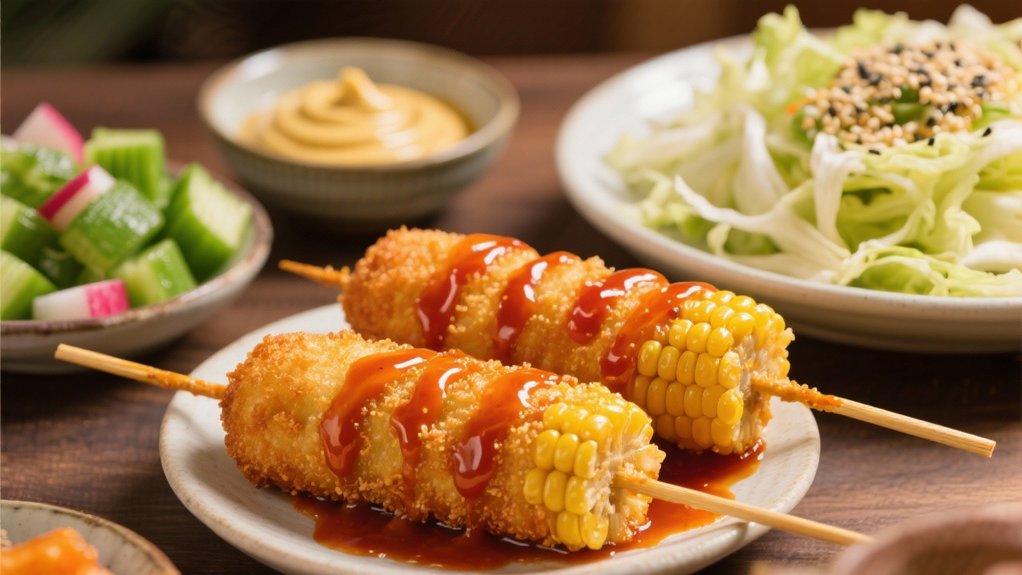
Moving from simple rice to something more indulgent, Korean corn dogs bring serious street food energy to your tteokbokki feast! These crispy, golden beauties perfectly complement tteokbokki’s spicy sauce with their satisfying crunch and gooey cheese centers.
You’ll find amazing Korean street vendors serving countless hotteok variations, from mozzarella-stuffed to potato-coated versions that’ll make your taste buds dance.
The contrast works magic – creamy cheese against spicy rice cakes, crispy coating meeting chewy textures. Plus, they’re fun to share! Grab a few different styles, dip them in that leftover tteokbokki sauce, and you’ve got yourself an epic Korean street food combo.
Cucumber Salad (Oi Muchim)
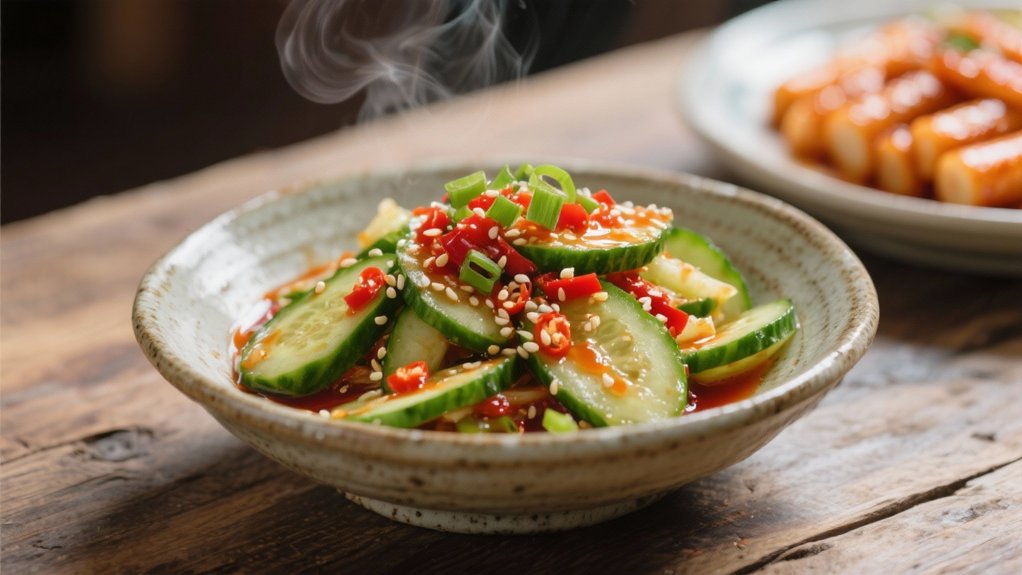
After all that rich, spicy heat from tteokbokki and crispy indulgence from Korean corn dogs, your palate will thank you for this revitalizing cucumber salad that cuts through all those bold flavors like a cool breeze!
Cucumber benefits include hydration and natural cooling properties that perfectly balance spicy dishes. Oi muchim preparation is surprisingly simple:
- Slice cucumbers thinly and salt them
- Drain excess water after 15 minutes
- Mix with rice vinegar, sesame oil, garlic
- Garnish with sesame seeds and scallions
This revitalizing side dish cleanses your palate between bites!
Mandu (Korean Dumplings)
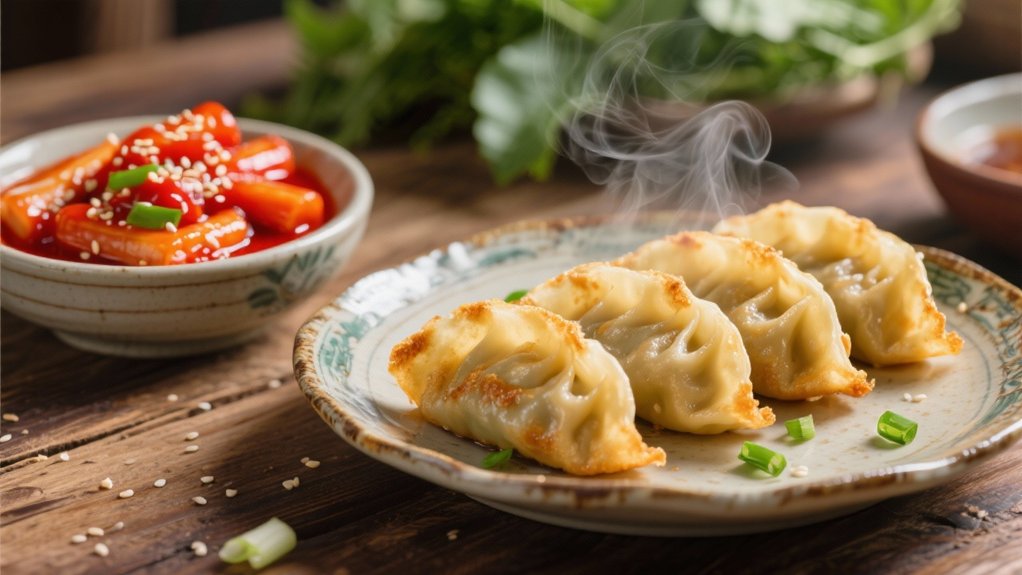
While cucumber salad provides that revitalizing contrast, mandu brings hearty satisfaction to your tteokbokki feast with their pillowy-soft wrappers and savory fillings that complement the spicy rice cakes beautifully.
These Korean dumplings offer the perfect textural balance, creating a more substantial meal that’ll keep you satisfied longer. Dumpling variations include pork and vegetable, kimchi, or beef fillings, giving you plenty of options to match your taste preferences.
Mandu cooking methods range from steaming and boiling to pan-frying for crispy bottoms. The mild, savory flavors provide a wonderful cooling effect against tteokbokki’s fiery kick!
Fishcake Soup (Eomuk-guk)
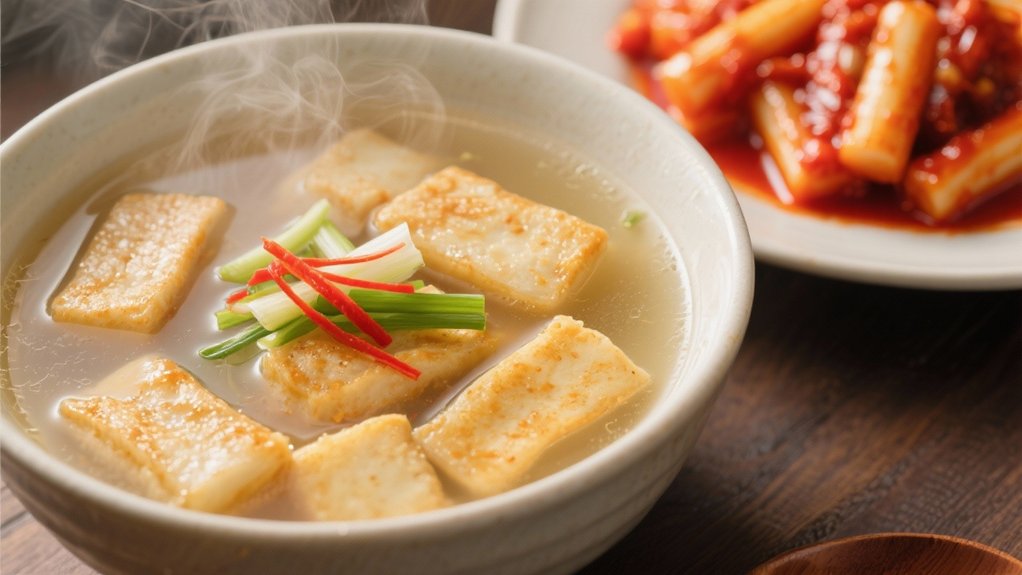
Another stellar companion that deserves a spot on your table is fishcake soup, or eomuk-guk as it’s known in Korea, which delivers comforting warmth alongside tteokbokki’s bold flavors.
The history of eomuk-guk traces back to Japanese influences during colonial times, evolving into a beloved Korean comfort food.
Popular variations of fishcake soup include:
- Simple broth with sliced fishcake and scallions
- Spicy versions with gochugaru and kimchi
- Rich broths featuring radish and kelp
- Modern takes with ramen noodles added
This gentle, savory soup perfectly balances tteokbokki’s intensity while keeping you wonderfully satisfied!
Seaweed Salad (Miyeok Muchim)
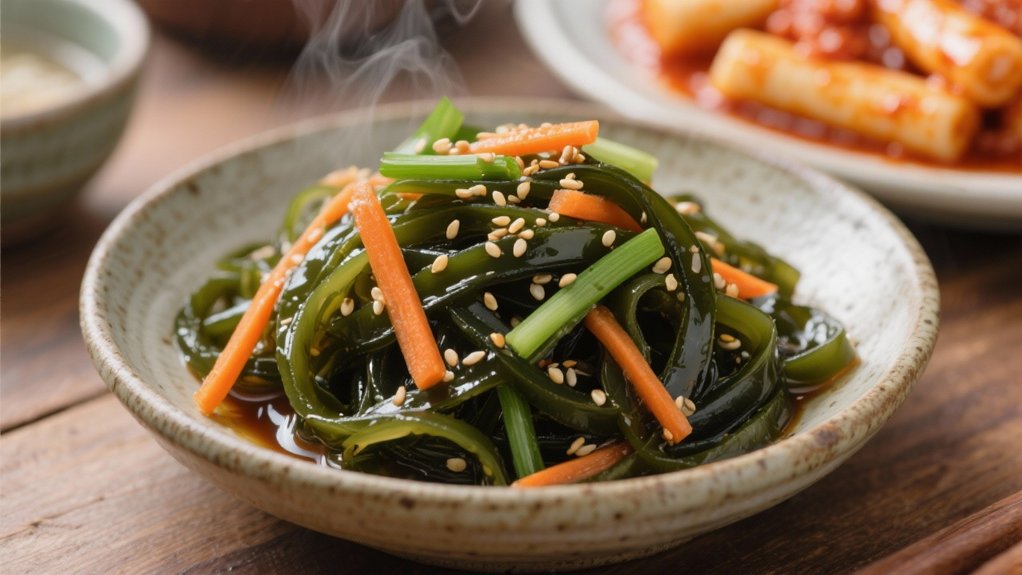
Moving from warm, comforting soups to something fresh and crisp, seaweed salad (miyeok muchim) brings a delightfully different texture and flavor profile to your tteokbokki feast.
This vibrant green side dish combines tender wakame seaweed with Korean ingredients like sesame oil, garlic, and rice vinegar for a rejuvenating contrast. The oceanic flavor cleanses your palate between bites of spicy rice cakes, while seaweed health benefits add nutritional value to your meal.
You’ll love how the cool, slippery texture balances tteokbokki’s heat! Plus, it’s incredibly easy to make and adds beautiful color to your table spread.
Korean Pancakes (Pajeon)
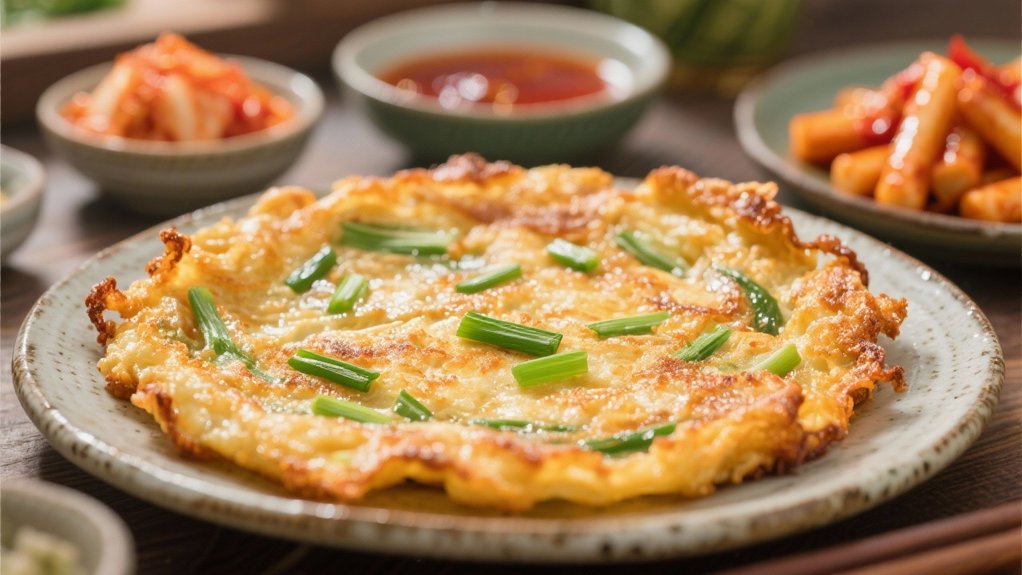
When you’re craving something crispy and satisfying to go with your spicy tteokbokki, Korean pancakes (pajeon) make an absolutely perfect pairing!
These savory pancakes offer a delightful textural contrast to those chewy rice cakes.
Popular pajeon variations include:
- Scallion pajeon – the classic green onion version
- Seafood pajeon – loaded with shrimp, squid, or other ocean treasures
- Kimchi pajeon – featuring tangy fermented cabbage
- Vegetable pajeon – packed with colorful seasonal vegetables
The crispy edges and tender center create an ideal balance against tteokbokki’s heat.
Pajeon dipping sauce, typically made with soy sauce, vinegar, and chili flakes, adds another layer of flavor that complements both dishes beautifully.
Pickled Bean Sprouts (Sukju Namul)
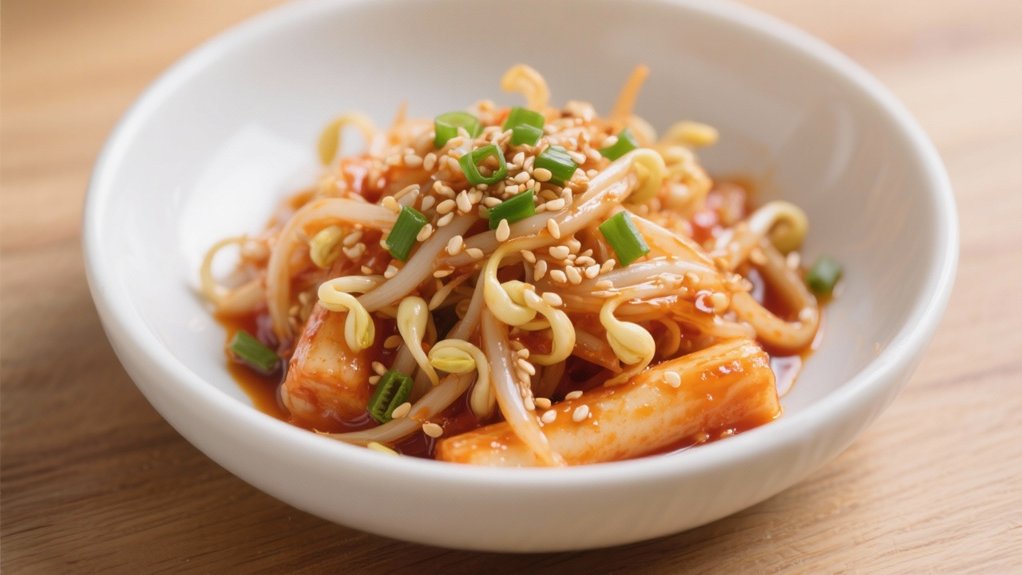
The cooling crunch of pickled bean sprouts (sukju namul) provides exactly what your taste buds need after diving into fiery tteokbokki!
These invigorating white strands offer serious nutritional benefits, packed with vitamin C, fiber, and protein to balance out your spicy meal.
The preparation methods couldn’t be simpler – just blanch fresh bean sprouts for two minutes, then toss with rice vinegar, sesame oil, garlic, and a pinch of salt.
Let them marinate for thirty minutes, and you’ve got the perfect palate cleanser!
Their crisp texture and tangy flavor make every bite of tteokbokki even more enjoyable.
Korean Fried Rice (Bokkeumbap)
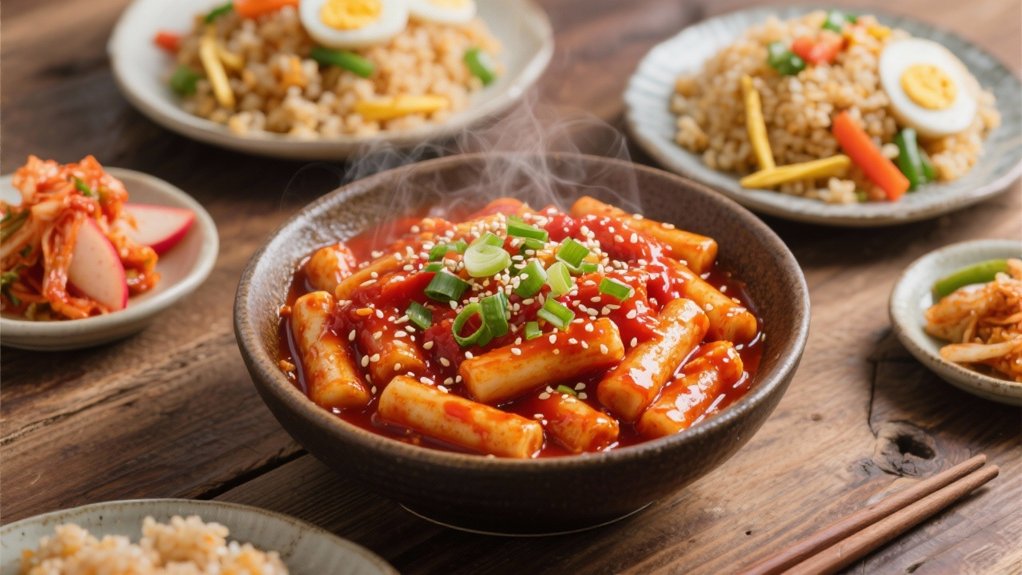
Since you’re already cooking up a storm with tteokbokki, why not transform those leftover ingredients into delicious Korean fried rice (bokkeumbap) that’ll stretch your meal even further?
This beloved Korean street food staple makes quick meals feel satisfying and complete.
Here’s what makes bokkeumbap perfect alongside tteokbokki:
- Uses day-old rice for ideal texture
- Incorporates leftover vegetables from your fridge
- Cooks in just 10-15 minutes
- Balances the spicy heat beautifully
Simply stir-fry cold rice with soy sauce, sesame oil, and whatever proteins you have handy.
The neutral, savory flavors provide a cooling contrast to tteokbokki’s fiery kick!
Cheese Kimbap
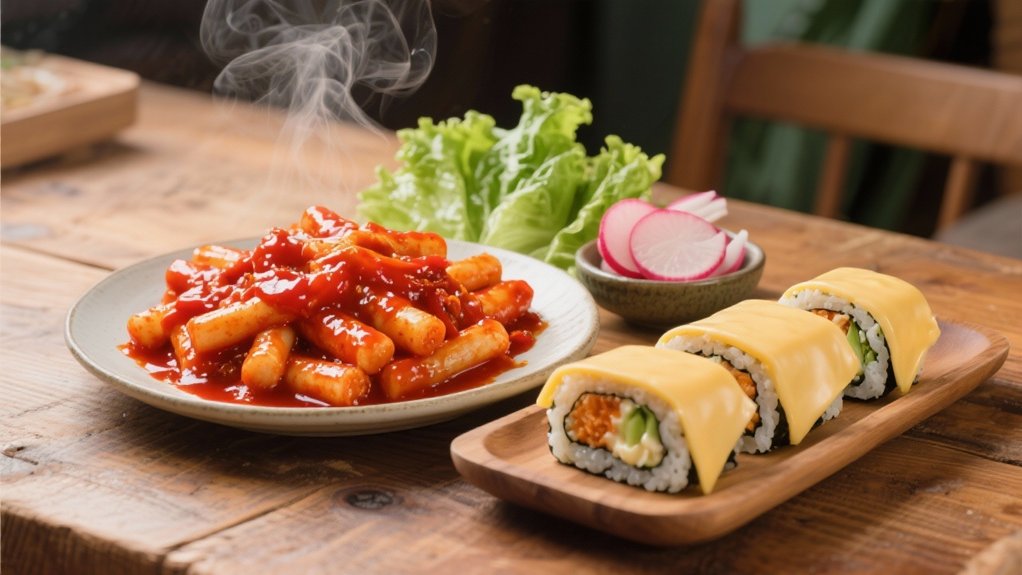
Crispy seaweed wraps filled with creamy, melted cheese create the perfect handheld companion to your spicy tteokbokki feast.
This modern twist on traditional kimbap brings rich, mild cheese flavors that beautifully balance the heat from your main dish. You’ll find various kimbap variations at Korean restaurants, from mozzarella to processed cheese versions that melt into gooey perfection.
The combination works like magic – the cool, creamy texture soothes your tongue between bites of fiery rice cakes. Plus, you can easily grab these rolls with your fingers, making them ideal for casual dining or sharing with friends during your Korean food adventure!
Korean Egg Roll (Gyeran-mari)
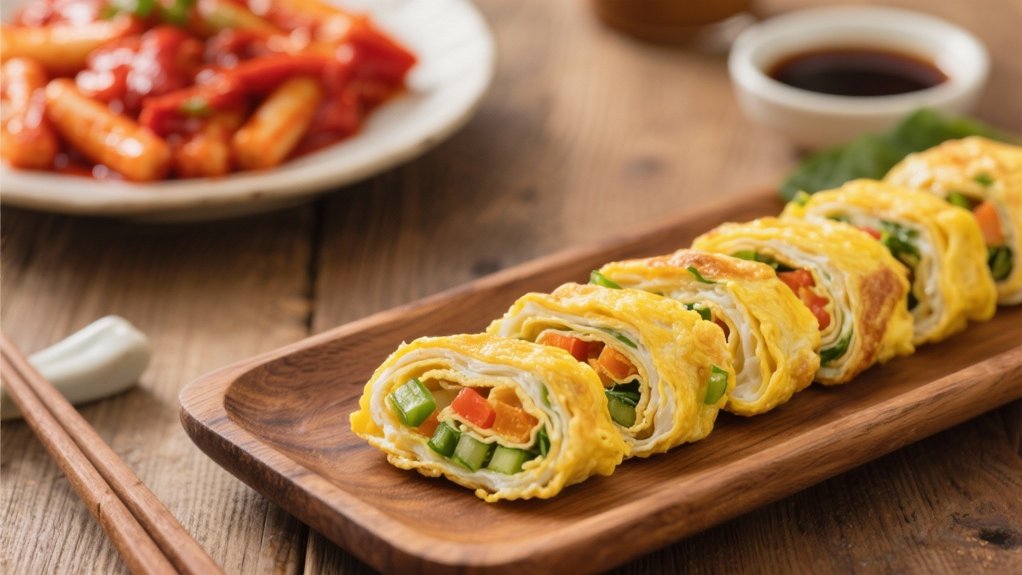
Fluffy yellow spirals of seasoned eggs bring a delicate, comforting element to your tteokbokki spread that you’ll absolutely love.
This beloved Korean egg roll showcases traditional Korean cooking techniques through simple ingredients and careful rolling methods. The mild, savory flavors provide perfect balance against spicy rice cakes.
Popular Gyeran mari variations include:
- Classic version – eggs, salt, and scallions
- Vegetable-packed – carrots, onions, and peppers mixed in
- Cheese-filled – mozzarella or cream cheese for richness
- Seasoned options – garlic, sesame oil, or soy sauce additions
You’ll master this technique quickly with practice, creating beautiful golden rolls that slice into perfect spirals every time!
Cold Buckwheat Noodles (Naengmyeon)
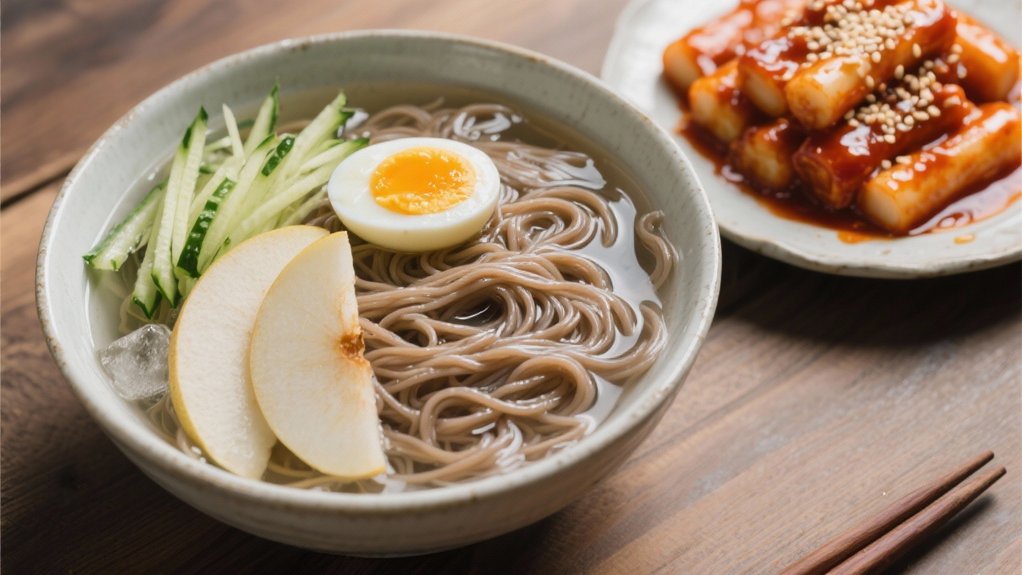
When the spicy heat of tteokbokki becomes too intense, invigorating cold buckwheat noodles offer the perfect cooling contrast your taste buds will thank you for.
These rejuvenating noodles come in two main cold noodle variations: mul-naengmyeon served in icy broth, and bibim-naengmyeon tossed with spicy sauce. The chewy texture balances beautifully against tteokbokki’s soft rice cakes, while the cold temperature provides instant relief from capsaicin burn.
Summer serving suggestions include adding sliced pear, cucumber, and hard-boiled egg for extra freshness. This combination transforms your meal into a satisfying hot-and-cold experience that’s particularly perfect during warmer months!